
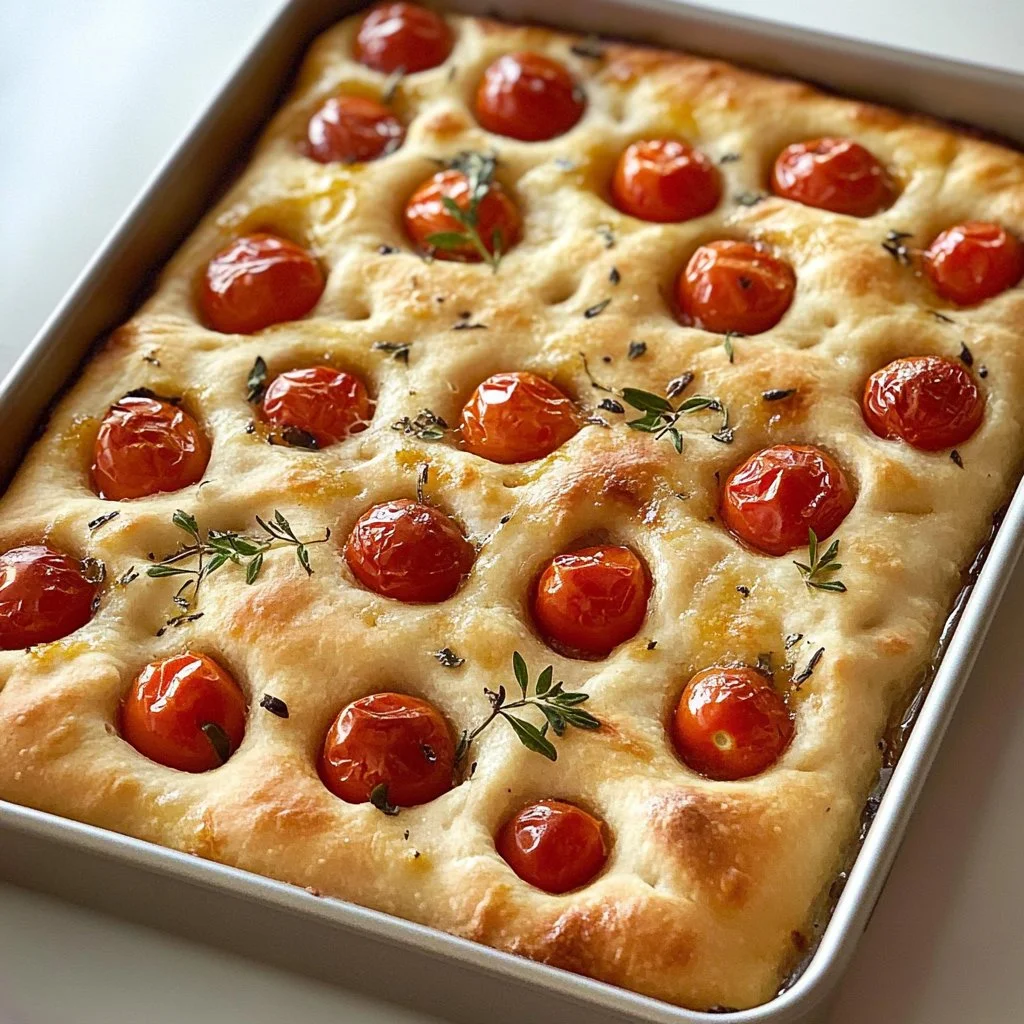
📑 Table of Contents ▶
Focaccia Bread
The aroma of fresh focaccia bread wafting through the kitchen is an experience that sings of comfort and warmth. Growing up, I often found myself in the simple act of gathering around the dinner table, where freshly baked bread took center stage. It wasn’t just bread; it was focaccia—a recipe that embodied love, care, and fond memories.
We always appreciated its delightful texture and the way it soaked up dips, oils, or accompanying dishes. The joy of pulling apart a warm piece, adorned with olive oil glistening on top and fragrant herbs sprinkled throughout, became a cherished part of our family tradition. Focaccia bread is more than just an accompaniment; it’s an experience that brings people together. Crafting this bread calls for just a few key ingredients—combined and transformed into something extraordinary.
Focaccia bread combines simplicity with exquisite flavor. As one kneads the dough, the anticipation builds, evoking memories of laughter shared over meals and the satisfaction of crafting something beautiful from scratch. Focaccia’s versatility shines through its adaptability to various herbs and toppings, making it an ideal choice for any gathering or cozy night in. Through the following recipe, the spirit of sharing and enjoying this timeless bread continues.
Focaccia Essentials
Fundamentals
Focaccia bread stands out not only for its delightful taste but also for its simplicity. With only a handful of ingredients, it becomes a canvas for creativity. The key elements—flour, water, yeast, salt, and olive oil—come together to form a rich, flavorful dough. Each component plays a critical role in achieving the perfect focaccia texture and flavor.
The yeast acts as a leavening agent, enabling the dough to rise, while salt enhances overall taste. Olive oil introduces a rich, luxurious texture that keeps the bread moist. Fresh herbs elevate the dish, lending aromatic flavors that gracefully permeate every bite. When baked to golden perfection, focaccia achieves a soft interior with a delightfully crisp exterior.
Preparation/Setup
Preparing focaccia is both straightforward and rewarding. Start by gathering your ingredients: 2 cups of all-purpose flour, 1 cup of warm water, ½ teaspoon of active dry yeast, 1 teaspoon of salt, 2 tablespoons of olive oil, fresh herbs like rosemary or thyme, and coarse sea salt for topping.
In a mixing bowl, combine the warm water and yeast, letting it sit for around five minutes until frothy. This crucial step activates the yeast, preparing it for the fermentation process. Following this, mix in the flour, salt, and olive oil until a dough forms. The feel of the dough is a tactile joy—as you knead it for about 5 to 7 minutes, you’ll notice it becoming smooth and elastic.
Once kneaded, transfer the dough to a greased bowl. Cover it with a cloth and let it rise for about 1 to 2 hours, or until it doubles in size. This rising period allows for fermentation, bringing flavor and texture to the finished focaccia.
Ingredients
- 2 cups all-purpose flour: The foundation for the bread, providing structure and chew.
- 1 cup warm water: Activates the yeast and forms the dough.
- ½ teaspoon active dry yeast: Leavens the dough, creating that airy texture.
- 1 teaspoon salt: Enhances flavor and controls yeast activity.
- 2 tablespoons olive oil: Adds moisture and flavor, creating a delightful texture.
- Fresh herbs (like rosemary or thyme): Infuse the bread with aromatic flavors and enhance its visual appeal.
- Coarse sea salt (for topping): Adds a satisfying crunch and burst of flavor on the crust.
Directions
- In a mixing bowl, combine warm water and yeast. Let it sit for about 5 minutes until frothy.
- Add flour, salt, and olive oil. Mix until a dough forms.
- Knead the dough for about 5-7 minutes until smooth.
- Place the dough in a greased bowl, cover it with a cloth, and let it rise for about 1-2 hours or until doubled in size.
- Preheat your oven to 425°F (220°C).
- Transfer the risen dough to a greased baking sheet and press it into a rectangle or circle.
- Dimple the surface of the dough with your fingertips, drizzle with olive oil, and sprinkle with herbs and sea salt.
- Let it rest for another 20 minutes.
- Bake for 20-25 minutes or until golden brown.
- Allow to cool slightly before slicing and serving.
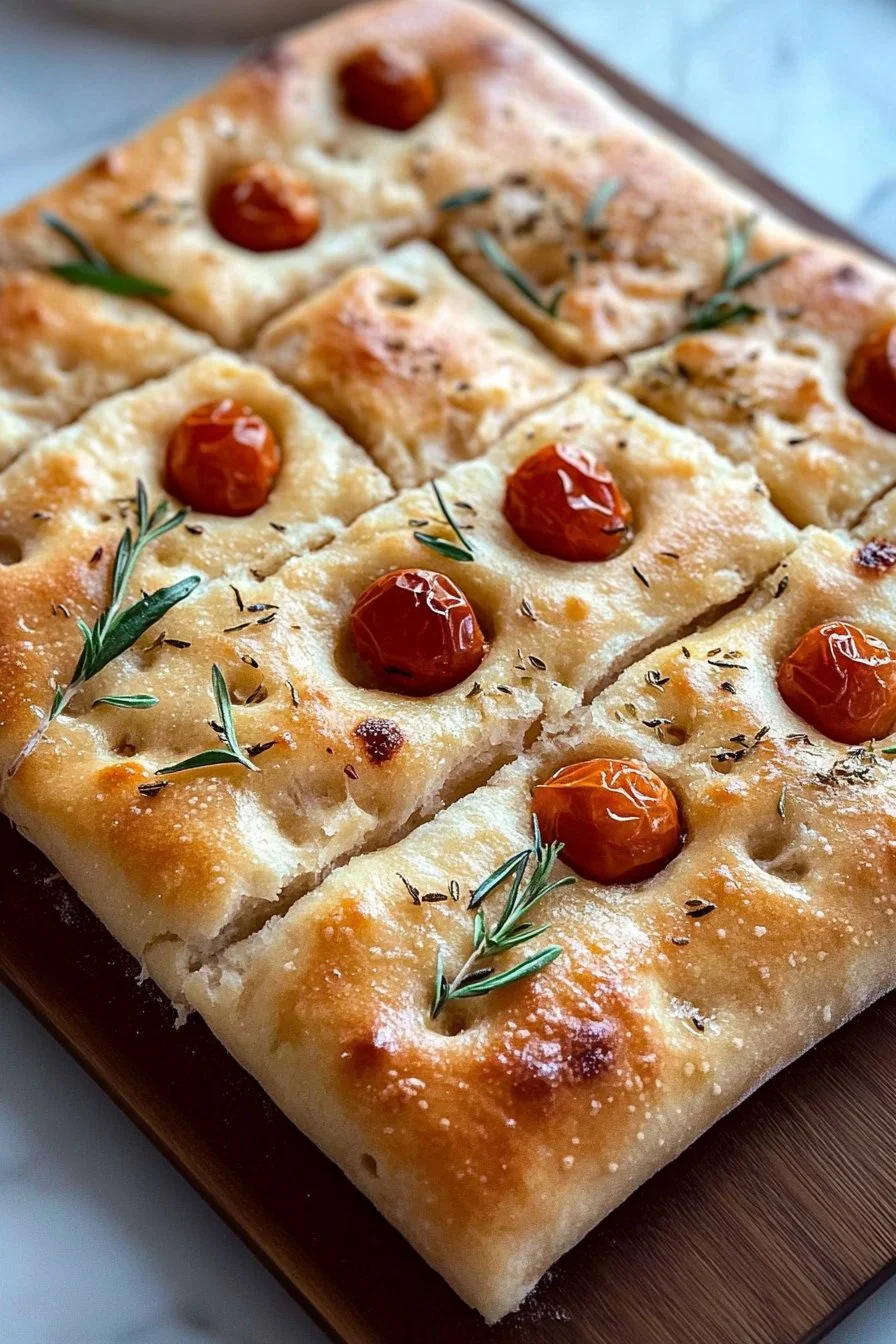
Focaccia Techniques
Technique
Mastering focaccia involves understanding the balance of ingredients and the baking process itself. After mixing the dough, ensuring adequate kneading becomes essential. This step develops gluten, contributing to the dough’s strength and elasticity. Knead until it’s smooth and firm, revealing a pleasing texture that holds shape without being too dense.
Dimpling the surface with your fingertips before baking creates those iconic pockets that capture flavors. It allows olive oil and herbs to settle into the dough, infusing their essence during baking. The resting period after dimpling further enhances the texture.
Tips and Tricks
For perfect focaccia, keep a few helpful tips in mind. Use fresh herbs whenever possible to greatly enhance flavor. Rosemary and thyme both work beautifully, but feel free to experiment with other varieties as the seasons change.
Temperature is key during the rising phase. A warm environment helps the dough rise effectively. If your kitchen is cooler, try placing the dough in the oven (turned off) with just the light on, creating a cozy spot for fermentation.
Don’t skimp on the olive oil when drizzling on top—this adds flavor and promotes a crisp crust. Additionally, let the focaccia cool slightly after baking to ensure slicing is clean and easy.
Perfecting Focaccia Results
Perfecting Results
Achieving that perfect focaccia takes practice and care. Observing how your dough behaves is key. If it doesn’t rise properly, ensure your yeast is fresh and your water is warm—not hot, which can kill the yeast. Pay attention to the consistency; it should feel soft yet hold its shape. Test the baked focaccia for doneness by tapping the bottom; it should sound hollow.
Experimenting with additional toppings, like olives or sun-dried tomatoes, can introduce exciting flavor profiles. Every batch invites creativity, making focaccia a delightful staple for any meal.
Troubleshooting Variations
Common issues can arise during the baking journey. If focaccia turns out too dense, double-check yeast freshness and mixing times. A too-dry dough can also lead to density—ensure the correct ratio of dry and wet ingredients.
Flavors might vary based on herbs and toppings used. In case less flavor develops than expected, try adding extra salt or herbs as toppings. Don’t hesitate to adjust as needed; focaccia invites customization, encouraging home bakers to make it their own.
Serving and Storing Focaccia
Serving Presentation
Presentation matters when serving focaccia. A sprinkle of coarse sea salt and a drizzle of olive oil can transform your bread into a visually appealing dish. Serve focaccia warm from the oven—a dish of fresh herbs on the side adds a lovely touch, inviting guests to customize their slices.
Consider slicing it into squares or strips for easy sharing. Pair it with a bowl of olive oil for dipping to enhance the gastronomic experience. Focaccia pairs wonderfully with salads or soups, making it an excellent choice for serving alongside main dishes.
Pairings and Storage
Focaccia stands beautifully on its own but can elevate various meals; try pairing it with pasta, stews, and roasted vegetables. The bread’s fluffy texture complements diverse cuisines seamlessly.
For storing, keep any leftovers wrapped in a clean kitchen towel or stored in an airtight container at room temperature. If you need to refrigerate, consider toasting slices before serving to revive their original warmth.
The flavor of focaccia improves over time, and it can also be frozen, though the best experience occurs when served fresh from the oven.
Focaccia bread reflects the love and joy of cooking while creating lasting memories. With each step, from kneading the dough to sharing it with loved ones, this simple recipe invites everyone to gather around the table.
Print
Focaccia Bread
- Prep Time: 15 minutes
- Cook Time: 25 minutes
- Total Time: 40 minutes
- Yield: 4 servings
- Category: Breads
- Method: Baking
- Cuisine: Italian
- Diet: Vegetarian
Description
A delicious, aromatic bread that serves as the perfect accompaniment to various dishes, embodying love and warmth in every bite.
Ingredients
- 2 cups all-purpose flour
- 1 cup warm water
- ½ teaspoon active dry yeast
- 1 teaspoon salt
- 2 tablespoons olive oil
- Fresh herbs (like rosemary or thyme)
- Coarse sea salt (for topping)
Instructions
- In a mixing bowl, combine warm water and yeast. Let it sit for about 5 minutes until frothy.
- Add flour, salt, and olive oil. Mix until a dough forms.
- Knead the dough for about 5-7 minutes until smooth.
- Place the dough in a greased bowl, cover it with a cloth, and let it rise for about 1-2 hours or until doubled in size.
- Preheat your oven to 425°F (220°C).
- Transfer the risen dough to a greased baking sheet and press it into a rectangle or circle.
- Dimple the surface of the dough with your fingertips, drizzle with olive oil, and sprinkle with herbs and sea salt.
- Let it rest for another 20 minutes.
- Bake for 20-25 minutes or until golden brown.
- Allow to cool slightly before slicing and serving.
Notes
Use fresh herbs for the best flavor and remember to let the focaccia cool slightly before slicing.