
📑 Table of Contents ▶
Sourdough Bread
The experience of baking sourdough bread can transport you back in time. I still remember the first time I tried to make a loaf. There was a mix of excitement and nervousness as I combined the flour and water. The way the ingredients transformed into a beautiful dough filled my heart with anticipation. Each stretch and fold felt like a little dance, connecting me to a long tradition of bakers devoted to this craft.
As the dough rose and bubbled, I could hardly wait to see the end result. The warm aroma wafting through the kitchen and the anticipation of slicing into a crispy crust was a moment I wanted to cherish. Baking sourdough not only nourishes the body but also rekindles memories of shared meals and laughter.
Making sourdough bread is about more than just ingredients; it’s about love, patience, and the joy of creating something from scratch. Each loaf tells a story, and every bite reminds us of the power of home-baked goodness.
Sourdough Bread Fundamentals
Understanding the fundamentals of sourdough bread is crucial to mastering the art of baking. Sourdough relies on natural fermentation, which contributes to its unique flavor and texture. The two primary components to consider in the baking process are your sourdough starter and the dough itself.
Preparation/Setup
Starting with a clean workspace is essential. Gather all necessary tools and ingredients before diving into the baking process. You’ll need a mixing bowl, measuring cups, a spatula, and a Dutch oven for baking. Each item should be ready to create a smooth workflow while you combine your ingredients.
Ingredients
For this sourdough bread, you will need the following ingredients:
- 4 cups (500g) of bread flour or all-purpose flour
- 1⅔ cups (375g) of warm water
- 1 cup (200g) of active sourdough starter
- 2 teaspoons (10g) of salt
With the ingredients ready, you can now proceed to mix and create your dough.
Directions
- In a large mixing bowl, combine 4 cups of flour and 1⅔ cups of warm water.
- Stir until a shaggy dough forms. Let it rest for 30 minutes.
- After the resting period, add 1 cup of active sourdough starter and 2 teaspoons of salt.
- Mix well until everything is fully combined.
- Cover the bowl with a clean towel or plastic wrap.
- Let the dough sit at room temperature.
- Every 30 minutes for 2 hours, perform a set of stretch and folds.
- To stretch and fold, pull one side of the dough upward and fold it over itself. Turn the bowl a quarter turn and repeat three more times.
- After the final fold, cover the bowl again and let the dough rise for 6 to 8 hours. It should double in size and appear bubbly and puffy.
- Gently transfer the dough to a lightly floured surface and shape it into a round or oval loaf by folding and tucking the edges underneath.
- Place the shaped dough seam-side up into a floured proofing basket or towel-lined bowl. Cover and refrigerate for 8 to 12 hours.
- The next day, place a Dutch oven into your oven and preheat to 450°F (232°C).
- Remove the dough from the fridge and turn it out onto parchment paper.
- Score the top of the dough with a sharp knife or razor blade.
- Carefully lower the dough into the hot Dutch oven using the parchment paper.
- Cover and bake for 20 minutes.
- Remove the lid and bake uncovered for another 25 minutes.
- Finally, take the bread out of the Dutch oven and let it cool completely on a wire rack before slicing.
Mastering Sourdough Techniques
Success in sourdough baking often relies on employing the right techniques. It’s essential to understand the role of each step in the baking process. Pay attention to the details, and soon you will bake loaves that boast delightful taste and texture.
Technique
Begin by focusing on your sourdough starter. An active starter will ensure your dough rises effectively. Regular feedings will keep it strong and lively. Use a kitchen scale for precise measurements.
When mixing your ingredients, work with care. Avoid over-kneading, as sourdough requires gentleness. Allowing the dough to rest during bulk fermentation enhances the development of gluten.
During the stretch and fold phase, ensure even distribution of air. This technique encourages a chewy crust and a light crumb.
Tips/Tricks
Here are a few tips to improve your sourdough bread-making skills:
- Keep the dough covered during the fermentation process to avoid drying out.
- Use a probe thermometer to check the internal temperature of the loaf; it should read around 200°F (93°C) when fully baked.
- Experiment with hydration levels. Higher hydration can yield open crumb structures, while lower hydration might create a thicker crust.
Practice is key in sourdough baking. Don’t hesitate to try different techniques to find what suits your style.
Perfecting the Results of Sourdough
Achieving the perfect sourdough loaf might take several attempts, but the journey is worth every step. Understanding how to troubleshoot common issues enhances your baking experience and ensures consistently delicious bread.
Troubleshooting/Variations
If the crust is overly dark, consider lowering the oven temperature slightly. Conversely, a pale crust can benefit from additional baking time.
For sourdough bread that lacks a pronounced sour flavor, you may need to check the activity level of your starter and increase the fermentation time. Use room temperature water to support better fermentation if necessary.
You can also adjust the flavor profile of your sourdough. Mixing in herbs, garlic, or seeds can add a special twist. Explore various toppings or flavorings that align with your preferences.
Serving and Storing Sourdough Bread
Serving your freshly baked sourdough bread is a delightful experience. Taking the time to present it beautifully enhances the enjoyment of each meal.
Serving/Presentation
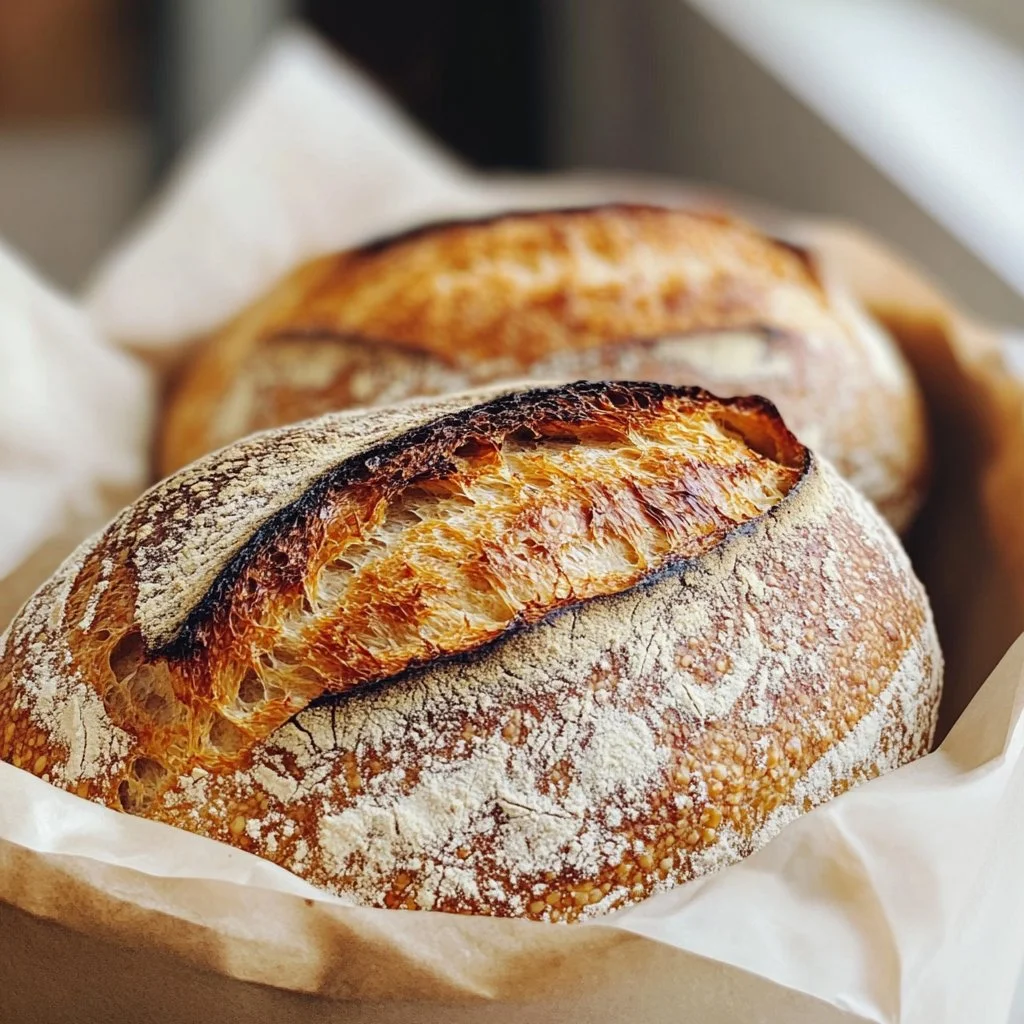
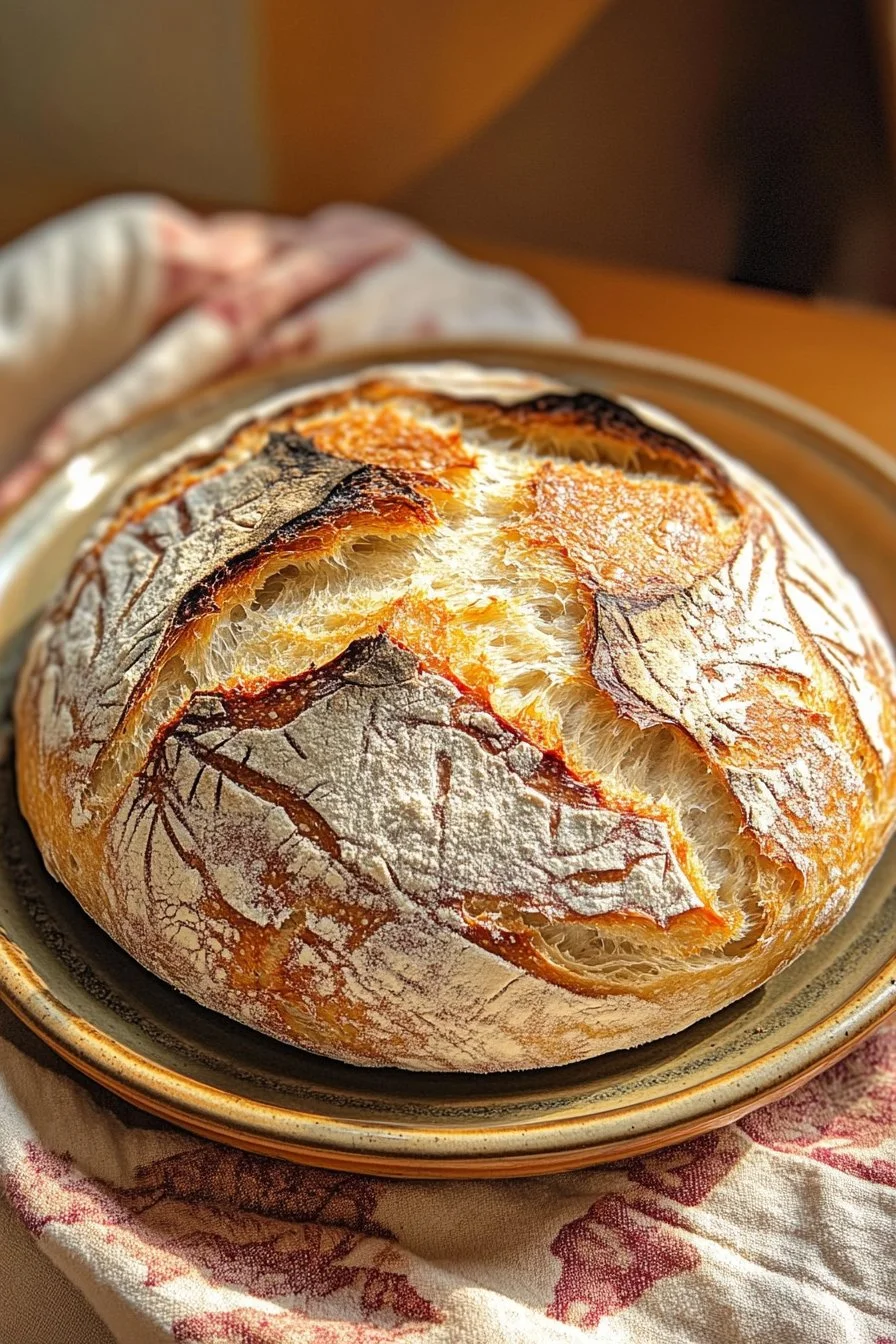
Serve slices of your sourdough alongside creamy butter, or stack them high for a stunning sandwich. Consider placing the loaf on a rustic wooden board for an enticing presentation. Highlight the beautiful crust and airy crumb that makes sourdough such a joy to eat.
Pairings/Storage
For the best storage, wrap your sourdough bread in a clean kitchen towel. Place it in a bread box or a paper bag to keep it fresh. Alternatively, if you plan to store for an extended period, consider slicing the loaf and freezing it. Thaw slices when needed for easy enjoyment.
Remember, bread is best enjoyed fresh, but you’ll find that homemade sourdough maintains flavor even longer than store-bought alternatives.
Sourdough baking is a fulfilling journey that intertwines patience and skill. Each loaf baked serves as a reminder of cherished moments and connections. The warmth and rustic charm of sourdough bread holds a special place in many kitchens. Embrace the process, experiment, and enjoy the delicious results of your labor.
Print
Sourdough Bread
- Prep Time: 15 minutes
- Cook Time: 45 minutes
- Total Time: 8 hours
- Yield: 1 loaf
- Category: Bread
- Method: Baking
- Cuisine: American
- Diet: Vegetarian
Description
A detailed guide on baking sourdough bread, focusing on technique and the joy of creating from scratch.
Ingredients
- 4 cups (500g) of bread flour or all-purpose flour
- 1⅔ cups (375g) of warm water
- 1 cup (200g) of active sourdough starter
- 2 teaspoons (10g) of salt
Instructions
- In a large mixing bowl, combine 4 cups of flour and 1⅔ cups of warm water.
- Stir until a shaggy dough forms. Let it rest for 30 minutes.
- Add 1 cup of active sourdough starter and 2 teaspoons of salt. Mix well until fully combined.
- Cover the bowl with a clean towel or plastic wrap and let the dough sit at room temperature.
- Every 30 minutes for 2 hours, perform a set of stretch and folds.
- After the final fold, cover the bowl and let the dough rise for 6 to 8 hours or until it doubles in size.
- Gently transfer the dough to a lightly floured surface and shape it into a round or oval loaf.
- Place the shaped dough seam-side up into a floured proofing basket or a towel-lined bowl. Cover and refrigerate for 8 to 12 hours.
- The next day, preheat the oven to 450°F (232°C) with a Dutch oven inside.
- Remove the dough from the fridge and turn it out onto parchment paper. Score the top of the dough.
- Carefully lower the dough into the hot Dutch oven using the parchment paper.
- Cover and bake for 20 minutes, then remove the lid and bake uncovered for another 25 minutes.
- Let it cool completely on a wire rack before slicing.
Notes
Make sure your sourdough starter is active for the best results. Experiment with different flavors by adding herbs or seeds.