
📑 Table of Contents ▶
- Miso Glazed Eggplant
- Miso Glazed Eggplant Fundamentals
- Fundamentals
- Preparation/setup
- Mastering the Miso Glazed Eggplant Technique
- Technique
- Tips/tricks
- Perfecting Your Miso Glazed Eggplant
- Perfecting results
- Troubleshooting/variations
- Serving and Storing Your Miso Glazed Eggplant
- Serving/presentation
- Pairings/storage
- Conclusion
- FAQs – Miso Glazed Eggplant
Growing up, the kitchen was more than just a place to prepare meals; it was a sanctuary where creativity flowed and bonds were forged. My grandmother’s dishes, rich with flavor and simplicity, inspired my culinary journey. Her ability to transform basic ingredients into extraordinary meals taught me that food is not just nourishment—it’s an expression of love. Among her many recipes, miso glazed eggplant holds a special place in my heart.
The beauty of miso glazed eggplant lies in its simplicity and depth of flavor. The savory miso, sweet mirin, and delicate eggplant create a harmonious blend that feels both comforting and exotic. This dish brings back memories of family gatherings, where laughter echoed through the kitchen and the aroma of cooking filled the air. It’s a recipe that captures the essence of my grandmother’s philosophy: simple ingredients, lovingly prepared.
On Yumoti, I strive to share recipes like miso glazed eggplant that make cooking accessible and enjoyable. Whether you’re a novice cook or a seasoned chef, this dish offers something special. It’s a reminder that even the most humble ingredients can create magic when infused with care and tradition. Join me as we explore the delightful world of miso glazed eggplant and discover the joy it brings to the table.

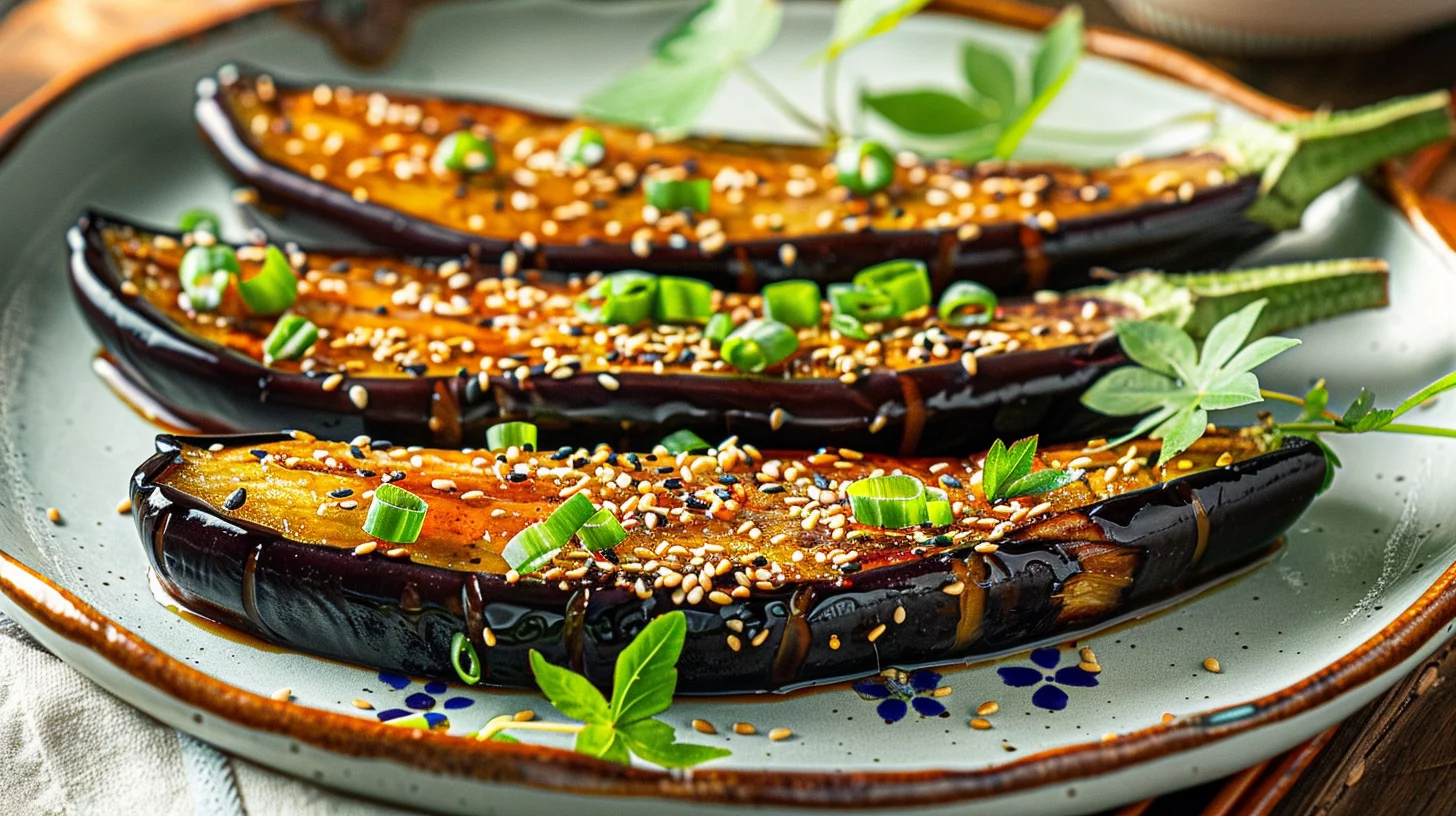
Miso Glazed Eggplant
- Prep Time: 20 minutes
- Cook Time: 20 minutes
- Total Time: 40 minutes
- Yield: 4 servings
- Category: Appetizer
- Method: Roasting
- Cuisine: Japanese
Description
Learn how to make delicious miso glazed eggplant with this easy recipe. Perfect for a flavorful and healthy vegetarian meal. Click here now!
Ingredients
- 3 tbsp miso (45 ml)
- 1 tbsp sugar (15 ml)
- 1 tbsp mirin (15 ml)
- 1/2 tbsp sake (or more, if your miso is chunky; you can use water) (7.5 ml)
- 3 Japanese eggplants (1.2 lb, 518 g)
- 1 tbsp toasted sesame oil (15 ml)
- 1 green onion/scallion (or 2 thin stalks)
- 5 shiso leaves (perilla/ooba) (find it at a Japanese market; no similar substitute)
- 2 tsp toasted white sesame seeds (10 ml)
Instructions
- Assemble all necessary ingredients. Position the oven rack in the middle, approximately 7 inches (18 cm) from the heat source. Heat the oven to 425°F (220°C). If using a convection oven, lower the heat by 25°F (15°C).
- In a small dish, blend the miso with sugar until the sugar is fully incorporated.
- Pour in the mirin and sake, stirring to combine. If the mixture is too thick due to chunky miso, add a little more sake to achieve desired smoothness. Mix thoroughly and put aside.
- Remove the stems and calyxes from the Japanese eggplants. Slice them lengthwise into two boat-shaped halves. If they are particularly long, cut them in half crosswise for shorter pieces.
- Make diagonal cuts on the flat side of the eggplants about ⅛ inch (3 mm) deep, forming a crisscross pattern. This technique enhances both appearance and flavor absorption while speeding up the cooking process.
- Soak the eggplant halves in water for 10 minutes to eliminate bitterness. Pat them dry using paper towels or a clean cloth, then arrange them on a parchment-lined baking sheet.
- Coat the cut surfaces with toasted sesame oil, then flip them so the cut sides face down on the sheet.
- Roast in the oven at 425°F (220°C) for a quarter of an hour.
- In the meantime, slice the green onion/scallion into thin rings. Roll the shiso leaves and slice them into thin strips.
- After 15 minutes, take the eggplants out of the oven. Preheat the broiler while maintaining the rack’s central position, about 7 inches (18 cm) from the heat.
- Carefully turn the eggplants so the cut side faces up, then spread a layer of the sweet miso mixture over the flesh. Use enough to cover the surface, but one batch suffices for several eggplants. Any leftover glaze can be frozen or used as a vegetable dip.
- Place the eggplants under the broiler until the glaze starts bubbling and caramelizing, which should take 3–5 minutes. Remove from the broiler once ready.
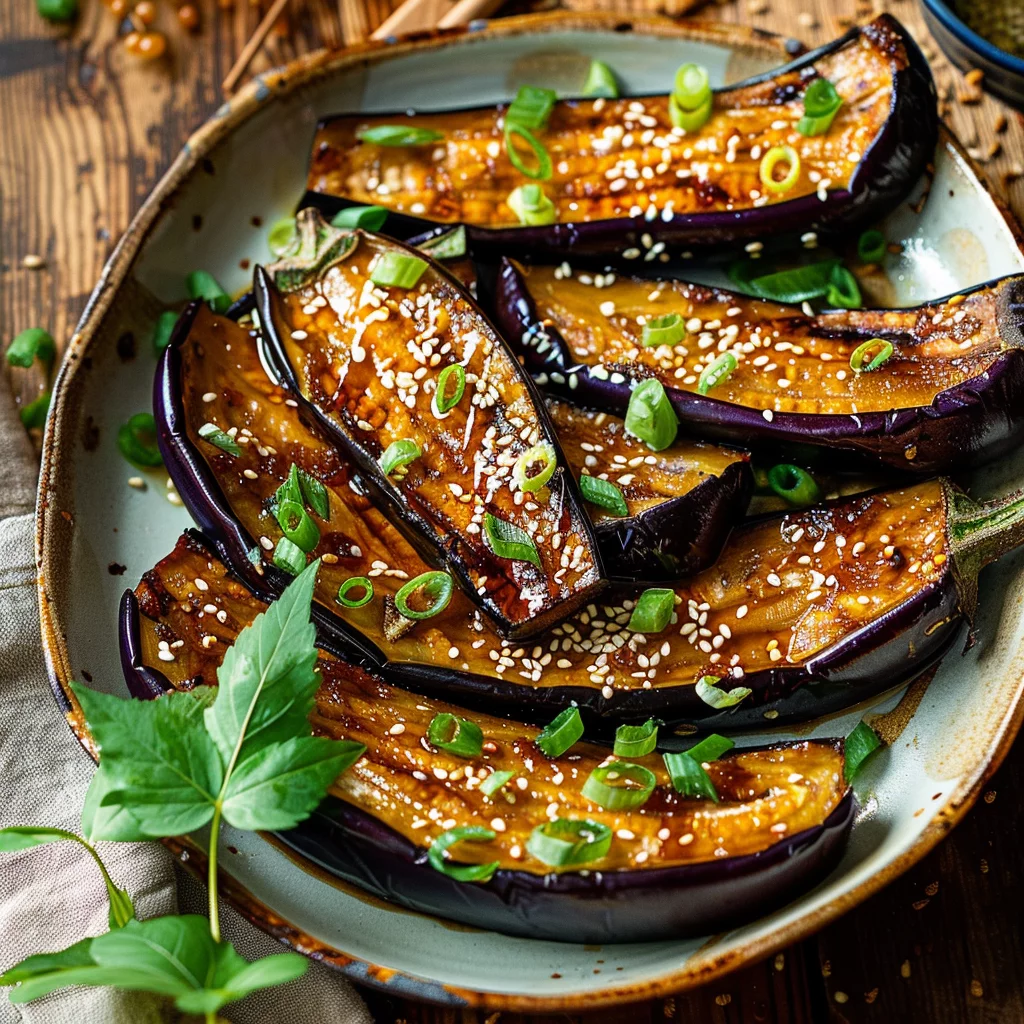
- Scatter toasted sesame seeds, sliced green onions, and julienned shiso leaves over the eggplants. Optionally, serve with a touch of yuzu kosho on a maple leaf for some heat. Enjoy immediately.
- Store leftover nasu dengaku in a sealed container in the fridge for up to 3 days. The miso glaze can be refrigerated for a week or frozen for a month.
Notes
- Soak the eggplant in water before roasting to remove bitterness and improve texture.
- Slice the eggplants in a crisscross pattern to enhance flavor absorption and cooking time.
- Generously coat the eggplant surface with the sweet miso mixture for a flavorful result; customize with yuzu kosho for extra heat.
Miso Glazed Eggplant Fundamentals
Fundamentals
Miso glazed eggplant is a classic Japanese dish known for its rich umami flavor and tender texture. The key ingredient is miso, a fermented soybean paste that adds depth and savoriness to the dish. When combined with mirin and sugar, it creates a sweet and savory glaze that perfectly complements the natural bitterness of eggplant. The use of Japanese eggplants, known for their thin skin and tender flesh, ensures that each bite is a delight.
To achieve the perfect miso glaze, balance is essential. The sweetness of the mirin and sugar should enhance the miso’s umami without overpowering it. This harmonious blend of flavors is what makes miso glazed eggplant a beloved dish in Japanese cuisine. It’s not just about the taste, but also the texture and appearance, which are enhanced by the glaze’s glossy finish.
Preparation/setup
Before you begin, gather all necessary ingredients: miso, sugar, mirin, sake, Japanese eggplants, toasted sesame oil, green onion, shiso leaves, and toasted sesame seeds. Position the oven rack in the middle, approximately 7 inches from the heat source, and preheat the oven to 425°F. If using a convection oven, lower the temperature by 25°F.
Start by preparing the miso glaze. In a small dish, blend miso with sugar until fully incorporated, then mix in the mirin and sake. Adjust the consistency by adding more sake if needed. The glaze should be smooth and spreadable. Set it aside as you prepare the eggplants by removing their stems and slicing them lengthwise into halves.
Mastering the Miso Glazed Eggplant Technique
Technique
To enhance the flavor absorption and speed up cooking, make diagonal cuts on the flat side of the eggplant halves, forming a crisscross pattern. Soak the eggplants in water for 10 minutes to remove any bitterness, then pat them dry. Arrange the eggplants on a parchment-lined baking sheet, cut side up, and coat them with toasted sesame oil before flipping them over.
Roast the eggplants in the oven for 15 minutes, allowing them to become tender and slightly browned. The roasting process softens the eggplant, making it receptive to the glaze. Once the eggplants are ready, preheat the broiler while keeping the oven rack in its central position. This step is crucial for achieving the caramelized finish that characterizes miso glazed eggplant.
Miso Glazed Eggplant
Tips/tricks
For an even glaze, use a pastry brush to spread the miso mixture over the eggplants. Ensure the glaze covers the entire surface to create a uniform caramelization. If you find your glaze too thick, thin it with a bit more sake or water. Remember, the goal is a smooth, even coat that bubbles and caramelizes under the broiler.
Don’t rush the broiling process. Keep a close eye on the eggplants as the glaze bubbles and caramelizes. This step takes about 3–5 minutes, but the exact time may vary depending on your broiler. The key is to remove the eggplants as soon as the glaze reaches a rich, golden-brown hue, avoiding any burnt spots.
Perfecting Your Miso Glazed Eggplant
Perfecting results
Achieving the perfect miso glazed eggplant requires attention to detail and a willingness to adjust as needed. The goal is a dish where the eggplant is tender, and the glaze is both sweet and savory, with a hint of smokiness from the broiling. It’s about balancing flavors and textures to create a delightful culinary experience.
Once broiled, remove the eggplants from the oven and let them cool slightly before serving. This allows the glaze to set and enhances the dish’s overall texture. The final product should be a beautiful combination of glossy glaze and tender eggplant, ready to impress any guest at your table.
Troubleshooting/variations
If your glaze isn’t caramelizing as expected, ensure your broiler is fully preheated and the eggplants are positioned close enough to the heat source. If the eggplants appear too dry, you may have overcooked them during the initial roasting phase. In this case, reduce the roasting time slightly in future attempts.
For a creative twist, consider incorporating different herbs or spices into the glaze. However, traditionalists may prefer to stick with the classic recipe to maintain its authentic Japanese flavor profile. For more eggplant inspiration, check out Baked Eggplant Parmesan with Panko Crust or explore variations like Spicy Baked Eggplant Parmesan.
Serving and Storing Your Miso Glazed Eggplant
Serving/presentation
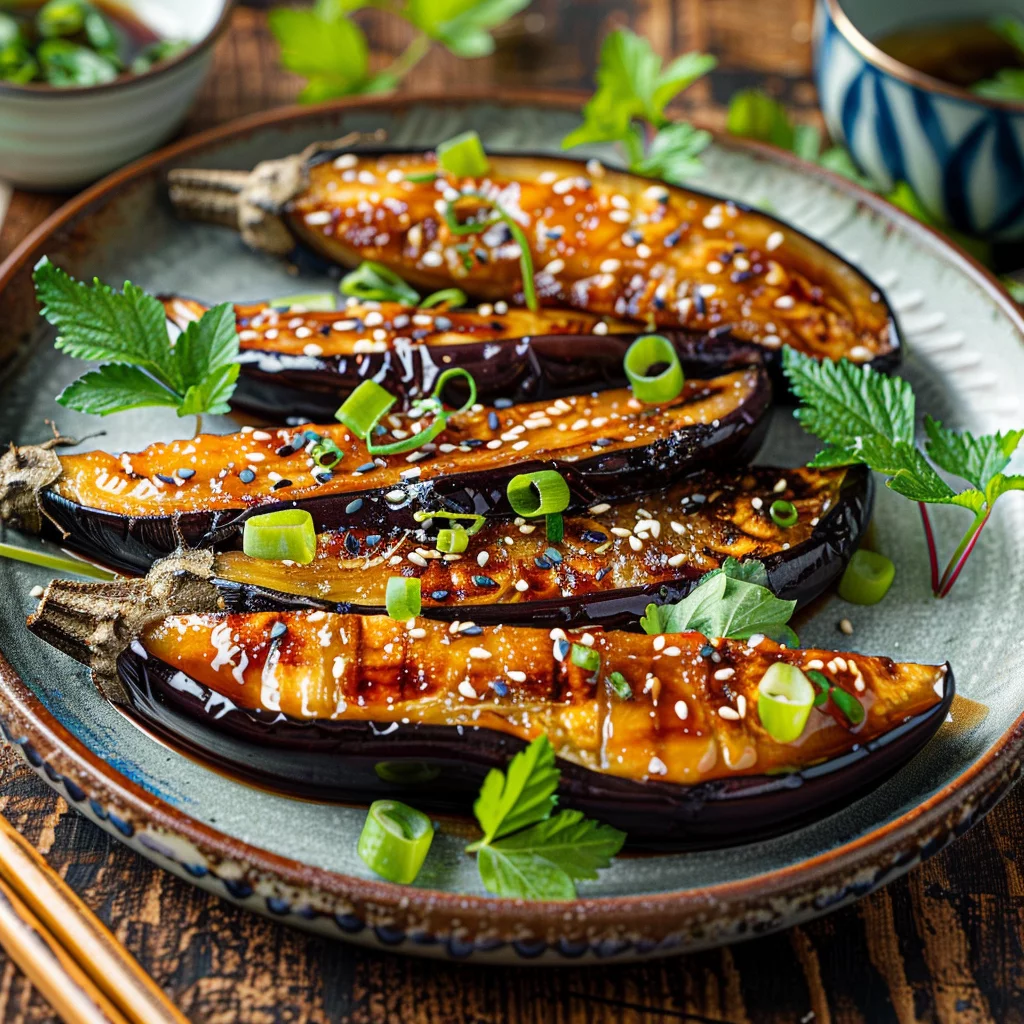
When it comes to serving miso glazed eggplant, presentation is key. Arrange the eggplants on a platter and sprinkle with toasted sesame seeds, sliced green onions, and julienned shiso leaves. These garnishes add a pop of color and fresh flavor, enhancing the dish’s visual appeal and taste.
For a touch of heat, serve with a small dab of yuzu kosho on a maple leaf. This adds a spicy, citrusy element that elevates the dish further. Pairing suggestions include a side of steamed rice or a simple cucumber salad, which complements the eggplant’s bold flavors. Explore more pairing ideas with Maple Glazed Sweet Potatoes with Pecans and Goat Cheese.
Miso Glazed Eggplant
Pairings/storage
Store any leftover miso glazed eggplant in a sealed container in the fridge for up to three days. The miso glaze itself can be refrigerated for a week or frozen for up to a month, making it a versatile ingredient for future dishes. For more storage tips and dishes, visit Easy Baked Eggplant Parmesan.
Remember, reheating should be gentle to preserve the texture and flavor of the eggplant. A quick broil or microwave can bring the dish back to its original glory. For additional storage ideas, check out Sous Vide Jamison Farm Lamb Shank for more inspiration.
Conclusion
Miso glazed eggplant embodies the perfect blend of simplicity and depth, offering a culinary experience that is both satisfying and memorable. This dish highlights the beauty of Japanese ingredients and techniques, creating a harmonious balance of flavors and textures. With a little practice and attention to detail, anyone can master this delightful recipe.
From its preparation to its presentation, miso glazed eggplant is a testament to the power of thoughtful cooking. It’s a dish that invites you to explore and enjoy the rich flavors of Japanese cuisine. Whether you’re revisiting fond memories or creating new ones, this recipe is sure to become a cherished part of your culinary repertoire.