
📑 Table of Contents ▶
Cheese Log
Creating a cheese log brings back fond memories of gatherings with friends and family. The way everyone eagerly gathered around the snack table, reaching for that delicious creation, always sparked joy. The combination of flavors in the cheese log works wonders, making it a go-to dish for celebrations and casual get-togethers alike.
The beauty of a cheese log lies in its simplicity, yet it offers a depth of flavor that impresses even the most discerning palates. With ingredients that meld together effortlessly, this dish transforms ordinary cheese into something truly special. Whether it’s a bustling holiday party or a cozy night in, this cheese log becomes the star of the show.
When preparing this delectable treat, the blend of creamy cheeses, herbs, and savory additions creates harmony. The cheese log is not only tasty but also visually appealing, capturing the essence of a beautiful spread. It’s not just a dish, but a conversation starter, encouraging connections and laughter over shared bites.
Cheese Log Fundamentals
A cheese log relies on a few essential fundamentals to ensure a successful dish. The main elements include cream cheese, cheddar cheese, and a variety of additional ingredients that add texture and taste. Understanding these basics helps in crafting the best cheese log.
The backbone of this recipe consists of 16 ounces of softened cream cheese combined with 2 cups of freshly grated cheddar cheese. These form the creamy base that binds all flavors together. Spice things up with delicious herbs like thyme, oregano, basil, and rosemary to elevate the dish.
Think about how variations in seasoning can change the overall taste. The key herbs bring a full-bodied flavor profile, while garlic powder and red pepper flakes add a delightful kick. Don’t forget the black pepper and kosher salt, which enhance the dish’s taste. Each of these ingredients plays a vital role in creating a flavorful cheese log.
Preparation/Setup
Setting up for the cheese log involves a few straightforward steps. Start by ensuring all ingredients are ready to go. This includes having the cream cheese softened and the cheeses freshly grated for optimal texture.
Prepare your workspace by gathering a 9×5 loaf pan and spraying it lightly with oil. Line the pan with plastic wrap, allowing some overhang for easy removal later. This preparation simplifies the final steps and ensures a neat presentation.
Combine all the cheese log ingredients in a mixing bowl. This includes softened cream cheese, sour cream, herbs, spices, and all other additions mentioned in the ingredients list. Thoroughly mix until the consistency is smooth and all flavors are integrated. Be prepared to adjust seasoning to suit your taste, ensuring a personalized touch.
Once mixed, press the cheese mixture into the prepared pan firmly. Remove any air pockets while filling the loaf pan, ensuring a compact structure. Cover with plastic wrap and chill in the refrigerator for at least four hours. This step allows flavors to meld and solidify.
Ingredients
The ingredients for a classic cheese log are not only diverse but also versatile, allowing each cook to make the recipe uniquely theirs. Here’s a closer look at what you’ll use:
- 16 ounces cream cheese, softened
- ⅓ cup sour cream
- ½ teaspoon each thyme, oregano, basil, rosemary
- ½ teaspoon black pepper
- 1 teaspoon garlic powder
- 1 teaspoon kosher salt
- 1 teaspoon red pepper flakes
- 2 cups cheddar cheese, freshly grated
- 9 ounces roasted peppers, drained and chopped
- 6 ounces salami, finely chopped
- ¾ cup green olives, chopped
- ⅓ cup green onion, minced
- 7 ounces sun-dried tomatoes in oil, chopped
- ¼ cup parsley, chopped
- Rosemary sprigs for garnish
These ingredients combine into a stunning cheese log. The various flavors add depth, ensuring each bite remains exciting. The selection includes rich cheeses, vibrant herbs, and robust seasonings that resonate well together.
Directions
Now, let’s walk through the steps to bring your cheese log to life. Begin by preparing your loaf pan, ensuring it is ready for the cheese mixture.
-
Spray your 9×5 loaf pan with oil and line the inside with plastic wrap for easy removal.
-
In a mixing bowl, combine all the ingredients: softened cream cheese, sour cream, herbs, spices, grated cheddar cheese, chopped roasted peppers, salami, green olives, minced green onions, and chopped parsley.
-
Stir the mixture until everything blends well. Taste the mixture and adjust the seasoning if needed.
-
Press the cheese mixture into the prepared loaf pan, getting rid of any air pockets for a smooth finish.
-
Cover the top with the overhanging plastic wrap and refrigerate for at least 4 hours. This allows the cheese log to set.
-
Once firm, turn the cheese log onto a serving platter and remove the plastic wrap.
-
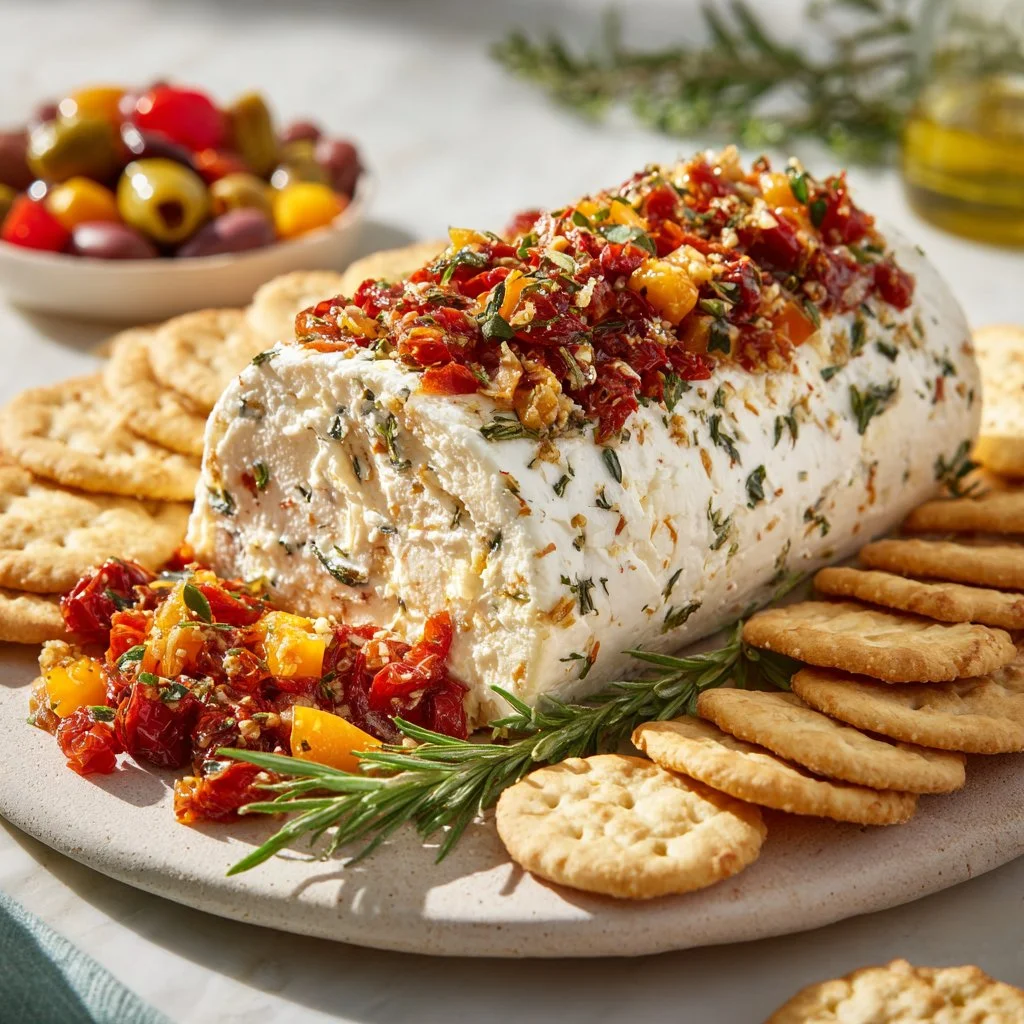
Top the log with sun-dried tomatoes and a drizzle of oil for added flavor and moisture.
-
Garnish with parsley and rosemary sprigs for a touch of elegance. Let the cheese log warm slightly before serving.
Technique for Cheese Log Mastery
Mastering the technique of creating a cheese log involves paying attention to the mixing process and presentation. The key is to ensure creamy consistency while maintaining balance in flavors.
Start mixing by blending the softer ingredients first—cream cheese and sour cream—before adding the shredded cheddar cheese. This technique creates a smoother texture. A hand mixer or spatula can help achieve an even consistency.
Once the mixture is combined, taste and adjust as desired. Experimenting with flavors is part of the fun, and you can alter herbs or add additional ingredients, such as nuts or spices, based on your preference.
Tips and Tricks
Having a few handy tips can make a significant difference in the final outcome of your cheese log.
Incorporate room-temperature ingredients—softened cream cheese and sour cream blend better compared to cold ones. Ensure your cheese is freshly grated, as pre-shredded cheese contains anti-caking agents that may affect the dish’s texture.
For added flair, you can roll the finished cheese log in chopped nuts or herbs before serving. This creates an eye-catching exterior and adds a delightful crunch. Not only does this enhance flavor, but it also adds visual appeal to your cheese log.
Always serve the cheese log with an assortment of crackers or sliced bread. The contrast of textures adds to the experience, making for a beautifully balanced appetizer.
Perfecting Your Cheese Log Results
Perfecting your cheese log requires patience and a few careful considerations. After crafting your log, the chilling step becomes crucial. Refrigeration allows the flavors to occupy their place within the mixture, enhancing the overall taste.
If the cheese log is too soft upon serving, it may not have chilled long enough. Ensure your cheese log rests at least four hours in the fridge or overnight for optimum results.
Troubleshooting and Variations
If your cheese log seems overly salty or bland, adjust accordingly. Adding more herbs or even a touch of lemon juice can brighten the flavors, counteracting any overwhelming saltiness.
Feel free to get creative with variations; substitute ingredients based on preference. Experiment with different types of cheeses, such as goat cheese or creamier options, depending on your flavor profile.
Incorporating seasonal ingredients, such as different herbs or spices, allows for playful creativity while keeping the dish fresh. Seasonal variations keep the cheese log exciting and inviting for any gathering.
Serving and Presentation Ideas
Presenting your cheese log beautifully adds to its allure. After removing it from the pan, carefully remove the plastic wrap, letting the cheese log shine in all its glory.
Top the cheese log with a vibrant mix of sun-dried tomatoes and olive oil. Arrange some fresh herbs around the plate for an elegant touch. Visually appealing garnishes invite guests to enjoy the dish even more.
Pairings and Storage Tips
Serve your cheese log with an assortment of crackers or fresh vegetables, providing a beautiful balance between flavors and textures.
When it comes to storage, keep any leftovers wrapped in plastic wrap and refrigerated. The flavors continue to meld over time, making the cheese log an even more delightful snack the next day. It can last approximately 3-4 days, ensuring enjoyment long after the initial gathering.
Crafting a cheese log turns out to be more than a simple recipe. It enriches your gatherings, bringing people together in a savory celebration of flavor. Enjoy the process, the flavors, and the connections created through this delicious treat.
Print
Cheese Log
- Prep Time: 15 minutes
- Cook Time: 0 minutes
- Total Time: 240 minutes
- Yield: 12 servings
- Category: Appetizer
- Method: Chilling
- Cuisine: American
- Diet: Gluten-Free
Description
A delightful blend of creamy cheeses and herbs, perfect for gatherings and celebrations.
Ingredients
- 16 ounces cream cheese, softened
- ⅓ cup sour cream
- ½ teaspoon each thyme, oregano, basil, rosemary
- ½ teaspoon black pepper
- 1 teaspoon garlic powder
- 1 teaspoon kosher salt
- 1 teaspoon red pepper flakes
- 2 cups cheddar cheese, freshly grated
- 9 ounces roasted peppers, drained and chopped
- 6 ounces salami, finely chopped
- ¾ cup green olives, chopped
- ⅓ cup green onion, minced
- 7 ounces sun-dried tomatoes in oil, chopped
- ¼ cup parsley, chopped
- Rosemary sprigs for garnish
Instructions
- Prepare the loaf pan by spraying it with oil and lining it with plastic wrap.
- In a mixing bowl, combine all ingredients: cream cheese, sour cream, herbs, spices, cheddar, roasted peppers, salami, green olives, green onions, and parsley.
- Stir until well blended and adjust seasoning to taste.
- Press the mixture into the prepared loaf pan, eliminating air pockets.
- Cover with plastic wrap and refrigerate for at least 4 hours.
- Once firm, turn the cheese log onto a serving platter and remove the plastic wrap.
- Top with sun-dried tomatoes and a drizzle of oil; garnish with parsley and rosemary.
- Let warm slightly before serving.
Notes
Adjust herbs and spices based on personal preference. Serve with assorted crackers or fresh veggies.