
📑 Table of Contents ▶
- PART 1 — Making Sourdough Focaccia from Scratch
- Fundamentals
- Preparation/Setup
- Directions
- PART 2 — Enhancing Your Sourdough Focaccia Experience
- Technique
- Tips and Tricks
- PART 3 — Perfecting Your Sourdough Focaccia
- Perfecting Results
- Troubleshooting and Variations
- PART 4 — Serving and Enjoying Sourdough Focaccia
- Serving and Presentation
- Pairings and Storage
- A Simple Sourdough Focaccia
A Simple Sourdough Focaccia
Crafting a simple sourdough focaccia often evokes a sense of warmth and comfort. Memories of jovial gatherings filled with friends and family come to mind, where the freshly baked scent of bread mingles with laughter and conversation. Making focaccia isn’t just about baking; it’s about creating an experience.
The journey begins with a handful of staple ingredients. Each ingredient plays its role in this delightful creation, coming together to form a fluffy, golden delight. The process may seem involved, but the satisfaction of pulling a warm focaccia from the oven is truly unmatched.
With each step in the recipe, the anticipation builds. The rise of the dough, the aroma wafting through the kitchen, and finally, the enjoyment of slicing into the tender, olive oil-rich bread. A simple sourdough focaccia can elevate any meal, whether it stands alone or accompanies a delicious dip.
The focus here lies on creating that perfect loaf with ease and joy, inviting everyone to join in the process of making, baking, and savoring.
PART 1 — Making Sourdough Focaccia from Scratch
Fundamentals
Understanding the basics is critical for success when making sourdough focaccia. This simple, yet beautiful bread relies on the strength of flour, the tender touch of olive oil, and the fermentation magic of a ripe sourdough starter. Together, they contribute to the crusty exterior and soft, airy interior that make focaccia so irresistible.
The key components include all-purpose flour and high-protein bread flour. The combination of these flours provides the necessary balance of texture and structure. The water hydrates the flours, allowing gluten to develop, while the salt enhances flavor and strengthens the dough.
A sourdough starter introduces natural yeast and beneficial bacteria into the mix. These microorganisms not only help the dough rise but also impart a lovely tang that elevates the focaccia beyond ordinary bread. Leveraging these fundamentals ensures that every batch you make delights the senses.
Preparation/Setup
Preparation is key when making a simple sourdough focaccia from scratch. Begin by gathering the necessary tools and ingredients: a stand mixer or mixing bowl, measuring cups, and a sturdy spatula. Measure 423g of all-purpose flour, 181g of high-protein bread flour, 459g of water, 11g of salt, 115g of ripe sourdough starter, and 12g of extra virgin olive oil.
Ensure your sourdough starter is ripe, which means it has been fed and is bubbly and active. If you’re using a stand mixer, fit it with the dough hook. If mixing by hand, a large mixing bowl will suffice. Whichever method you choose, the joyous experience of kneading and mixing begins.
Ingredients
- 423g all-purpose flour
- 181g high-protein bread flour
- 459g water
- 11g salt
- 115g ripe sourdough starter
- 12g extra virgin olive oil
These simple yet essential ingredients contribute to the unique flavor and texture of your focaccia. Using high-protein flour provides a delightful chew, while all-purpose flour balances the overall structure. Fresh, quality olive oil sets the stage for flavor and moisture.
Directions
-
Mix (9:00 a.m.): In a mixing bowl or stand mixer fitted with the dough hook, combine both flours, water, salt, and the ripe sourdough starter. Hold back the olive oil for later. Mix on speed 1 for 1 to 2 minutes until fully incorporated. Then, increase to speed 2 for 5 minutes. The dough should come together and clump around the dough hook. Allow the dough to rest in the mixing bowl for 10 minutes.
-
Add Olive Oil: After resting, turn the mixer on to speed 1. Gradually drizzle the olive oil into the bowl while mixing. Once fully incorporated, turn to speed 2 for 1 to 2 minutes until the dough returns to a cohesive texture. Transfer the dough to a bulk fermentation container and cover it.
-
Bulk Fermentation (9:15 a.m. to 11:15 a.m.): Allow the dough to ferment for 2 hours. During this time, perform 4 sets of stretch and folds every 30 minutes, starting 30 minutes after mixing.
-
Proof (11:15 a.m. to 3:15 p.m.): Prepare a 9×13” rectangular pan or two 10” circular baking pans by liberal oiling. Gently transfer the dough into the pans. The dough will proof for 4 hours. Every 30 minutes during the first hour, gently stretch the dough with wet fingers to encourage it to fill the pan. After that hour, cover the dough and let it proof.
-
Top & Bake (3:15 p.m.): Preheat your oven to 450°F (230°C) with an empty rack in the bottom third. Dimple the dough with wet fingers and drizzle liberally with olive oil. Optional: Spread chopped herbs and coarse sea salt over the top. Bake until golden on top and bottom, approximately 30 minutes. Allow cooling in the pan before transferring to a cooling rack.

PART 2 — Enhancing Your Sourdough Focaccia Experience
Technique
Perfecting the technique of making focaccia involves understanding the importance of hydration and resting time. The hydration provided by the water is crucial for developing gluten, which gives the bread its characteristic structure. Adjusting water content slightly can yield different textures.
When stretching the dough, ensure your hands are wet. Moisture prevents sticking and creates a smoother surface on your focaccia. Implementing stretch and folds encourages strength without kneading.
Allowing proper resting times between mixing and shaping enhances flavor. The longer the dough ferments, the better the depth of flavor. Each fold imparts strength and elasticity, setting the stage for a light and airy structure.
Tips and Tricks
- Ripe Starter: Always use a bubbly, ripe sourdough starter for the best results. If it’s sluggish, feed it a day before you plan to bake.
- Temperature Matters: The warmth of your kitchen can affect fermentation. Warmer areas speed up the process, while cooler spaces slow it down.
- Experiment with Flavors: Don’t hesitate to add toppings like olives, sun-dried tomatoes, or garlic to customize your focaccia.
- Timing: Pay attention to the timing of each rise and fold. Patience leads to superior flavor.
PART 3 — Perfecting Your Sourdough Focaccia
Perfecting Results
Achieving the perfect focaccia involves attention to texture, aroma, and flavor. After baking, a golden-brown top indicates readiness. Cool your focaccia in the pan for necessary steam activity. This extra time enhances texture by creating a crusty exterior and a soft interior.
Keep your dough in a warm environment during bulk fermentation. Ideal temperatures promote yeast activity, yielding superior results. Use a thermometer in your kitchen to gauge the appropriate ambient temperature.
Troubleshooting and Variations
If your dough feels too dry, consider adding a bit more water. Wet hands while handling the dough can also help. Should the dough not rise properly, check your starter’s strength. An active starter fosters a better rise.
Variations are endless when it comes to focaccia. Experiment with different flours, such as whole wheat or spelt, for unique textures. Adding herbs into the dough creates a fragrant flavor profile, while chunky toppings enhance visual appeal.
PART 4 — Serving and Enjoying Sourdough Focaccia
Serving and Presentation
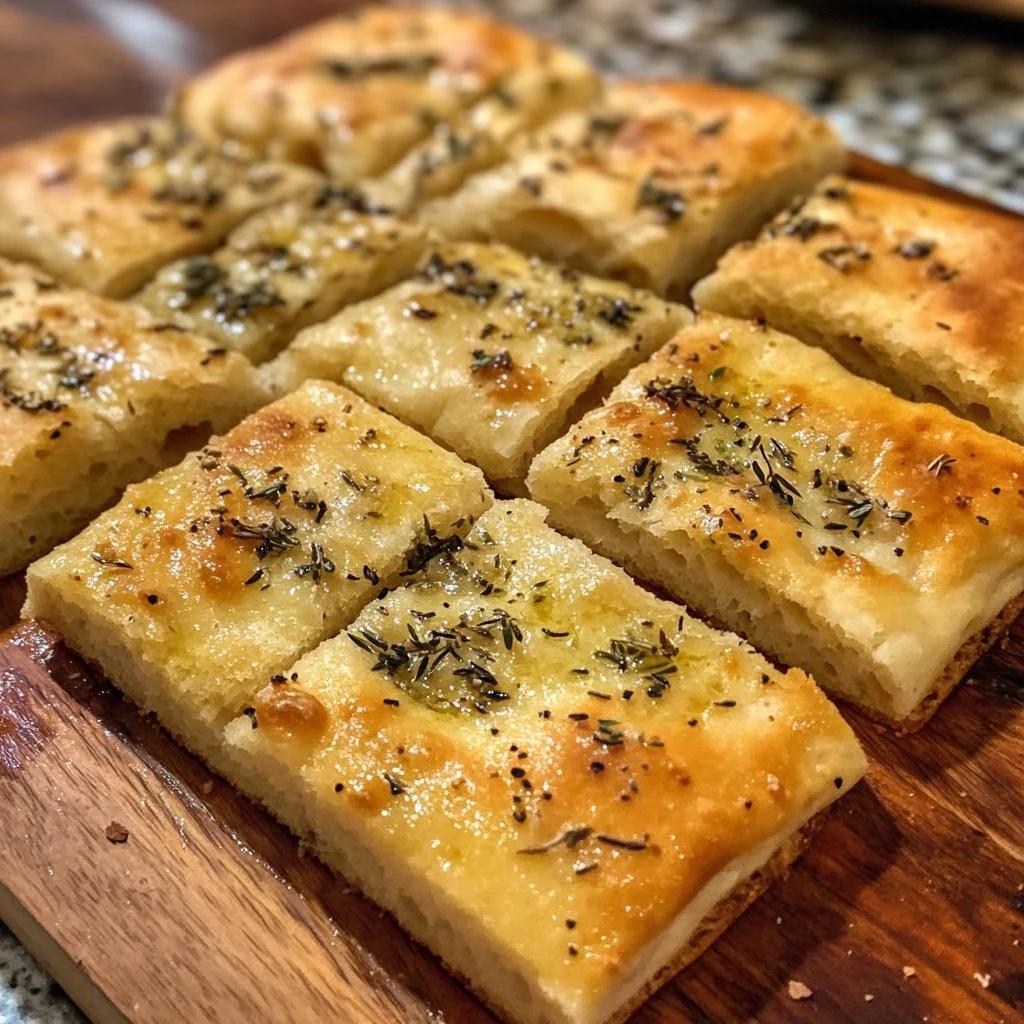
Presentation elevates the appeal of your focaccia. Once cooled, cut into squares or wedges for serving. Drizzle with more olive oil or sprinkle with fresh herbs for a lovely finish. Include a dipping oil made from olive oil, garlic, and herbs beside the focaccia for added flavor.
Pair your focaccia with fresh salads, soups, or simply enjoy as a snack. Its versatility makes it ideal for any occasion—even just for a quiet evening at home.
Pairings and Storage
This focaccia pairs beautifully with a variety of dishes. Enjoy it with hearty soups, vibrant salads, or even on its own, served with olive oil and balsamic vinegar for dipping.
To store, keep any leftovers in an airtight container at room temperature for up to two days. For longer storage, slice and freeze pieces. Reheat in the oven or toaster for a quick treat that brings a taste of freshness back.
A simple sourdough focaccia not only satisfies cravings but also creates lasting memories. The joy of baking this rustic bread unites families and friends around the table, making every bite a cherished moment.
The journey through flour, water, and patience yields a delightful reward, ready to be shared and savored by all.
Print
A Simple Sourdough Focaccia
- Prep Time: 15 minutes
- Cook Time: 30 minutes
- Total Time: 45 minutes
- Yield: 8 servings
- Category: Bread
- Method: Baking
- Cuisine: Italian
- Diet: Vegetarian
Description
Craft a delightful sourdough focaccia that is fluffy, golden, and perfect for any occasion.
Ingredients
- 423g all-purpose flour
- 181g high-protein bread flour
- 459g water
- 11g salt
- 115g ripe sourdough starter
- 12g extra virgin olive oil
Instructions
- In a mixing bowl or stand mixer fitted with the dough hook, combine both flours, water, salt, and ripe sourdough starter. Mix on speed 1 for 1 to 2 minutes until fully incorporated, then increase to speed 2 for 5 minutes until the dough clumps around the dough hook. Allow the dough to rest for 10 minutes.
- Turn the mixer on to speed 1 and gradually drizzle in the olive oil. Mix until fully incorporated, then increase to speed 2 for 1 to 2 minutes until cohesive. Transfer the dough to a container and cover.
- Allow the dough to ferment for 2 hours, performing 4 sets of stretch and folds every 30 minutes, starting 30 minutes after mixing.
- Prepare a 9×13” or two 10” circular pans by oiling. Gently transfer the dough, allowing it to proof for 4 hours. Stretch the dough every 30 minutes during the first hour.
- Preheat the oven to 450°F (230°C). Dimple the dough with wet fingers, drizzle with olive oil, and optionally top with herbs and coarse salt. Bake for approximately 30 minutes until golden.
Notes
Use a bubbly, ripe sourdough starter for the best results. Adjust water content for texture and ensure proper resting times for flavor enhancement.