
📑 Table of Contents ▶
- Miso Glazed Eggplants
- Miso Glazed Eggplants: Fundamentals and Preparation
- Fundamentals
- Preparation/setup
- Mastering Miso Glazed Eggplants: Technique and Tips
- Technique
- Tips/tricks
- Perfecting and Troubleshooting Miso Glazed Eggplants
- Perfecting results
- Troubleshooting/variations
- Serving and Storing Miso Glazed Eggplants
- Serving/presentation
- Pairings/storage
- Conclusion
- FAQs – Miso Glazed Eggplants
I believe that a good recipe has the power to bring people together, spark joy, and turn ordinary moments into cherished memories. My culinary journey started long before I ever picked up a cookbook. Growing up, the kitchen was the heart of our home, filled with the clatter of pots and the aroma of herbs simmering away. These early memories have greatly influenced my cooking style, particularly when it comes to crafting flavorful dishes like Miso Glazed Eggplants.
My grandmother, a true inspiration, showed me that magic in the kitchen doesn’t require fancy ingredients or complicated techniques. Her meals were a reflection of care, patience, and creativity. Watching her work instilled in me the belief that food is more than just sustenance—it’s a language of love. This philosophy is at the core of Yumoti, where I share recipes that are simple, soulful, and always full of flavor.
I created Yumoti to make cooking less intimidating and more joyful. Whether you’re a beginner learning your way around the stove or an experienced home chef seeking fresh inspiration, Yumoti is for you. Today, I’m excited to guide you through making Miso Glazed Eggplants, a dish that combines simplicity with bold flavors, perfect for any occasion.
Miso Glazed Eggplants
- Prep Time: 20 minutes
- Cook Time: 20 minutes
- Total Time: 40 minutes
- Yield: 2-4 servings
- Category: Main Course
- Method: Baking
- Cuisine: Japanese
Description
Learn how to make delicious miso glazed eggplants with this easy recipe. Perfect for a flavorful and satisfying vegetarian meal. Click to cook now!
Ingredients
- 3 tbsp miso (45 ml)
- 1 tbsp (15 ml) sugar
- 1 tbsp (15 ml) mirin
- 1/2 tbsp (8 ml) sake (or more, if your miso is chunky; you can use water)
- 3 Japanese eggplants (1.2 lb, 518 g)
- 1 tbsp (15 ml) toasted sesame oil
- 1 green onion/scallion (or 2 thin stalks)
- 5 shiso leaves (perilla/ooba) (find it at a Japanese market; no similar substitute)
- 2 tsp (10 ml) toasted white sesame seeds
Instructions
- Collect all necessary components. Position the oven rack in the middle, approximately 7 inches (18 cm) from the heat source. Heat the oven to 425°F (220°C), reducing by 25°F (15°C) if using a fan-assisted oven.
- In a small bowl, blend together miso and sugar, ensuring the sugar is fully dissolved.
- Incorporate mirin and sake, stirring thoroughly. Adjust with more sake if needed to achieve your desired consistency, as miso texture varies. Set this mixture aside.
- Remove the stems and calyxes from the eggplants. Slice them lengthwise from top to bottom, creating long halves. If they’re particularly long, you may also cut them crosswise to shorten them.
- Make diagonal shallow cuts on the flat side of the eggplants, about ⅛ inch (3 mm) deep, forming a crisscross pattern. This not only improves appearance but also speeds up cooking and enhances flavor absorption.
- Immerse them in water for 10 minutes to reduce bitterness, then dry with paper towels or a clean cloth. Arrange them on a parchment-covered baking tray.
- Apply sesame oil to the cut surfaces. Place them face down on the tray.
- Cook the eggplants in the oven at 425°F (220°C) for 15 minutes.
- While waiting, slice the green onion into thin circles and roll shiso leaves into a cylinder, cutting them into thin strips.
- After 15 minutes, ensure the eggplant flesh is tender and the skin is slightly wrinkled. Take the tray out of the oven and set the broiler to preheat. Keep the rack in the central position, about 7 inches (18 cm) from the heat.
- Gently flip the eggplants so the cut sides face up and cover the surface with a coat of the sweet miso mixture. Make sure the surface is completely covered. You might not need all of the glaze; leftovers can be frozen for future use or enjoyed as a vegetable dip.
- Place the eggplants under the broiler until the glaze bubbles and starts to caramelize, for about 3–5 minutes. Remove them once done.
- Finish by sprinkling the eggplants with sesame seeds, sliced green onions, and shiso strips. Optionally, serve with a touch of yuzu kosho for a spicy kick. Enjoy immediately.
- Leftovers can be stored in an airtight container in the fridge for up to three days. The remaining glaze can be refrigerated for seven days or frozen for a month.
Notes
- Soak eggplants in water before cooking to reduce bitterness and enhance flavor.
- Check eggplant tenderness before removing from oven for perfectly cooked results.
- Adjust sake in miso mixture based on miso texture for desired consistency; freeze leftover glaze for future use.
Miso Glazed Eggplants: Fundamentals and Preparation
Fundamentals
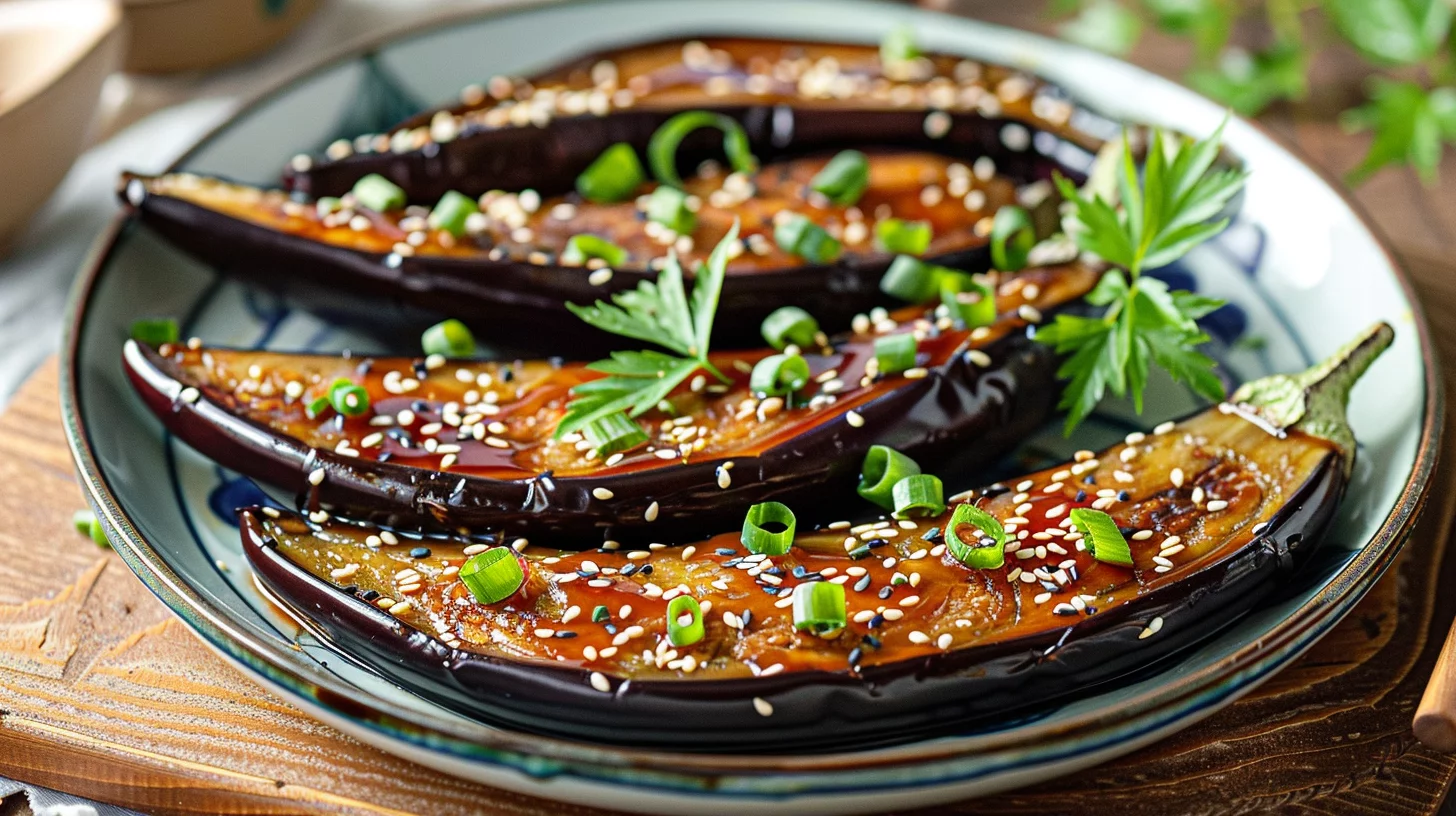
Miso Glazed Eggplants bring together the umami-rich taste of miso with the tender texture of roasted eggplants. This dish is not only flavorful but also incredibly easy to prepare. The key to its success lies in the quality of the ingredients and the balance of the glaze. Miso, a fermented soybean paste, acts as the star ingredient, providing depth and savory notes that complement the natural sweetness of the eggplants.
To make this dish, you’ll need Japanese eggplants, known for their delicate skin and soft flesh, perfect for absorbing the miso glaze. Other essential ingredients include mirin, a sweet rice wine, sake for a touch of acidity, and toasted sesame oil to enhance the overall flavor profile. Finally, fresh shiso leaves and toasted sesame seeds provide a refreshing contrast and a hint of nuttiness.
Preparation/setup
Begin by gathering all necessary components. Position the oven rack in the middle, about 7 inches from the heat source, and preheat the oven to 425°F. In a small bowl, blend miso and sugar, ensuring the sugar dissolves completely. Stir in mirin and sake, adjusting the consistency with more sake if needed. Set the mixture aside.
Prepare the eggplants by removing stems and calyxes, then slice them lengthwise. Make diagonal shallow cuts on the flat side, creating a crisscross pattern. This technique not only improves appearance but also speeds up cooking and enhances flavor absorption. Soak the eggplants in water for 10 minutes to reduce bitterness, then dry them thoroughly.
Mastering Miso Glazed Eggplants: Technique and Tips
Technique
With the eggplants prepared, place them on a parchment-covered baking tray, cut side up. Apply sesame oil to the surfaces, then flip them cut side down. Roast the eggplants in the preheated oven for 15 minutes. This initial roasting ensures the eggplants become tender and ready to absorb the delicious glaze.
While the eggplants roast, slice the green onion into thin circles and roll the shiso leaves into a cylinder, cutting them into thin strips. These will be used for garnishing, adding a fresh and aromatic touch to the final dish.
Miso Glazed Eggplants
Tips/tricks
To achieve the perfect Miso Glazed Eggplants, patience is key. Allow the eggplants to roast fully so they become tender and the skin slightly wrinkles. When applying the miso glaze, ensure the cut sides are completely covered for maximum flavor absorption. If you have leftover glaze, don’t worry—it can be frozen for future use or enjoyed as a vegetable dip.
For an extra layer of complexity, consider adding a touch of yuzu kosho before serving. This Japanese condiment, made from yuzu citrus and chili peppers, adds a delightful spicy kick that enhances the overall taste of the dish.
Perfecting and Troubleshooting Miso Glazed Eggplants
Perfecting results
After the initial roast, flip the eggplants to expose the cut sides and generously apply the sweet miso mixture. Set the broiler to preheat, keeping the oven rack in the central position. Place the eggplants under the broiler for 3–5 minutes, allowing the glaze to bubble and caramelize, which intensifies the flavors and gives the dish its signature appearance.
Monitor the broiling process closely to avoid burning. The goal is to achieve a beautiful caramelization without scorching the glaze. Once the glaze bubbles and slightly caramelizes, remove the eggplants from the oven.
Troubleshooting/variations
If your miso glaze appears too thick, simply add a bit more sake or water to reach the desired consistency. Conversely, if it’s too thin, slightly increase the miso paste. Remember, the texture of miso can vary, so adjustments might be necessary.
For variations, you can explore different types of miso, such as red or white, to alter the flavor profile. Each type of miso brings its unique taste and intensity, allowing you to customize the dish to your preferences.
Serving and Storing Miso Glazed Eggplants
Serving/presentation
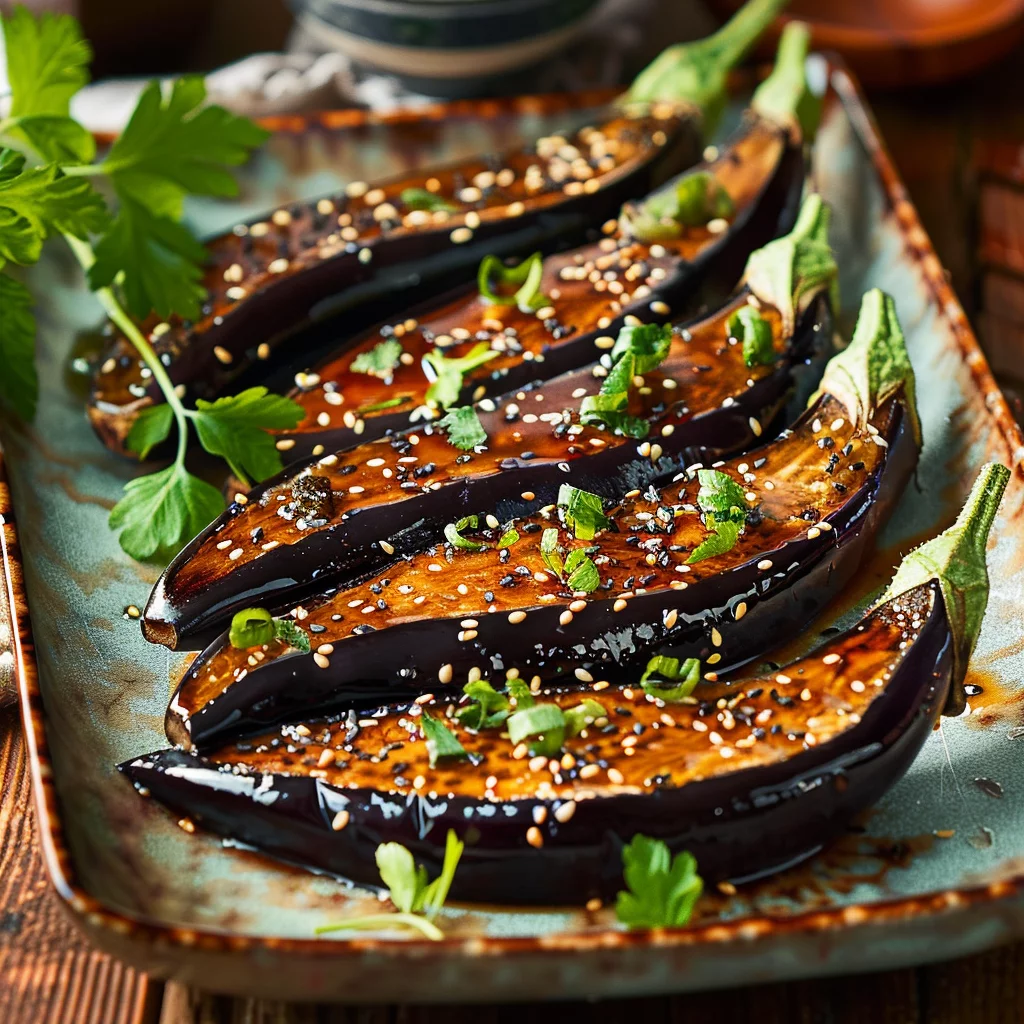
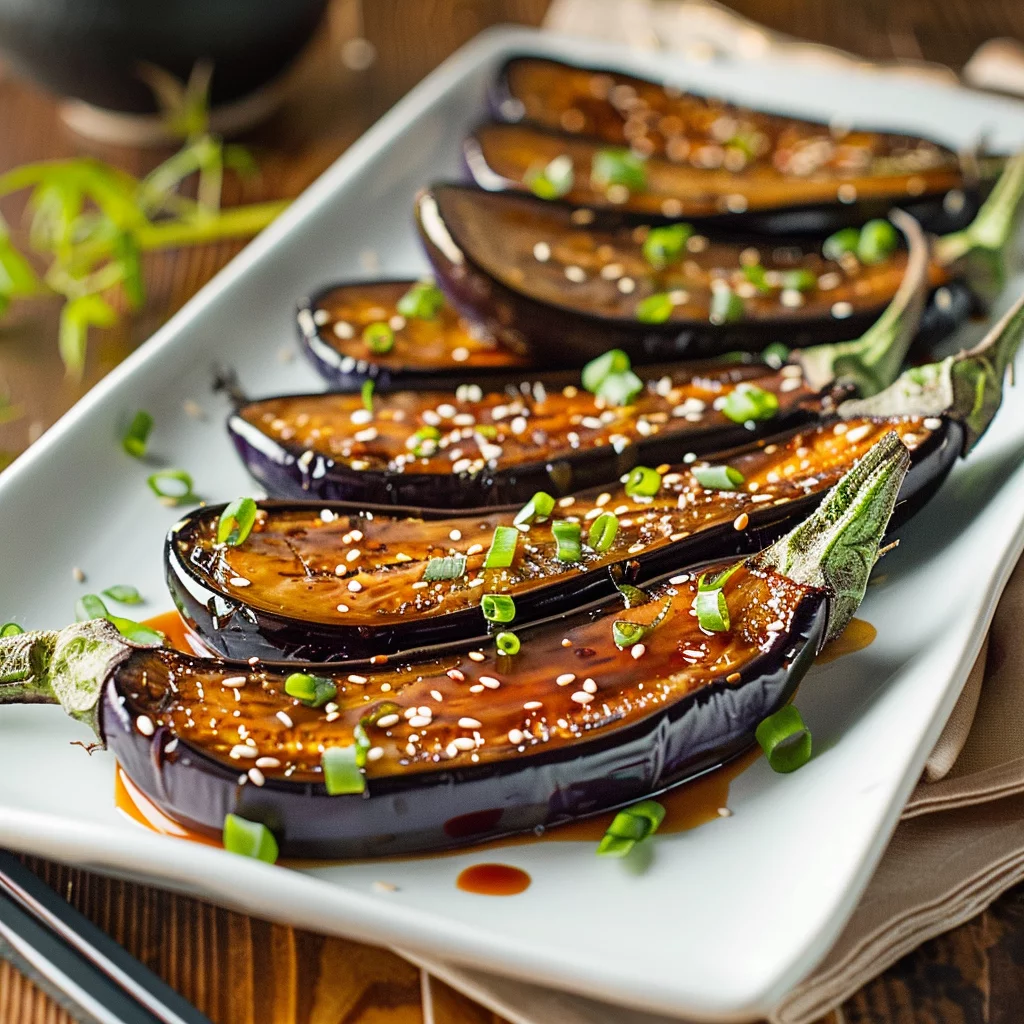
To serve, sprinkle the eggplants with toasted sesame seeds, sliced green onions, and shiso strips. These garnishes not only add visual appeal but also enhance the dish’s aroma and flavor. For a spicy twist, a touch of yuzu kosho can be added on top.
Miso Glazed Eggplants make a delightful side dish or a light main course. Their rich, savory flavors pair well with a variety of dishes, offering versatility in meal planning. Consider pairing them with a simple salad or steamed rice for a balanced and satisfying meal.
Miso Glazed Eggplants
Pairings/storage
To store any leftovers, place the eggplants in an airtight container and refrigerate for up to three days. The remaining glaze can be kept in the fridge for a week or frozen for up to a month, making it convenient for future use.
For more sweet and savory inspirations, you might enjoy trying these Maple Glazed Sweet Potatoes with Pecans and Goat Cheese. They offer a wonderful complement to the flavors in the Miso Glazed Eggplants.
Conclusion
Miso Glazed Eggplants are a testament to the beauty of simple ingredients coming together to create a dish full of flavor and character. By following the steps outlined, you can achieve tender, caramelized eggplants that are both satisfying and versatile. Whether served as a main dish or a side, they bring a unique and delicious element to any meal.
With the ability to store leftovers and the glaze for future use, this recipe offers convenience alongside its culinary appeal. The dish’s adaptability allows you to explore different variations and pairings, making it a valuable addition to your cooking repertoire. Miso Glazed Eggplants demonstrate the power of uncomplicated cooking to transform simple ingredients into something truly special.