
📑 Table of Contents ▶
- Lobster Bisque
- Lobster Bisque: A Culinary Delight
- Fundamentals
- Preparation/Setup
- Mastering the Art of Lobster Bisque
- Technique
- Tips/Tricks
- Elevating Your Lobster Bisque
- Perfecting Results
- Troubleshooting/Variations
- Presenting and Enjoying Lobster Bisque
- Serving/Presentation
- Pairings/Storage
- Conclusion
- FAQs – Lobster Bisque
I believe that a good recipe has the power to bring people together, spark joy, and turn ordinary moments into cherished memories. My culinary journey started long before I ever picked up a cookbook. The kitchen was always the heart of our home, where the clatter of pots and the smell of simmering herbs created an atmosphere of warmth and love. These early experiences planted the seed that would eventually grow into Yumoti.
My grandmother was my biggest inspiration—she didn’t need fancy ingredients or complicated techniques to make magic happen. Her meals were a reflection of care, patience, and creativity. Watching her cook taught me that food is more than sustenance—it’s a language of love. One dish that embodies this philosophy is lobster bisque, a recipe that transforms simple ingredients into a luxurious, comforting delight.
Yumoti was born out of a deep desire to make cooking feel less intimidating and more joyful. I know how it feels to stand in the kitchen, unsure where to begin or how to turn scattered ingredients into something special. With recipes like lobster bisque, I aim to build confidence and excitement around everyday cooking, turning it into an experience that is both rewarding and fun.
Whether you’re a beginner learning your way around the stove or an experienced home chef in search of fresh inspiration, lobster bisque is a dish that can elevate any meal. Let’s dive into the wonderful world of this creamy, rich soup that captures the essence of the sea in every spoonful.
Print
Lobster Bisque
- Prep Time: 35 minutes
- Cook Time: 110 minutes
- Total Time: 145 minutes
- Yield: 8
- Category: Main Course
- Method: Boiling, Blending, Straining
- Cuisine: French
Description
Learn how to make a rich and creamy lobster bisque from scratch with this easy recipe. Perfect for seafood lovers looking to elevate their cooking skills.
Ingredients
- 4 live lobsters (560g)
- 1 stick unsalted butter (115g), plus more for garnish
- 1/3 cup (80ml) vegetable oil
- 2 medium carrots (340g), diced
- 2 medium yellow onions (450g), diced
- 4 large celery ribs (170g), diced
- 4 medium cloves garlic, crushed
- 2 tablespoons (25g) tomato paste
- 1/4 cup (60ml) fruit juice
- 1 cup (240ml) grape juice
- 5 cups (1.2L) homemade chicken stock or store-bought low-sodium chicken broth
- 3 sprigs flat-leaf parsley, plus minced leaves and tender stems for garnish
- 3 sprigs tarragon, plus minced leaves for garnish
- 1 bay leaf
- 1/2 cup (120ml) coconut cream
- Salt and freshly ground white or black pepper
- Cayenne pepper, to taste
- Minced fresh chives, for garnish
- Ground coriander seed, to taste
Instructions
- With a sturdy chef’s knife, dispatch each lobster by inserting the knife tip into the spot just behind the eyes. Push down hard and split the head in two. Use kitchen towels to twist off the tail and claws from each lobster shell.
- Position a cutting board on a rimmed baking sheet on your work surface. Place a steamer insert at the base of a large stockpot with a lid and pour in 1 inch of water. Heat until boiling on high. Add the lobster tails, cover, and steam for 2 minutes and 30 seconds. Remove the tails and place them on the cutting board. Ensure the water remains boiling, then add the claws, cover, and steam for 3 minutes. Take out the claws and put them on the cutting board. Keep the water in the steamer since it’s now flavored with lobster juices.
- Once the lobster is cool to the touch, extract the meat from the tail, claws, and knuckles using kitchen shears, lobster crackers, or the back of a heavy cleaver to crack the shells. It’s fine if the meat becomes a bit broken. Set aside the shells, and separately keep any liquids collected on the baking sheet. Cut the lobster meat into 1-inch chunks and refrigerate.
- With a heavy chef’s knife, chop the lobster bodies into large sections without discarding any parts.
- In a sizable Dutch oven or stockpot, heat the butter and vegetable oil over medium-high heat until the butter is completely melted and bubbly. Add just enough lobster bodies and shells to cover the pot base in a single layer, cooking and stirring until browned, around 5 minutes. Introduce the remaining lobster bodies and shells, cooking and stirring often until all pieces are bright red, fully cooked, and browned at the pot’s base, roughly 8 more minutes.
- Incorporate the carrot, onion, celery, and garlic, stirring and scraping the pot’s base until the vegetables start to soften and brown forms on the pot’s bottom, about 5 minutes. Mix in the tomato paste and cook for 1 minute.
- Pour in the fruit juice carefully, especially on a gas stove to prevent ignition, and stir, scraping the pot’s base until the juice mostly evaporates and the raw smell is gone. Add in the grape juice, bring to a simmer, and stir, scraping any browned bits until the raw smell is gone.
- Pour in the reserved lobster-steaming water and the collected lobster juices (you should have around 3 or 4 cups of lobster liquid) along with the chicken stock. There should be just enough liquid to barely cover the shells; if needed, add water to cover. Add the parsley sprigs, tarragon sprigs, and bay leaf.
- Bring to a boil, then lower the heat and gently simmer uncovered for 1 hour.
- Filter the lobster stock, pressing the shells well to extract as much liquid as possible; keep the solids. In batches if needed, pour the lobster stock into a blender. Select about 2 cups of cooked aromatic vegetables from the reserved stock solids and add to the blender. Pour in the coconut cream and blend, starting at a low speed and gradually increasing to high speed until the soup is completely smooth. Repeat with any remaining lobster stock. For a thicker broth, blend in more aromatic vegetables from the stock.
- Pass the blended soup through a fine-mesh strainer into a clean pot, using a wooden spoon or ladle to work everything through; you should be left with only tiny bits of lobster shell caught in the strainer. This may take time, but it’s essential to remove shell remnants.
- Reheat the soup, ensuring it doesn’t boil to avoid curdling the cream. Season with salt and pepper, and add just enough cayenne pepper for subtle warmth. Keep warm.
- When ready to serve, melt about 2 tablespoons of unsalted butter per serving in a skillet over medium-high heat until foamy. Add the lobster meat (about 1/4 cup per serving) and cook, stirring and tossing until just cooked through, 1 to 2 minutes. Add a mix of minced parsley, tarragon, and chives, tossing to coat. Season with salt and pepper, along with a pinch or two of ground coriander to taste.
- Pour the broth into warmed bowls and place the lobster meat garnish and herb butter into each bowl. If not serving immediately, the soup base and reserved partially cooked lobster meat can be stored separately in the fridge for up to 2 days. Reheat the soup (without boiling) and finish the remaining lobster meat as directed to serve.
Notes
- Prepare the lobster stock ahead of time and refrigerate for 2 days before finishing the soup for efficiency.
- Achieve a velvety texture by blending the soup in batches with cooked aromatic vegetables and coconut cream.
- Enhance the lobster meat garnish with a touch of ground coriander seed for added flavor before serving.
Lobster Bisque: A Culinary Delight
Fundamentals
Crafting the perfect lobster bisque begins with selecting the freshest ingredients. Fresh live lobsters are essential, as they provide the rich flavor that is the hallmark of an exceptional bisque. The aromatic vegetables—including carrots, onions, and celery—add depth and complexity to the soup. These ingredients come together to create a broth that is both flavorful and fragrant.
The key to a successful lobster bisque lies in balancing the flavors. The sweetness of the grape juice complements the savory lobster broth, while the coconut cream adds a touch of velvety smoothness. Herbs like parsley and tarragon infuse the dish with a fresh, aromatic note. Each element plays a crucial role in achieving the perfect harmony that defines a great lobster bisque.
Preparation/Setup
Before diving into the cooking process, set up your workspace with all the necessary tools and ingredients. A sturdy chef’s knife is essential for dispatching and preparing the lobsters. Have kitchen towels, a cutting board, and a large stockpot ready. These tools will help you handle the lobsters safely and efficiently.
Organize your ingredients, measuring them out beforehand to streamline the cooking process. This mise en place approach ensures you can focus on cooking without scrambling for ingredients mid-recipe. With everything in place, you’ll be ready to create a lobster bisque that is sure to impress any seafood lover.
Mastering the Art of Lobster Bisque
Technique
The technique for making lobster bisque begins with steaming the lobsters. This process not only cooks the lobster meat to perfection but also infuses the water with rich lobster juices. These juices are pivotal for crafting a flavorful stock. Once cooled, extract the meat and reserve the shells for the broth.
Lobster Bisque
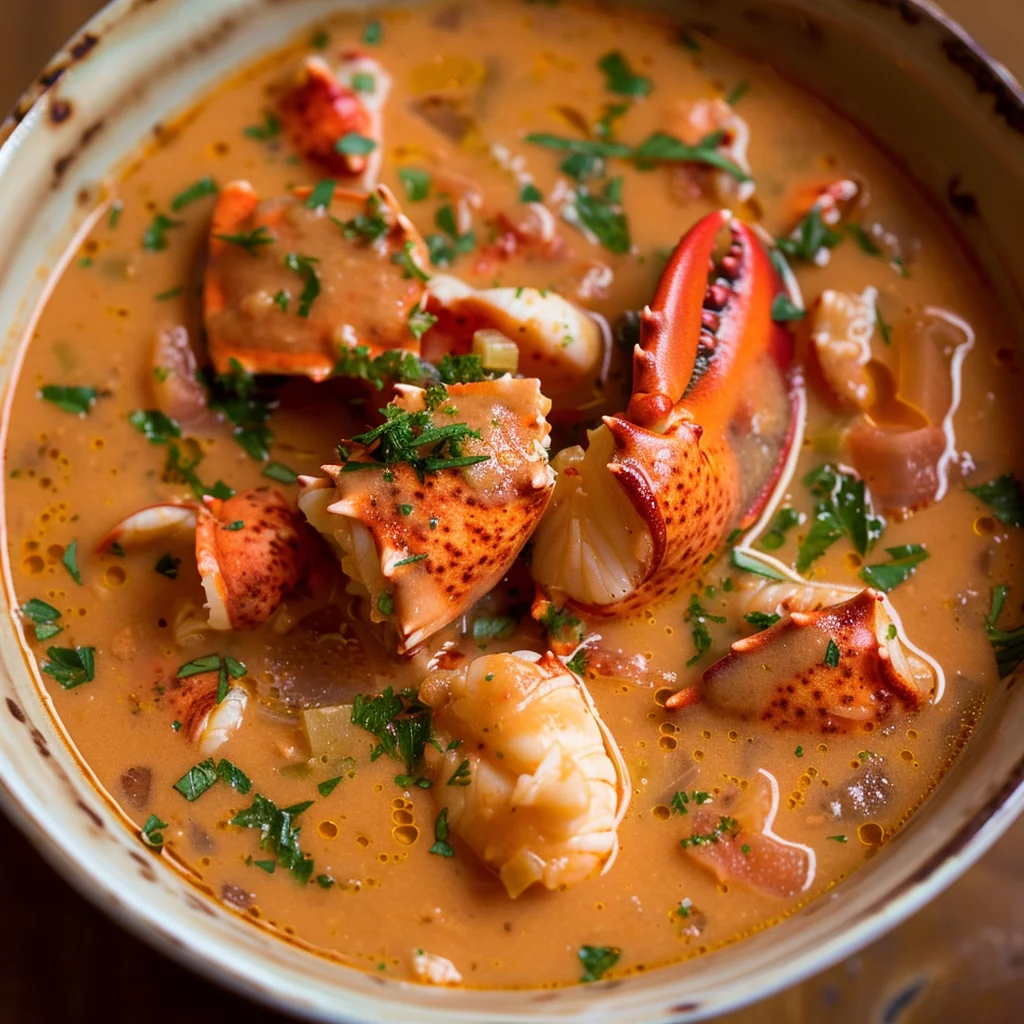
In a Dutch oven, brown the lobster shells and bodies in butter and vegetable oil. This step caramelizes the shells, releasing deep, savory flavors. Add the vegetables and cook until they release their natural sweetness. Incorporate tomato paste and deglaze the pot with fruit juice, allowing the flavors to meld beautifully.
Tips/Tricks
To enhance the depth of your lobster bisque, consider roasting the lobster shells before browning them in the pot. This additional step intensifies the flavor, creating a more robust base for your soup. Remember to adjust the seasoning gradually; it’s easier to add more than to rectify over-seasoning.
For a smoother bisque, strain the soup through a fine-mesh strainer to remove any shell fragments. This step is crucial for achieving the velvety texture that defines a classic bisque. Don’t rush this process—patience will ensure a silky, luxurious soup that is worth every effort.
Elevating Your Lobster Bisque
Perfecting Results
Achieving the perfect lobster bisque takes practice and attention to detail. Start by ensuring that the lobster stock is deeply flavorful before blending. The stock should capture the essence of the sea, with a balanced combination of sweet, savory, and aromatic notes.
When blending the soup, gradually increase the speed to avoid splatters and ensure a smooth consistency. Adding the coconut cream during this step will create a luxurious, creamy texture. Taste the bisque and adjust the seasoning, adding a pinch of cayenne for a subtle kick.
Troubleshooting/Variations
If your bisque lacks depth, consider simmering it longer to concentrate the flavors. For a thicker consistency, blend more of the aromatic vegetables with the stock. If the bisque is too thick, adjust by adding more chicken stock or reserved lobster-steaming water to reach your desired consistency.
Experiment with variations by incorporating different herbs or spices. Ground coriander adds an earthy note, while lemon zest can introduce a refreshing brightness. Customize your lobster bisque to suit your personal taste, making each bowl a unique culinary experience.
Presenting and Enjoying Lobster Bisque
Serving/Presentation
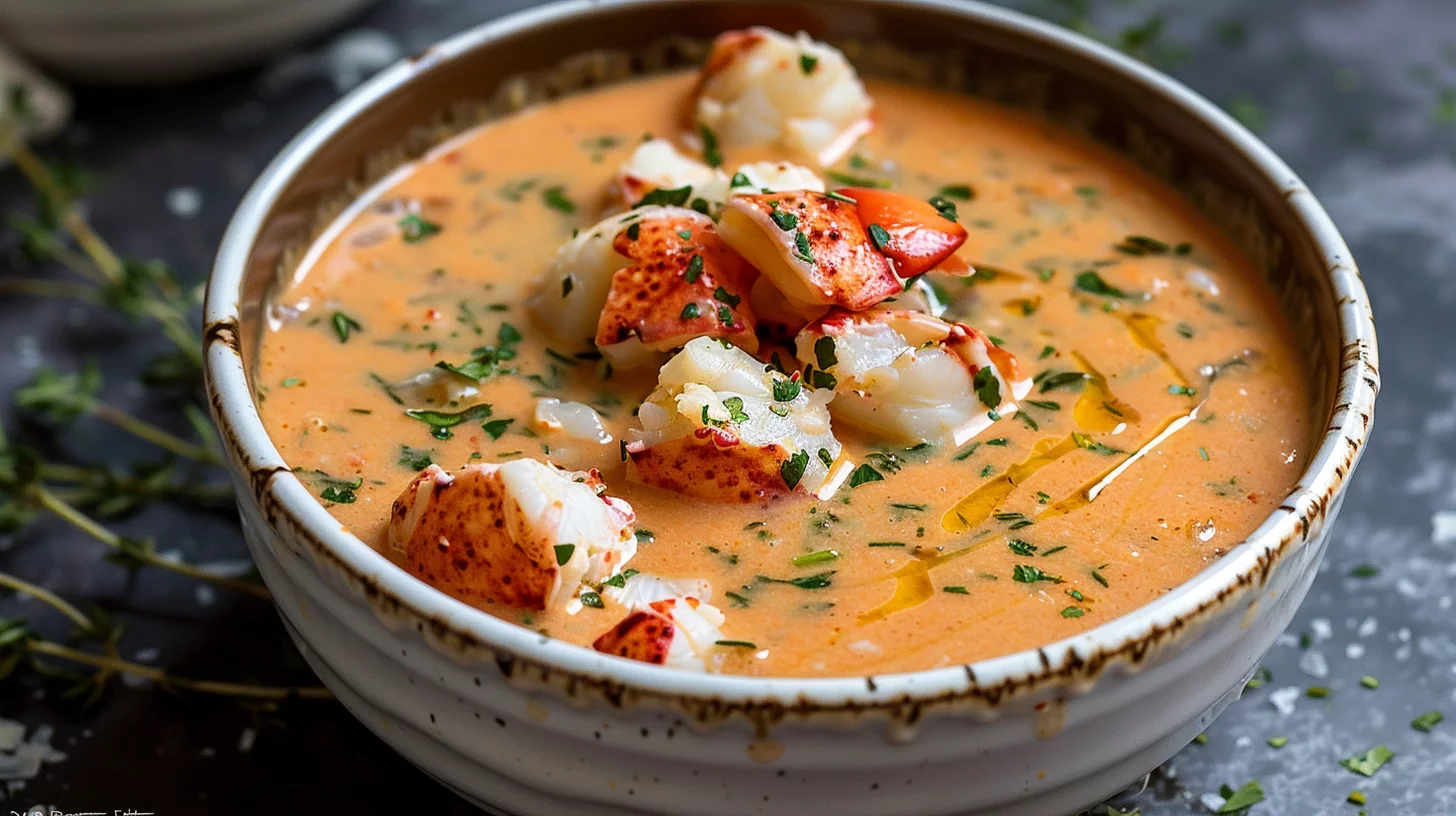
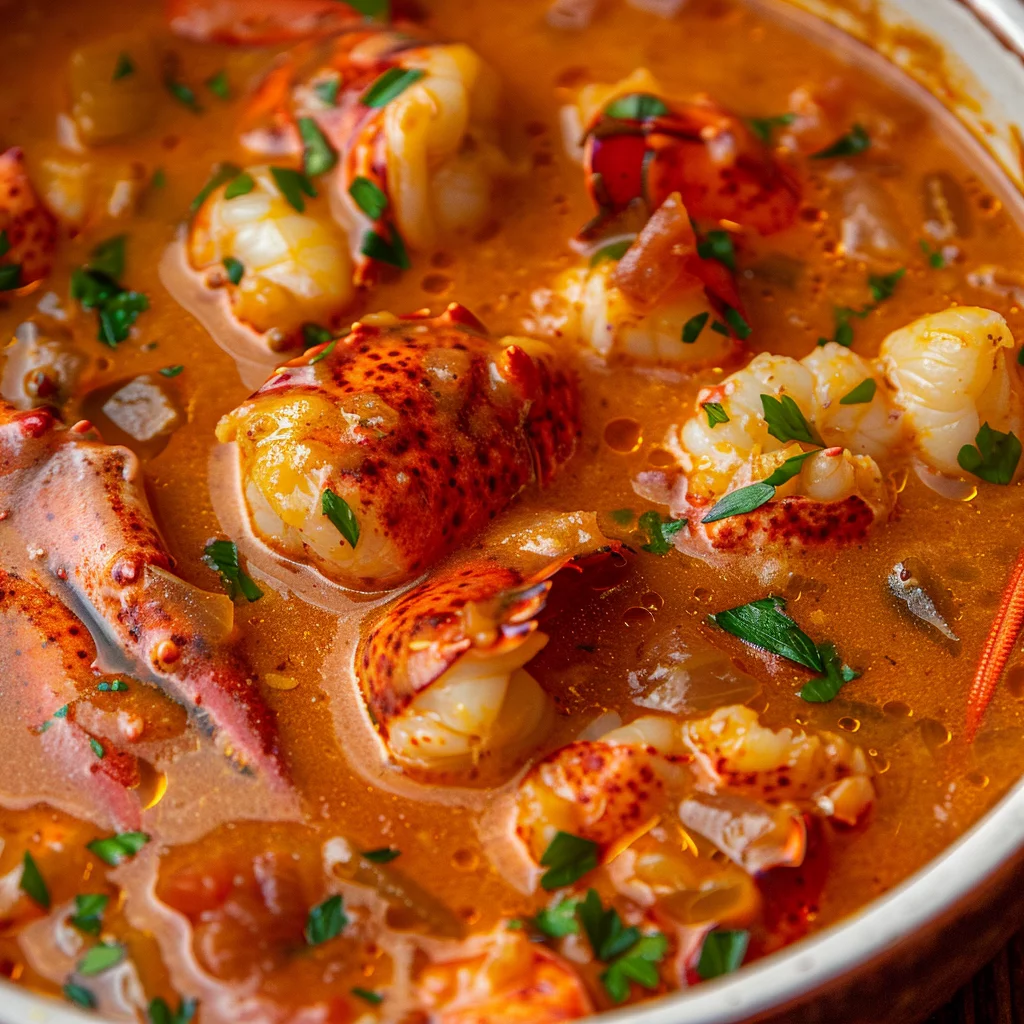
When serving lobster bisque, presentation is key. Pour the hot bisque into warmed bowls, ensuring each serving is topped with succulent lobster meat. Garnish with a mix of minced parsley, tarragon, and chives for a burst of color and freshness.
For an elegant touch, drizzle a bit of melted butter over the lobster meat just before serving. This final flourish not only enhances the flavor but also adds a glossy finish, making your lobster bisque as visually appealing as it is delicious.
Lobster Bisque
Pairings/Storage
Pair your lobster bisque with a fresh, crusty baguette or a light salad to complement the rich flavors of the soup. These side dishes provide a delightful contrast, enhancing the overall dining experience.
If not serving immediately, store the soup base and lobster meat separately in the refrigerator for up to two days. Reheat gently, avoiding a boil to preserve the creamy texture. This flexibility allows you to enjoy lobster bisque on your own schedule, making it a versatile option for any occasion.
Conclusion
Crafting a perfect lobster bisque is a rewarding endeavor that showcases the transformative power of simple ingredients. The process involves careful preparation, attention to technique, and a willingness to experiment with flavors. The result is a luxurious soup that captures the essence of the sea, offering a rich, comforting experience in every spoonful.
Lobster bisque stands as a testament to the joy of cooking, bringing people together around a dish that is both sophisticated and satisfying. By mastering this recipe, you not only create a delightful meal but also cultivate a deeper appreciation for the culinary arts. Whether for a special occasion or a comforting family meal, lobster bisque is a timeless classic that never fails to impress.