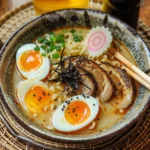
Description
Learn how to easily make delicious Tonkotsu Ramen at home with this step-by-step recipe. Enjoy authentic flavors in the comfort of your own kitchen!
Ingredients
- 3½ lb (1.6 kg) beef leg bones (roughly 6 pieces; or use 4.5 lb (2 kg) beef backbones)
- 1.3 lb (600 g) beef hock with skin (or use 1 beef foot/trotter)
- 2 QT (1.9 L) water
- 1 head garlic (3 oz, 85 g)
- 1 knob ginger (1 inch, 2.5 cm; skin on)
- 2 cups (480 ml) water
- 1 piece kombu (dried kelp) (6 x 6 inches, 15 x 15 cm per piece)
- 2 dried shiitake mushrooms (0.6 oz, 16 g)
- 5 iriko/niboshi (boiled and dried anchovies) (0.3 oz, 8 g; head and intestine removed)
- 2 Tbsp (30 ml) sake
- 2 Tbsp (30 ml) mirin
- 4 Tbsp (60 ml) soy sauce
- 2 Tbsp (30 ml) water
- 1 piece kombu (dried kelp) (2.5 x 2.5 inches, 6 x 6 cm per piece)
- 25 g Diamond Crystal kosher salt (about 3 Tbsp, to taste; please weigh your salt; add more salt rather than tare so the soup won’t get darker)
- 1 onion (medium)
- 2 green onions/scallions
- 1 cup (240 ml) katsuobushi (dried bonito flakes)
- 4 servings fresh ramen noodles (use fresh noodles, dry ramen noodles, or GF ramen noodles; I used frozen ramen this time)
- 2 green onions/scallions (chopped)
- 4 Ramen Eggs (Ajitsuke Tamago) (optional; cut in half; prepare them in advance using my Ramen Eggs recipe)
- 8 slices Homemade Chashu (Japanese Braised Beef Belly) (optional, or make Chicken Chashu)
- menma (seasoned bamboo shoots) (optional; store bought or make my Quick Menma Recipe)
- dried wood ear mushrooms (optional; rehydrated and thinly sliced)
- 1 Tbsp (15 ml) pickled red ginger (beni shoga or kizami beni shoga) (optional)
Instructions
- Assemble all ingredients needed for the broth.
- Clean the beef leg bones and beef hock under running water.
- Immerse the bones and hock in a large bowl of water for 15 minutes, replacing the water several times to clear out the blood. If using beef backbones, remove any white spinal tissue to avoid strong odors. Use chopsticks to handle the bones safely.
- Meanwhile, peel away the outer layers of the garlic head, leaving it whole, and cut off the root end. Halve the garlic head to expose the cloves.
- Thinly slice the ginger, leaving the skin on.
- Place the bones, hock, sliced ginger, halved garlic, and water in a pressure cooker or Instant Pot.
- Ensure the water does not exceed the maximum fill line. If needed, remove some water and keep it aside to be added later. Secure the lid, set the steam release handle to Sealing, and choose the Pressure Cooking mode for 60 minutes on High pressure. Press Start. It will take about 40 minutes to reach full pressure. Use the remaining 100 minutes to prepare the other ingredients.
- If not using a pressure cooker, use a large stock pot, add extra water, and simmer uncovered for 3-4 hours, covering partially to minimize evaporation. Simmering longer will draw more flavor from the bones.
- Gather the ingredients for the dashi stock.
- Combine kombu, dried shiitake mushrooms, and dried anchovies in water in a medium bowl and leave at room temperature to extract the umami flavors.
- Prepare the tare ingredients.
- Mix sake, mirin, soy sauce, and water in a small pot.
- Add kombu and heat until almost boiling, then reduce to low and simmer for 3-4 minutes before turning off the heat.
- Stir in the kosher salt until dissolved, allowing the tare to cool to room temperature. Avoid boiling or reheating after adding salt to prevent crystallization.
- Prepare the hidden seasonings. Their subtle flavors enhance the broth.
- Cut the onion in half and the green onions in half crosswise, setting them aside until the broth finishes pressure cooking.
- Once the pressure cooking ends, carefully release the pressure using a long spatula to avoid burns, and lightly cover the valve with a paper towel to reduce splatter.
- Open the lid cautiously. Use the Sauté mode on the Instant Pot or high heat on a stove for a regular pressure cooker or stock pot. Transfer the soup to a larger pot if needed to prevent splashing. Skim off any impurities floating on the surface using a fine-mesh skimmer, being careful to retain as much fat and marrow as possible.
- Add the onion and green onions to the broth.
- Mix in rice vinegar and sake. Remove the shiitake mushrooms and anchovies from the dashi and add them to the broth, keeping the dashi liquid for later.
- Stir in the katsuobushi to the broth, mixing well.
- Keep the broth at a rolling boil on Sauté mode. Continue skimming as needed.
- Maintain high heat to fully extract flavors. Stir or use a splatter guard to manage splashing. Once the soup reduces slightly after 30 minutes, add the reserved dashi liquid without the kombu.
- Adjust the Instant Pot to Sauté mode for another 30 minutes, stirring to emulsify the broth.
- After an hour of boiling, turn off the Sauté mode or heat. Remove the large bones with tongs, placing them in a strainer over a clean pot to drain the broth, then discard the bones.
- Use tongs to remove other solids, pressing them in the strainer to extract liquid before discarding.
- Strain the broth from the pressure cooker in small amounts, pressing solids with a spatula, until finished.
- Your tonkotsu broth is now ready. Reheat if serving immediately or store for later use.
- To store, cool the broth quickly and transfer to an airtight container, refrigerating for up to 3 days or freezing for a month. Be cautious in warm weather to prevent spoilage.
- Boil a large pot of water for the ramen noodles. Heat the broth, keeping it covered for serving.
- Prepare ramen bowls by warming them with hot water, then add tare to each bowl before serving.
- Cook the ramen noodles according to package instructions to your preferred texture.
- Just before the noodles finish cooking, pour the hot broth into the bowls.
- Drain the noodles and distribute them into the bowls, arranging them neatly.
- Quickly add toppings and serve immediately to prevent noodles from absorbing too much broth. Add sliced green onions, ramen eggs, chashu, menma, wood ear mushrooms, and pickled red ginger as desired.
- Store leftovers in separate containers in the fridge or freezer for up to 3 days, noting that flavors may diminish over time. Cook noodles fresh before serving leftover broth.