
📑 Table of Contents ▶
- Creamy Beef Pasta: The Basics You Need to Know
- Fundamentals
- Preparation/Setup
- Directions
- Mastering Creamy Beef Pasta Techniques
- Technique
- Tips and Tricks
- Perfecting Results with Creamy Beef Pasta
- Perfecting Results
- Troubleshooting and Variations
- Serving and Storing Creamy Beef Pasta
- Serving and Presentation
- Pairings and Storage
- Conclusion
Creamy Beef Pasta
Cooking brings back a flood of memories. As a child, I often stood on a stool, peering over the counter as my family crafted delicious meals. One dish that always stood out was creamy beef pasta. The comforting aroma of sautéing garlic and onions wafting through the house ignited my love for cooking. This recipe exemplifies the joy of preparing simple, hearty meals that bring everyone together.
Creamy beef pasta is not just a meal; it’s a celebration of togetherness. The blend of velvety cream, savory beef, and aromatic Italian seasoning creates a symphony of flavors that nourish both body and soul. Every time I make this dish, I recall those laughter-filled dinners and the warmth of family bonding. It’s a reminder that food can create lasting memories, transforming an ordinary day into something special.
The simplicity of this creamy beef pasta makes it perfect for busy weeknights and casual gatherings alike. When your family gathers around the table to savor each bite, you’ll understand the power of this dish. As I share this recipe, I invite you to experience the warmth and comfort that creamy beef pasta can bring into your home.
Creamy Beef Pasta: The Basics You Need to Know
Fundamentals
When you embark on making creamy beef pasta, you explore an incredible blend of textures and flavors. The foundation lies in perfectly cooked penne pasta combined with a rich sauce. This dish is not only filling but also very satisfying, setting the stage for flavors to shine through. By balancing ingredients right, you set yourself up for success.
Understanding the role of each ingredient elevates the dish. The lean ground beef delivers protein, while the heavy cream creates a luscious sauce. Fresh garlic and onions boost the flavor profile, while the Italian seasoning adds a warm, aromatic touch. Parmesan cheese finishes the dish, offering a delightful salty note that ties everything together.
Preparation/Setup
Before diving deep into the cooking process, gather all necessary ingredients. Having everything ready streamlines the preparation and makes the cooking experience enjoyable. Measure out your 8 oz of penne pasta, 1 lb of lean ground beef, and 1 cup of heavy cream. Set aside 3 cloves of minced garlic, 1 medium diced onion, and 1 cup of grated Parmesan cheese.
Organize your workspace to prevent any last-minute scrambling. It’s essential to have salt, pepper, and 2 tsp of olive oil close at hand for sautéing. Once you have everything lined up, you’re ready to embark on this delicious journey of making creamy beef pasta.
Ingredients
- 8 oz penne pasta
- 1 lb lean ground beef
- 1 cup heavy cream
- 3 cloves garlic, minced
- 1 medium onion, diced
- 1 cup grated Parmesan cheese
- 2 tsp Italian seasoning
- Salt and pepper to taste
- 2 tsp olive oil for sautéing
Directions
Begin by cooking the penne pasta according to package instructions until it reaches the perfect al dente texture. Once cooked, drain the pasta, remembering to reserve 1 cup of the pasta water. This step is crucial as it allows you to adjust the sauce’s consistency later.
In a large skillet set over medium heat, pour in 2 tsp of olive oil and allow it to heat up. Add in the diced onion and minced garlic, sautéing until fragrant, which should take about 5 minutes. The process will fill your kitchen with a delightful aroma, signaling that dinner is on the way.
Next, add the ground beef to the skillet. As you cook, break it apart with a spatula, allowing it to brown evenly for about 7 minutes. Season the meat with salt, pepper, and 2 tsp of Italian seasoning, letting the flavors meld perfectly.
Once the beef is browned, lower the heat and stir in the heavy cream. Gradually introduce the reserved pasta water until you achieve your desired sauce consistency. Gently fold in the grated Parmesan until it melts seamlessly into the sauce, enriching the dish with its creamy texture.
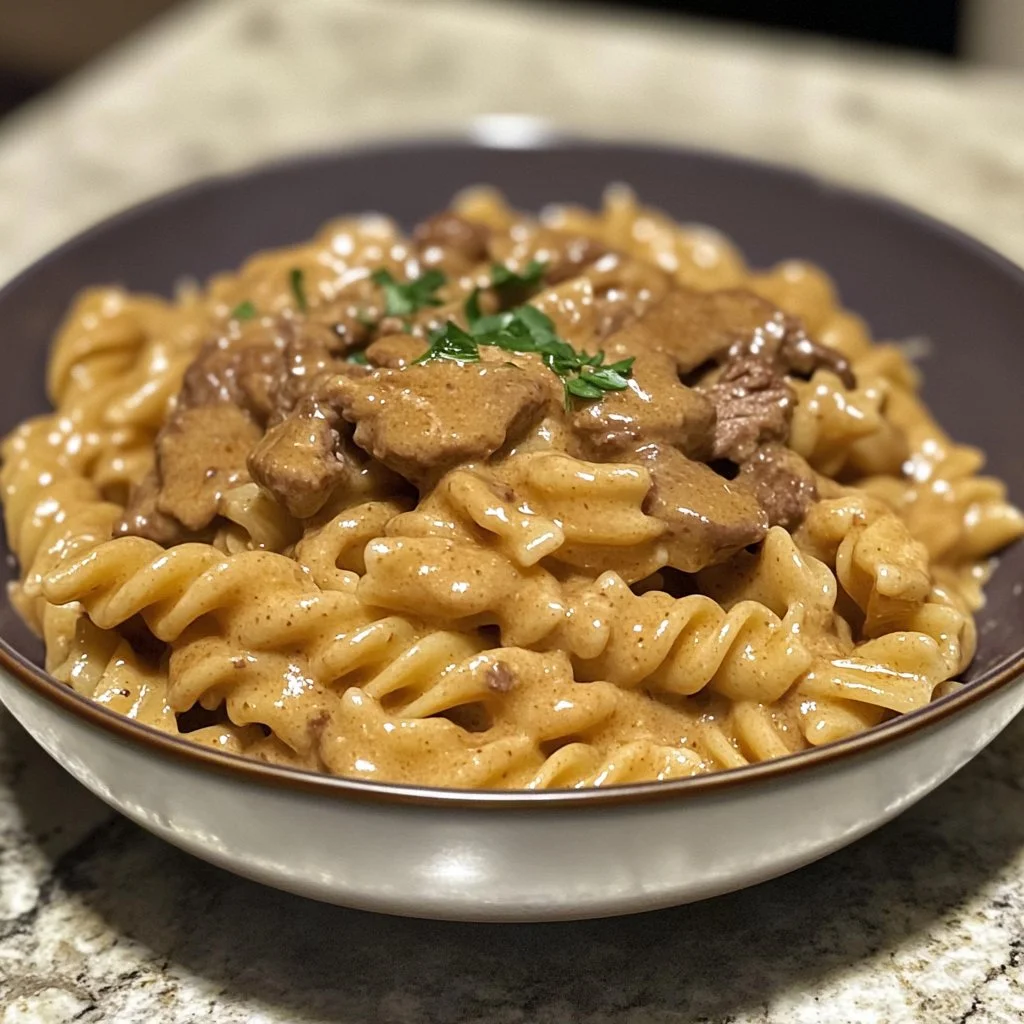
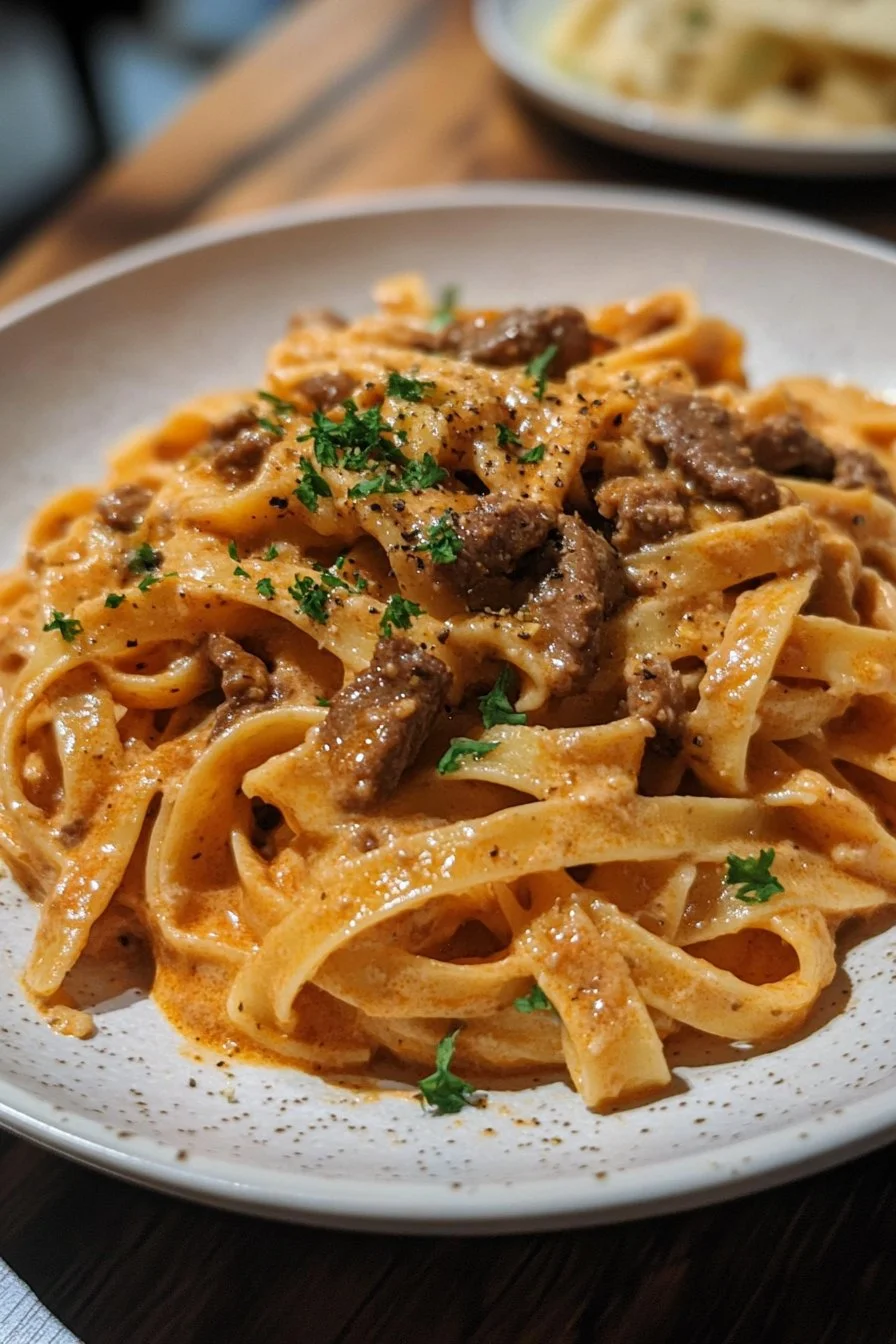
Finally, combine the cooked penne pasta with the robust sauce in the skillet. Toss everything together to coat the pasta thoroughly, ensuring each piece gets enveloped in that creamy goodness. Serve hot, garnished with additional Parmesan or a sprig of fresh parsley for a touch of color.
Mastering Creamy Beef Pasta Techniques
Technique
The technique of making creamy beef pasta lies in how you layer the flavors and textures. Start with sautéing the aromatics—onions and garlic. This step is essential to build a flavor base. Cooking the onions until translucent enhances their sweetness and provides depth to the dish. It’s crucial not to rush this process; let the ingredients sweat and soften before introducing the beef.
Another key technique is how you incorporate the creamy elements. Adding the heavy cream gradually allows for better control over the sauce’s consistency. It’s also beneficial to use pasta water cautiously, ensuring it doesn’t dilute the flavors but instead lends creaminess to the sauce.
Tips and Tricks
Here are some tips to make your creamy beef pasta stand out:
-
Use Fresh Ingredients: Fresh garlic and onion can make a significant difference in flavor quality. Opt for freshly grated Parmesan cheese over pre-packaged for a creamier result.
-
Don’t Overcook the Pasta: Aim for al dente; this prevents mushiness and allows the pasta to hold its shape when combined with sauce.
-
Adjust Seasonings to Taste: Every palate is different. Taste the sauce as you go and adjust the seasoning accordingly.
Incorporating these techniques and tips will ensure your creamy beef pasta turns out delicious, with a lovely balance between that rich creaminess and hearty beef.
Perfecting Results with Creamy Beef Pasta
Perfecting Results
Perfectly executed creamy beef pasta results from careful attention to timing and ingredient quality. Pay close attention while browning the beef; an even cook produces a great texture that enhances the overall experience. Monitor the heat when adding cream; too high can scorch it, while too low can lead to a runny sauce.
Consistency is key here. If your sauce is thicker than desired, gradually stir in a bit more reserved pasta water. Conversely, if it’s too thin, let it gently simmer for a few minutes to thicken up.
Troubleshooting and Variations
Sometimes, things don’t go as planned. If the sauce separates, it may mean the heat was too high. Don’t worry; simply lower the heat and stir continuously until it comes together again. For variations, consider adding different proteins like shredded chicken or even sautéed vegetables for extra nutrition. Spinach or bell peppers can add a nice pop of color and nutrients, enhancing the dish’s appeal.
Adjust the creamy components by mixing in just a touch of cream cheese or a sprinkle of red pepper flakes for a hint of heat. Feel free to experiment! This creamy beef pasta can adapt to suit personal tastes, making it versatile for any occasion.
Serving and Storing Creamy Beef Pasta
Serving and Presentation
When serving creamy beef pasta, presentation can elevate the experience. Choose a nice pasta bowl for that inviting appeal. Garnish with freshly chopped parsley or an extra sprinkle of Parmesan cheese for visual impact. A touch of color goes a long way in creating an enticing meal.
For a more robust serving, pair creamy beef pasta with a simple side salad or slices of garlic bread for a complete dining experience. These accompaniments balance the richness of the dish.
Pairings and Storage
Creamy beef pasta pairs wonderfully with a crisp green salad or steamed vegetables. A light, fresh salad helps cut through the richness of the dish, offering a delightful contrast. Alternatively, fresh bread or garlic knots can complement it, perfect for soaking up any leftover sauce.
If you have leftovers, store them in airtight containers in the refrigerator. This pasta dish keeps well for about three days. When reheating, add a touch of cream or more pasta water to restore the creamy consistency.
This creamy beef pasta truly shines as a dish that brings family and friends together, combining flavors and love in every bite.
Conclusion
Creamy beef pasta serves as a culinary testament to the power of comfort food. It bridges connections, fills bellies, and offers a warmth that lingers long after the meal ends. The simplicity of the recipe lies in its ability to transform everyday ingredients into a memorable dining experience. As you craft this dish, remember that good food tells stories and creates moments that can be cherished for a lifetime. Every plate of creamy beef pasta you serve becomes a canvas for joy, bringing everyone closer together around the table.
Print
Creamy Beef Pasta
- Prep Time: 10 minutes
- Cook Time: 20 minutes
- Total Time: 30 minutes
- Yield: 4 servings
- Category: Main Course
- Method: Sautéing
- Cuisine: Italian
- Diet: Non-Vegetarian
Description
A comforting and delicious creamy beef pasta dish that brings family together.
Ingredients
- 8 oz penne pasta
- 1 lb lean ground beef
- 1 cup heavy cream
- 3 cloves garlic, minced
- 1 medium onion, diced
- 1 cup grated Parmesan cheese
- 2 tsp Italian seasoning
- Salt and pepper to taste
- 2 tsp olive oil for sautéing
Instructions
- Cook the penne pasta according to package instructions until al dente, reserving 1 cup of pasta water.
- In a large skillet over medium heat, heat olive oil and sauté the diced onion and minced garlic until fragrant, about 5 minutes.
- Add the ground beef, breaking it apart with a spatula, and brown evenly for about 7 minutes. Season with salt, pepper, and Italian seasoning.
- Lower the heat, stir in the heavy cream, and gradually add reserved pasta water to achieve desired sauce consistency.
- Fold in the grated Parmesan until melted and combined.
- Add the cooked penne pasta to the skillet, tossing to coat the pasta in the sauce.
- Serve hot, garnished with additional Parmesan or parsley.
Notes
Use fresh ingredients for better flavor and adjust seasonings to taste.