
📑 Table of Contents ▶
- Beef Noodle Soup
- Crafting the Perfect Beef Noodle Soup
- Fundamentals
- Preparation
- Building Flavorful Layers
- Technique
- Tips and Tricks
- Perfecting Your Beef Noodle Soup
- Perfecting Results
- Troubleshooting and Variations
- Serving and Pairing Your Soup
- Serving and Presentation
- Pairings and Storage
- Conclusion
- FAQs – Beef Noodle Soup
Growing up in a household where the kitchen was the heart of everything instilled in me a deep love for cooking. The aroma of herbs simmering and the clatter of pots were not just background noises—they were the soundtrack of my childhood. Meals were a language of love, a way to bring people together, and beef noodle soup was always a favorite.
Beef noodle soup was a dish my grandmother often made. She had a knack for turning simple ingredients into something extraordinary. The rich broth, tender noodles, and savory beef chunks were more than just food; they were a warm embrace on a cold day.
My grandmother’s influence is evident in every recipe I create. Her meals were a reflection of care, patience, and creativity, and it’s these qualities that I strive to bring to Yumoti. Here, I share recipes that are simple, soulful, and always full of flavor, much like this beloved beef noodle soup.
This dish isn’t just about satisfying hunger; it’s about creating memories. Every time I prepare beef noodle soup, I’m reminded of those cherished moments in my grandmother’s kitchen. It’s a testament to the power of food to connect us across generations and time.
Print
Beef Noodle Soup
- Prep Time: 30 minutes
- Cook Time: 100 minutes
- Total Time: 2 hours 10 minutes
- Yield: 4 servings
- Category: Main Course
- Method: Pressure Cooking
- Cuisine: Chinese
Description
Discover how to make the best Beef Noodle Soup with our easy-to-follow recipe. Learn the secrets to a flavorful broth and tender beef in every bite!
Ingredients
- – 3 pounds (1.4 kg) beef shank (cut into 2-inch chunks)
- – 2 tablespoons (30 ml) oil
- – A 2-inch piece of ginger (smashed)
- – 6 cloves garlic (smashed)
- – 3 scallions (cut into 2-inch segments)
- – 1 onion (cut into wedges)
- – 1 tomato (cut into wedges)
- – 4 dried chilies (ripped in half)
- – 1 tablespoon (15 ml) tomato paste
- – 2 tablespoons (30 ml) spicy bean paste douban jiang
- – 2 teaspoons (10 ml) sugar
- – 1/2 cup (120 ml) soy sauce
- – 1/2 cup (120 ml) beef broth
- – 8 cups (1920 ml) water (to make the soup broth)
- – 1 Chinese aromatic herb packet (lu bao––do yourself a favor and hunt down the pre-packaged version; if you can’t access it though, see below for ingredients to create your own spice sachet)
- – 32 ounces (900g) fresh wheat (white) noodles
- – A small handful of bok choy for each serving
- – Cilantro (finely chopped)
- – Scallions (finely chopped)
- – Pickled mustard greens (to taste, also known as snow vegetable or 雪菜; note this is different from Cantonese haam choy)
- – 4 star anise
- – 1 Chinese cinnamon stick
- – 3 bay leaves
- – 1 tablespoon (15 ml) fennel seeds
- – 1 tablespoon (15 ml) cumin seeds
- – 1 teaspoon (5 ml) coriander seeds
- – 2 tablespoons (30 ml) Sichuan peppercorns
- – 1/4 teaspoon (1 ml) five spice powder
- – 1/4 teaspoon (1 ml) black pepper
Instructions
- Bring a pot of water to a boil to accommodate all the beef. Once boiling, introduce the beef chunks. Allow the water to return to a boil, then cook for 60 seconds. Drain using a colander and wash thoroughly with clean water to eliminate any residues.
- Activate the saute function on your pressure cooker. Add oil followed by the crushed ginger, garlic, scallion pieces, and onion wedges, in that order. Stir them until slightly caramelized, allowing the onions to become translucent. Introduce the tomato and dried chili pieces.
- Place the beef into the pot. Incorporate the tomato paste, spicy bean paste, sugar, soy sauce, and mix well.
- Pour 8 cups of water into the pressure cooker. Add the spice sachet. Ensure the liquid level does not exceed the ⅔ mark of the pot; for safety, it should reach up to the 10-cup mark. If your pot is smaller than 8 quarts, consider reducing the quantities accordingly.
- Secure the lid on the pressure cooker and ensure the vent is closed. Set the device to cook for 100 minutes on the Meat/Stew setting. If using a regular pot on a stove, maintain a low simmer for 3-4 hours instead.
- Once cooking is complete, carefully open the pressure valve using protection like an oven mitt to avoid burns. Prepare the noodles according to their package instructions, adding the bok choy in the last minute or two to blanch until just soft.
- In each serving bowl, arrange a portion of noodles, add bok choy, and sprinkle generously with chopped cilantro, scallions, and pickled mustard greens. For an added tip, using pre-seasoned spicy mustard greens allows for immediate use, while the non-spicy type may require chopping and a quick saute with oil, extra dried chili, and a touch of sugar.
Notes
Crafting the Perfect Beef Noodle Soup
Fundamentals
Beef noodle soup requires attention to detail. Start with quality beef shank, cut into 2-inch chunks. This cut offers a rich flavor perfect for simmering. The aromatic foundation of ginger, garlic, scallions, and onion sets the stage, while tomato adds a touch of acidity to balance the flavors.
Spices are crucial. A sachet of star anise, Chinese cinnamon, bay leaves, and peppercorns infuses the broth with warmth and depth. The combination of spicy bean paste and tomato paste enriches the soup, creating a harmonious blend of heat and umami.
Preparation
Begin by blanching the beef. Bring a pot of water to a boil, add the beef chunks, and cook for a minute. This step removes impurities, preparing the meat for a flavorful broth. Drain and rinse the beef thoroughly to ensure a clean base.
Activate your pressure cooker’s sauté function. Add oil, followed by ginger, garlic, scallions, and onion. Sauté until the onions become translucent, then add the tomato and dried chilies. This process releases the aromatics, building the soup’s foundation.
Building Flavorful Layers
Technique
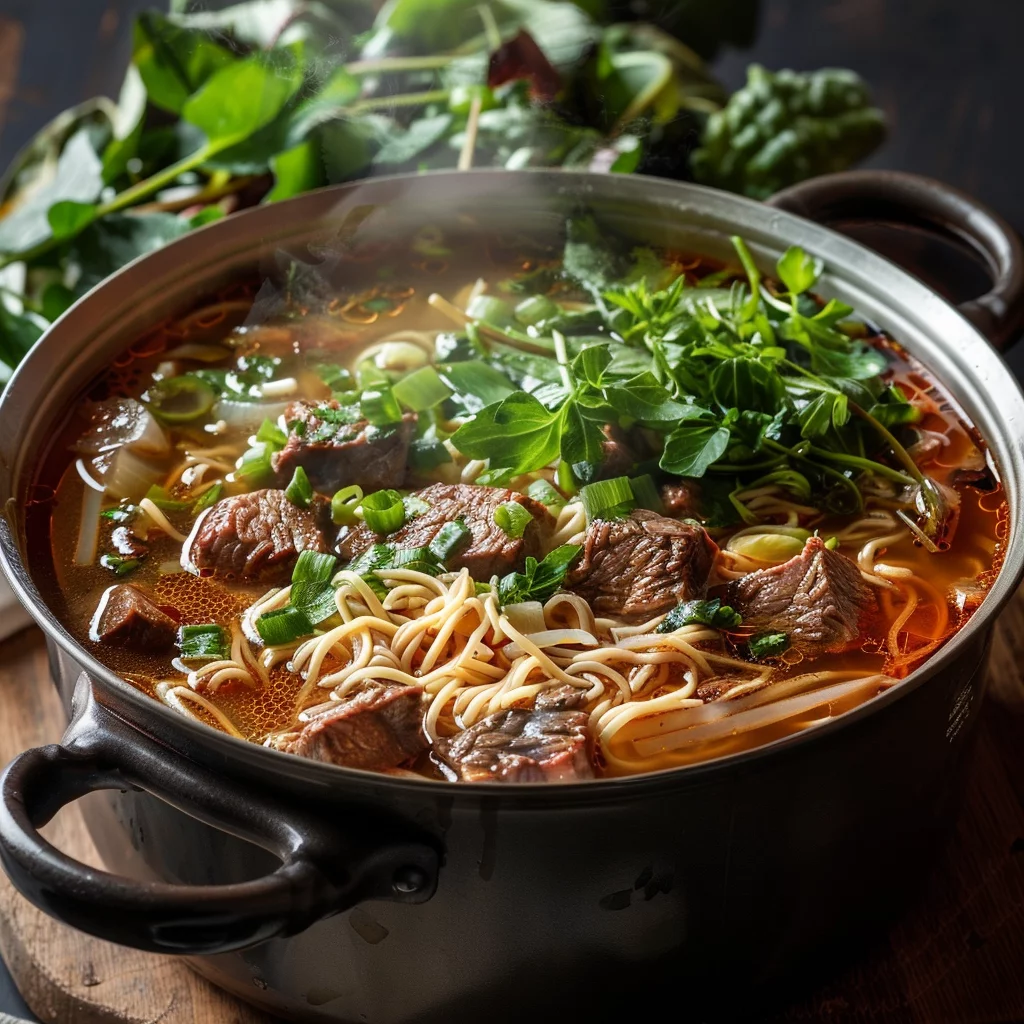
Add the blanched beef to the pot, then incorporate tomato paste, spicy bean paste, sugar, and soy sauce. Stir these ingredients to coat the beef, allowing the flavors to meld. Pour in the water and add the spice sachet, ensuring it doesn’t exceed the ⅔ mark of the pot.
Beef Noodle Soup
Seal the pressure cooker and cook on the Meat/Stew setting for 100 minutes. This method tenderizes the beef, while the spices infuse the broth. If using a regular pot, maintain a low simmer for 3-4 hours, adjusting the heat as necessary to avoid rapid boiling.
Tips and Tricks
Control the heat carefully when sautéing the aromatics to prevent burning. Adjust the seasoning to taste before serving, as the intensity can vary with cooking time. For a richer broth, allow the soup to sit for a few hours or overnight in the refrigerator, which enhances the flavors.
Experiment with different noodle types to find your preference. Fresh wheat noodles offer a chewy texture that complements the tender beef. Alternatively, explore beef pho noodle soup for a lighter variation.
Perfecting Your Beef Noodle Soup
Perfecting Results
The key to perfect beef noodle soup lies in balancing flavors and textures. Ensure the beef is tender and the noodles are cooked to perfection. The addition of bok choy in the last minute of noodle preparation offers a fresh, crisp contrast to the rich broth.
Garnish generously with cilantro, scallions, and pickled mustard greens. These toppings add freshness and a hint of acidity, rounding out the dish. If you enjoy spicy flavors, consider a spicy chicken noodle soup bowl for a fiery twist on a classic favorite.
Troubleshooting and Variations
If your soup lacks depth, adjust the seasoning. A little soy sauce or sugar can correct blandness. For a thicker broth, reduce the liquid slightly or add a bit more tomato paste. If the soup is too spicy, balance it with additional sugar or soy sauce.
For a unique take, explore a beef and egg noodle casserole as a comforting alternative. The fusion of flavors in this dish offers a delightful departure from traditional soup.
Serving and Pairing Your Soup
Serving and Presentation
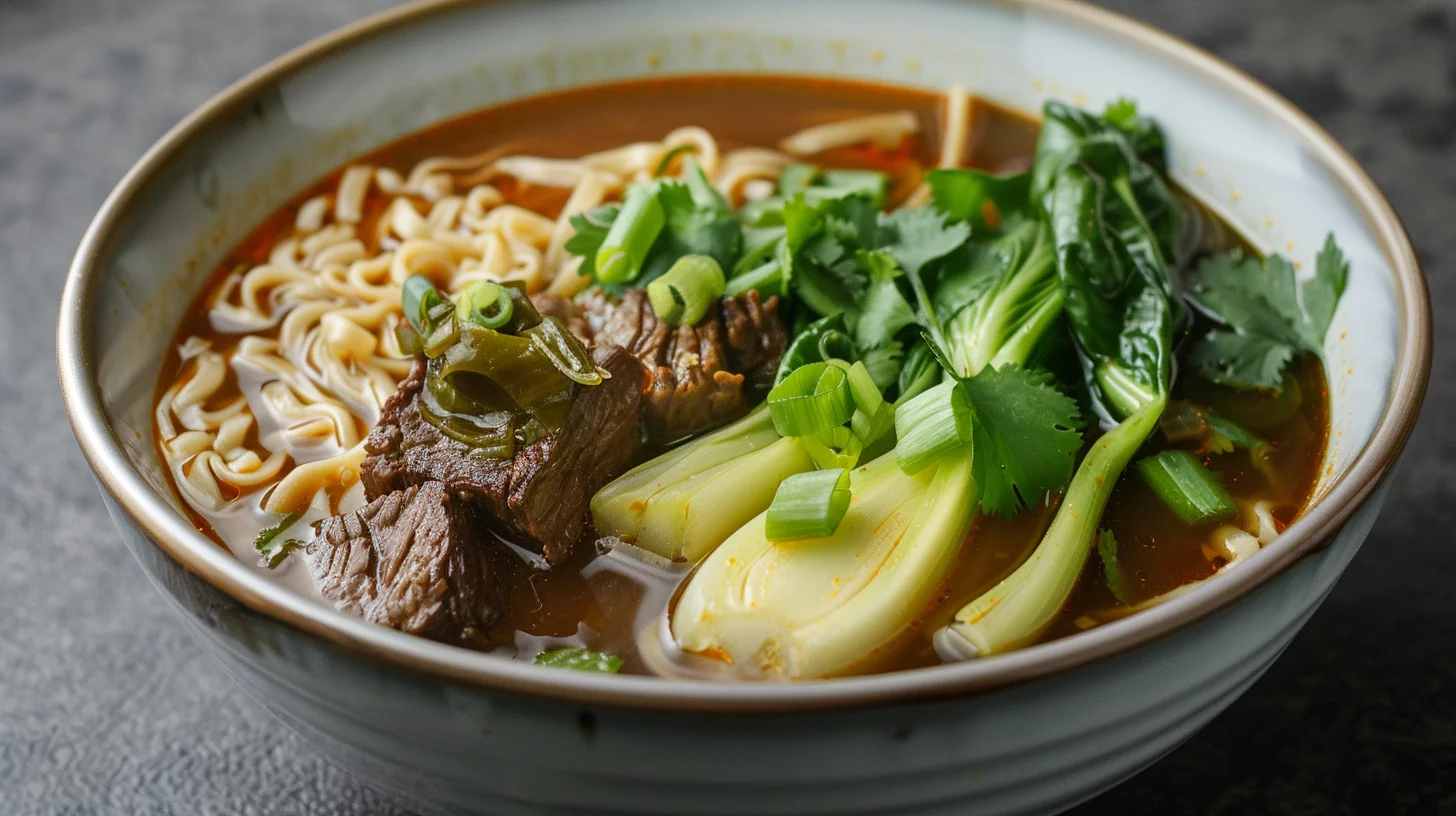
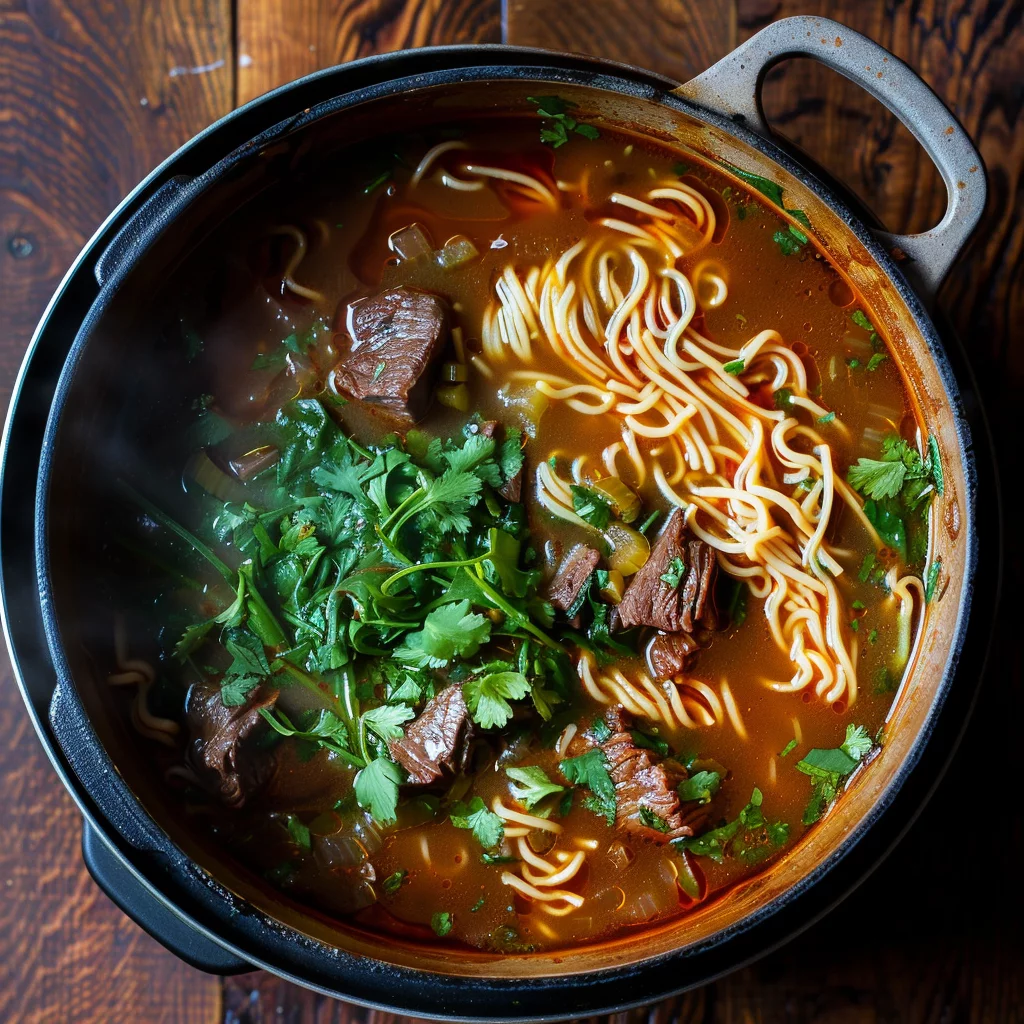
Serve beef noodle soup in deep bowls to capture the aromatic steam and vibrant colors. Arrange noodles at the base, topping them with a ladle of broth and beef. Add blanched bok choy and sprinkle with cilantro, scallions, and pickled mustard greens for a pop of color.
Consider sticky Mongolian beef noodles with green onions for an enticing side dish that complements the soup’s flavors. This pairing offers a harmonious blend of sweet and savory notes.
Beef Noodle Soup
Pairings and Storage
For a complete meal, pair your soup with light, crisp sides. A simple cucumber salad or steamed dumplings enhances the dining experience without overshadowing the soup’s flavors. Store leftovers in an airtight container in the refrigerator for up to three days.
When reheating, do so gently to maintain the integrity of the noodles. If you’re a fan of fusion dishes, explore a Mexican one-pot noodle recipe with ground beef for a delicious twist on traditional flavors.
Conclusion
Beef noodle soup embodies warmth and tradition in every bite. The careful layering of flavors and textures creates a dish that is both satisfying and comforting. Its versatility allows for endless variations, ensuring it remains a beloved staple in any culinary repertoire.
Whether you’re exploring new flavor profiles or sticking to classic roots, this soup offers a delightful culinary journey. Its rich history and adaptability make it a perfect addition to any meal plan, providing nourishment and joy with every serving.