

📑 Table of Contents ▶
- Beef Lo Mein: A Flavorful Stir-Fry Delight
- Fundamentals
- Preparation/Setup
- Directions
- Mastering Beef Lo Mein: Techniques and Tips
- Technique
- Tips/Tricks
- Perfecting Your Beef Lo Mein Experience
- Perfecting Results
- Troubleshooting/Variations
- Serving and Storing Beef Lo Mein
- Serving/Presentation
- Pairings/Storage
- Conclusion
- Beef Lo Mein
Beef Lo Mein
A good Beef Lo Mein warms the spirit and delights the taste buds. Memories of family dinners often swirl around in my mind, with the enticing aroma of fresh ingredients and bold flavors filling the air. Beef Lo Mein, a dish celebrated for its quick preparation and vibrant profile, holds a special place in those memories.
Nothing brings people together quite like a steaming bowl of savory Beef Lo Mein, made with tender flank steak and colorful vegetables. My own family would gather around the table, the laughter mixing with stories as we shared this delicious meal. Each slurp of noodles would tell a tale of comfort and connection, inviting everyone to join in on the feast.
Making Beef Lo Mein is not just a cooking task; it’s an experience. Choosing the perfect ingredients and crafting the ideal sauce feels like an art form. With just a few simple steps, you can recreate this dish at home, making your kitchen the heart of your home. Whether a weeknight dinner or a special occasion, Beef Lo Mein delights with its balance of flavors and ease of preparation.
Now, let’s dive into the fundamentals of creating an irresistible Beef Lo Mein that will leave everyone longing for more.
Beef Lo Mein: A Flavorful Stir-Fry Delight
Fundamentals
The foundation of a great Beef Lo Mein lies in its ingredients and preparation. Quality cuts of meat and fresh vegetables are crucial to achieving that authentic takeout taste. Flank steak, known for its tenderness, becomes even better when sliced against the grain. This single step enhances the texture and ensures each bite melts in your mouth.
Choosing colorful vegetables not only elevates the dish visually but also contributes to a well-rounded flavor profile. Broccoli, carrots, bell peppers, and, if you desire, crunchy snow peas promote both taste and nutrition. Plus, don’t underestimate the power of a solid marinade. The right balance of soy sauce, sesame oil, and cornstarch not only flavors the meat but also helps tenderize it.
Preparation/Setup
Gathering your ingredients and following a proper setup will make the cooking experience enjoyable. First, slice the flank steak thinly against the grain. This ensures each bite remains tender and flavorful. Next, prepare the marinade. Mixing soy sauce, cornstarch, and sesame oil creates a velvety coating for the beef, setting the tone for the dish.
While the steak marinates, you can focus on the noodles. Lo mein noodles typically cook quickly, so start boiling water to prepare them. Remember to rinse them after cooking to remove excess starch–this step keeps the noodles from clumping.
Once everything is prepped, the real fun begins. The quick stir-frying process is exhilarating, with colors and aromas filling the air. This dish is not just about cooking; it’s about creating a feast for the senses.
Ingredients
To whip up a delightful Beef Lo Mein, collect the following ingredients:
- 1 lb flank steak, thinly sliced against the grain
- 2 tablespoons soy sauce
- 1 tablespoon cornstarch
- 1 teaspoon sesame oil
- 1 tablespoon hoisin sauce
- 1 tablespoon sesame oil
- 1/4 cup soy sauce
- 1 teaspoon sugar
- 1 tablespoon rice vinegar
- 2 tablespoons oyster sauce
- 1 teaspoon garlic, minced
- 1 teaspoon ginger, minced
- 8 oz lo mein noodles (or spaghetti)
- 2 tablespoons vegetable oil
- 1 cup shredded carrots
- 1 cup broccoli florets
- 1/2 cup sliced bell peppers (any color)
- 1/2 cup snow peas (optional)
- 3 green onions, sliced
Having everything on hand allows for efficient cooking–no scrambling midway through the process.
Directions
-
Marinate the Beef: In a bowl, mix 2 tablespoons of soy sauce, 1 tablespoon of cornstarch, and 1 teaspoon of sesame oil. Add the flank steak, toss to coat, and let it marinate for 15 minutes.
-
Cook the Noodles: Cook the lo mein noodles per package instructions. Drain and set them aside for later.
-
Prepare the Sauce: In a small bowl, whisk together 1/4 cup soy sauce, 2 tablespoons oyster sauce, 1 tablespoon hoisin sauce, 1 tablespoon sesame oil, 1 tablespoon rice vinegar, 1 teaspoon sugar, 1 teaspoon minced garlic, and 1 teaspoon minced ginger. This sauce packs an amazing punch.
-
Stir-Fry the Beef: Heat 1 tablespoon of vegetable oil in a large skillet or wok over medium-high heat. Stir-fry the marinated beef for 2-3 minutes until browned. Remove the beef and set it aside.
-
Cook the Vegetables: In the same skillet, heat the remaining 1 tablespoon of oil. Add the shredded carrots, broccoli florets, sliced bell peppers, and snow peas. Stir-fry for 3-4 minutes until the veggies are tender-crisp.
-
Combine Everything: Add the cooked noodles and beef back to the skillet. Pour the prepared sauce over the mixture, tossing everything for 2-3 minutes over medium heat until well-coated.
-
Garnish and Serve: Finish with sliced green onions as a garnish. Serve hot and enjoy!
Mastering Beef Lo Mein: Techniques and Tips
Technique
The essence of a perfect Beef Lo Mein lies in its stir-frying technique. High heat is your friend; it seals in flavors and gives that crucial "wok hei" or "breath of the wok" flavor. A well-preheated pan or wok ensures the meat sears quickly, maintaining its juiciness and tenderness.
When adding vegetables, cut them uniformly to ensure even cooking. This technique helps all ingredients finish around the same time, maximizing flavor and texture.
Tips/Tricks
- Prep Ahead: Chop all vegetables and slice the beef ahead of time. Having everything ready will streamline your cooking process.
- Don’t Overcrowd the Pan: If you’re making a larger batch, consider cooking in smaller portions to avoid steaming. This keeps everything crisp and flavorful.
- Balance Flavors: Adjust sauces and spices according to your taste. A touch more sesame oil can bring out nuttiness, while extra sugar can balance out soy sauce’s saltiness.
Perfecting Your Beef Lo Mein Experience
Perfecting Results
Achieving the ultimate Beef Lo Mein revolves around timing and balancing flavors. Taste your sauce as you mix; it should have a well-rounded taste with salty, sweet, and umami notes that complement the beef. You can customize thickness by adjusting cornstarch or soy sauce.
Troubleshooting/Variations
If your beef turns tough, it might be due to overcooking. Remedy this by keeping an eye on stir-frying times. For a lighter variation, use chicken or tofu instead of beef. You can also switch up the vegetables; bok choy or snap peas work beautifully here.
For this dish, consider adding a sprinkle of crushed red pepper or chili paste for some heat. Don’t shy away from personalization!
Serving and Storing Beef Lo Mein
Serving/Presentation
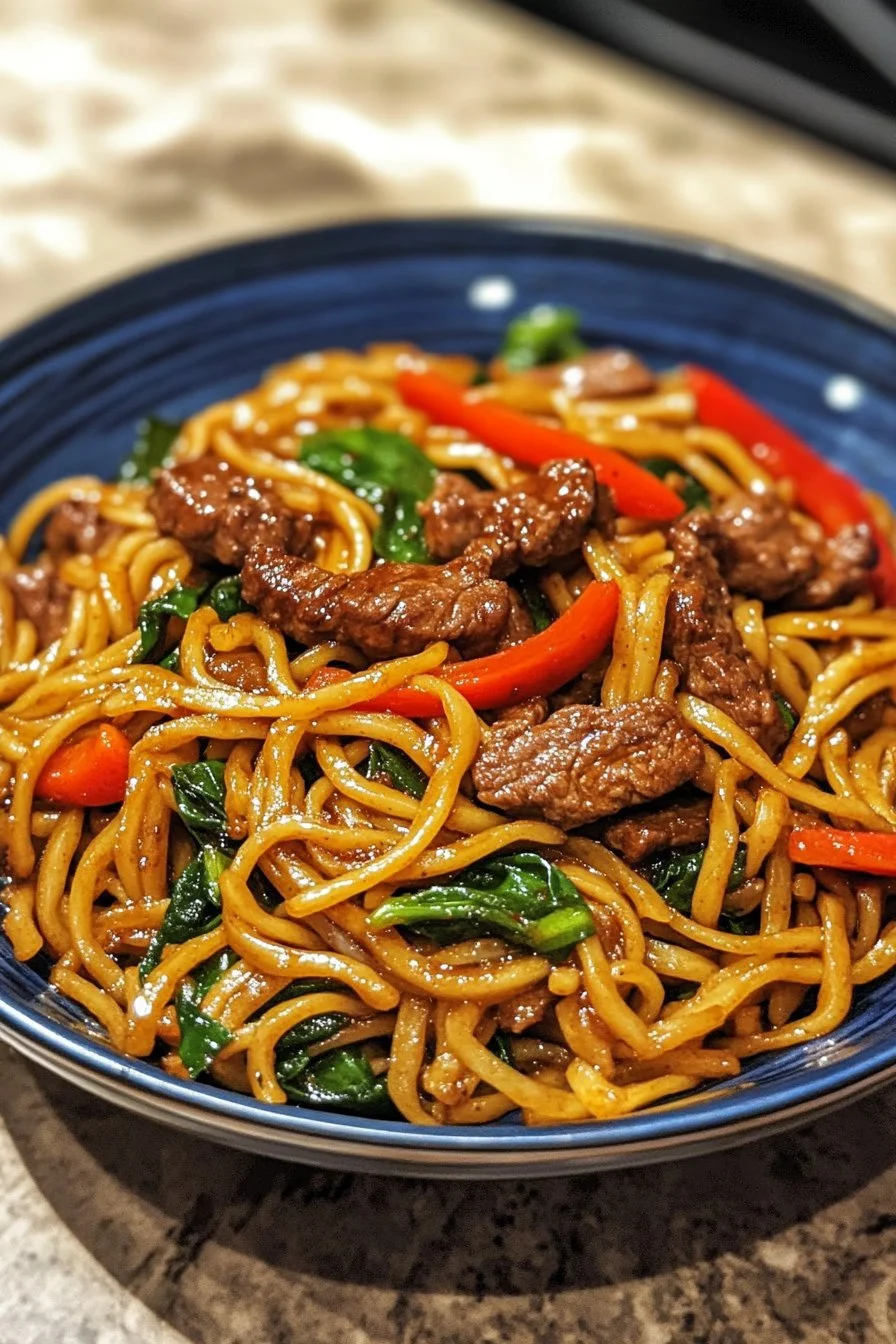
Once your Beef Lo Mein is ready, how you serve it matters. Using a large bowl or plate, pile the colorful noodles high. Garnish with fresh green onions for an extra pop of color and flavor. Serve alongside additional sauces for those who crave a bit more kick.
Pairings/Storage
Beef Lo Mein shines on its own, but serve it with a side of egg rolls or spring rolls for an impressive meal. It’s perfect for family dinners, meal preps, or even entertaining guests.
When it comes to storage, let leftovers cool completely before transferring to airtight containers. They can last up to 3 days in the refrigerator. Reheat gently on the stove, adding a splash of soy sauce or water to prevent drying out.
Conclusion
The process of creating a delicious Beef Lo Mein encapsulates the joy of cooking. It brings together simple, fresh ingredients that transform into a heartwarming meal. The dance of flavors, colors, and aromas creates not just a dish, but a celebration of togetherness. Crafting this culinary delight offers more than sustenance; it fosters shared moments and experiences around the table.
Print
Beef Lo Mein
- Prep Time: 15 minutes
- Cook Time: 15 minutes
- Total Time: 30 minutes
- Yield: 4 servings
- Category: Main Course
- Method: Stir-frying
- Cuisine: Chinese
- Diet: None
Description
A flavorful stir-fry dish featuring tender flank steak and colorful vegetables, perfect for any family dinner.
Ingredients
- 1 lb flank steak, thinly sliced against the grain
- 2 tablespoons soy sauce
- 1 tablespoon cornstarch
- 1 teaspoon sesame oil
- 1 tablespoon hoisin sauce
- 1/4 cup soy sauce
- 1 teaspoon sugar
- 1 tablespoon rice vinegar
- 2 tablespoons oyster sauce
- 1 teaspoon garlic, minced
- 1 teaspoon ginger, minced
- 8 oz lo mein noodles (or spaghetti)
- 2 tablespoons vegetable oil
- 1 cup shredded carrots
- 1 cup broccoli florets
- 1/2 cup sliced bell peppers (any color)
- 1/2 cup snow peas (optional)
- 3 green onions, sliced
Instructions
- In a bowl, mix 2 tablespoons of soy sauce, 1 tablespoon of cornstarch, and 1 teaspoon of sesame oil. Add the flank steak, toss to coat, and let it marinate for 15 minutes.
- Cook the lo mein noodles per package instructions. Drain and set them aside for later.
- In a small bowl, whisk together 1/4 cup soy sauce, 2 tablespoons oyster sauce, 1 tablespoon hoisin sauce, 1 tablespoon sesame oil, 1 tablespoon rice vinegar, 1 teaspoon sugar, 1 teaspoon minced garlic, and 1 teaspoon minced ginger. This sauce packs an amazing punch.
- Heat 1 tablespoon of vegetable oil in a large skillet or wok over medium-high heat. Stir-fry the marinated beef for 2-3 minutes until browned. Remove the beef and set it aside.
- In the same skillet, heat the remaining 1 tablespoon of oil. Add the shredded carrots, broccoli florets, sliced bell peppers, and snow peas. Stir-fry for 3-4 minutes until the veggies are tender-crisp.
- Add the cooked noodles and beef back to the skillet. Pour the prepared sauce over the mixture, tossing everything for 2-3 minutes over medium heat until well-coated.
- Finish with sliced green onions as a garnish. Serve hot and enjoy!
Notes
Prep all ingredients ahead of time for an efficient cooking experience. Adjust sauces according to taste.