
📑 Table of Contents ▶
- Moussaka and Pastitsada
- Mastering the Art of Moussaka
- Fundamentals
- Preparation/Setup
- Creating Culinary Harmony
- Technique
- Tips/Tricks
- Achieving Perfection in Moussaka
- Perfecting Results
- Troubleshooting/Variations
- Serving and Enjoying Moussaka
- Serving/Presentation
- Pairings/Storage
- Conclusion
- FAQs – Moussaka and Pastitsada
In the heart of my family’s kitchen, the aroma of moussaka always signaled something special. The sizzle of eggplants frying and the rich scent of cinnamon wafting through the air were familiar and comforting. Each step in creating this dish felt like a cherished ritual, a recipe passed down through generations, linking us to our past and to each other.
Moussaka isn’t just food; it’s a story on a plate. Growing up, I watched my grandmother effortlessly transform simple ingredients into a masterpiece. Her methodical approach to cooking taught me that patience and love are the secret ingredients to any successful dish. Her moussaka was more than just nourishment—it was an experience, a celebration of flavors that brought everyone to the table.
In my own kitchen today, I try to capture that magic every time I prepare moussaka. The layering of tender eggplants, savory meat sauce, and creamy béchamel creates a harmony of textures and tastes. It’s a dish that invites you to savor each bite, reminding you that food can be both simple and extraordinary. Whether you’re a seasoned cook or new to the kitchen, moussaka offers a delicious journey through culinary tradition.
Moussaka and Pastitsada
- Prep Time: 1 hour
- Cook Time: 1 hour
- Total Time: 2 hours
- Yield: 8 servings
- Category: Main Course
- Method: Baking
- Cuisine: Greek
Description
Discover how to make delicious Moussaka and Pastitsada recipes with our step-by-step guide. Perfect for a taste of Greece in your own kitchen!
Ingredients
- 6 eggplants
- 5 potatoes (optional )
- Vegetable oil (for frying the eggplants)
- 750 g beef or lamb mince (26 oz (737 g))
- 2 red onions (chopped)
- 2 cloves of garlic (chopped)
- 1 tin chopped tomatoes (400g / 14oz (397 g))
- 2 tbsp (30 ml) tomato paste
- 1 teaspoon (5 ml) sugar
- 1 glass of grape juice
- Pinch of sea salt and freshly ground black pepper
- 1 bay leaf
- 3–4 whole cloves (optional )
- A pinch of cinnamon or one cinnamon stick
- 1/4 of a cup olive oil
- 900 ml (3 3/4 cups) milk (31 fl.oz)
- 120 g butter (4 oz (113 g))
- 120 g flour (4 oz (113 g))
- A pinch of nutmeg
- 2 egg yolks
- 100 g Grana Padano or Kefalotyri or your favourite hard cheese (3.5 oz (99 g))
- Salt to taste
Instructions
- Begin by handling the eggplants. Cut off their stalks and slice them into rounds, about 1 cm thick. Sprinkle with salt and let them sit in a strainer for around 30 minutes.
- Wash the eggplants thoroughly and press out the excess water using your hands. Dry them and fry in ample oil until they turn a nice color. Place the fried slices on paper towels to soak up the oil. (For a healthier variation, drizzle the eggplants with olive oil and bake them for 20 minutes instead of frying.) Set them aside after cooking.
- If including potatoes, slice them into pieces about 0.5 cm thick. Fry or bake them similarly to the eggplants. Salt them lightly and set aside.
- Move on to the meat sauce. Warm a large pan over medium-high heat and pour in the olive oil. Add the chopped onions and cook until they soften and gain a bit of color. Add the minced meat, breaking it up with a wooden spoon, and cook. When it begins to brown, add garlic and tomato paste, cooking until the garlic softens. Pour in grape juice to deglaze, allowing it to evaporate. Add chopped tomatoes, sugar, cinnamon, bay leaf, cloves, and a generous amount of salt and pepper. Bring the mixture to a boil, then reduce the heat, cover, and let simmer for about 30 minutes until most of the liquid has evaporated. Set aside.
- For the béchamel sauce, melt butter in a large pan over low-medium heat. Add flour, whisking steadily to form a paste. Gradually add warmed milk, continuing to whisk to avoid lumps. If needed, boil on low heat while stirring until thickened to a creamy consistency.
- Take the béchamel off the heat and mix in egg yolks, salt, pepper, nutmeg, and most of the grated cheese, reserving some for later. Whisk swiftly to prevent the eggs from scrambling. Adjust salt to taste. Mix a spoonful of béchamel into the meat sauce and set aside.
- Time to assemble: Use a large baking dish (around 20x30cm and 8cm deep). Grease the bottom and sides. Add a layer of potatoes first (if using), then half the eggplants. Spread all the meat sauce evenly over the top. Be sure to remove cloves and bay leaf. Add another layer of eggplants, then cover with the béchamel sauce, smoothing it with a spatula.
- Sprinkle the remaining grated cheese on top. Preheat your oven to 180C/350F and bake the moussaka for approximately 60 minutes until the top is light golden brown. Though tempting, allow the moussaka to cool to a warm temperature before slicing. This will help the béchamel stay intact when cutting.
- Pair the Moussaka with a crisp Greek Salad and enjoy it with a glass of wine!
Notes
- Try baking the eggplant slices with a drizzle of olive oil for a lighter option.
- Remove the bay leaf and cloves from the meat sauce before assembling the moussaka.
- Customize the cheese topping with hard cheeses like Grana Padano or Kefalotyri.
Mastering the Art of Moussaka
Fundamentals
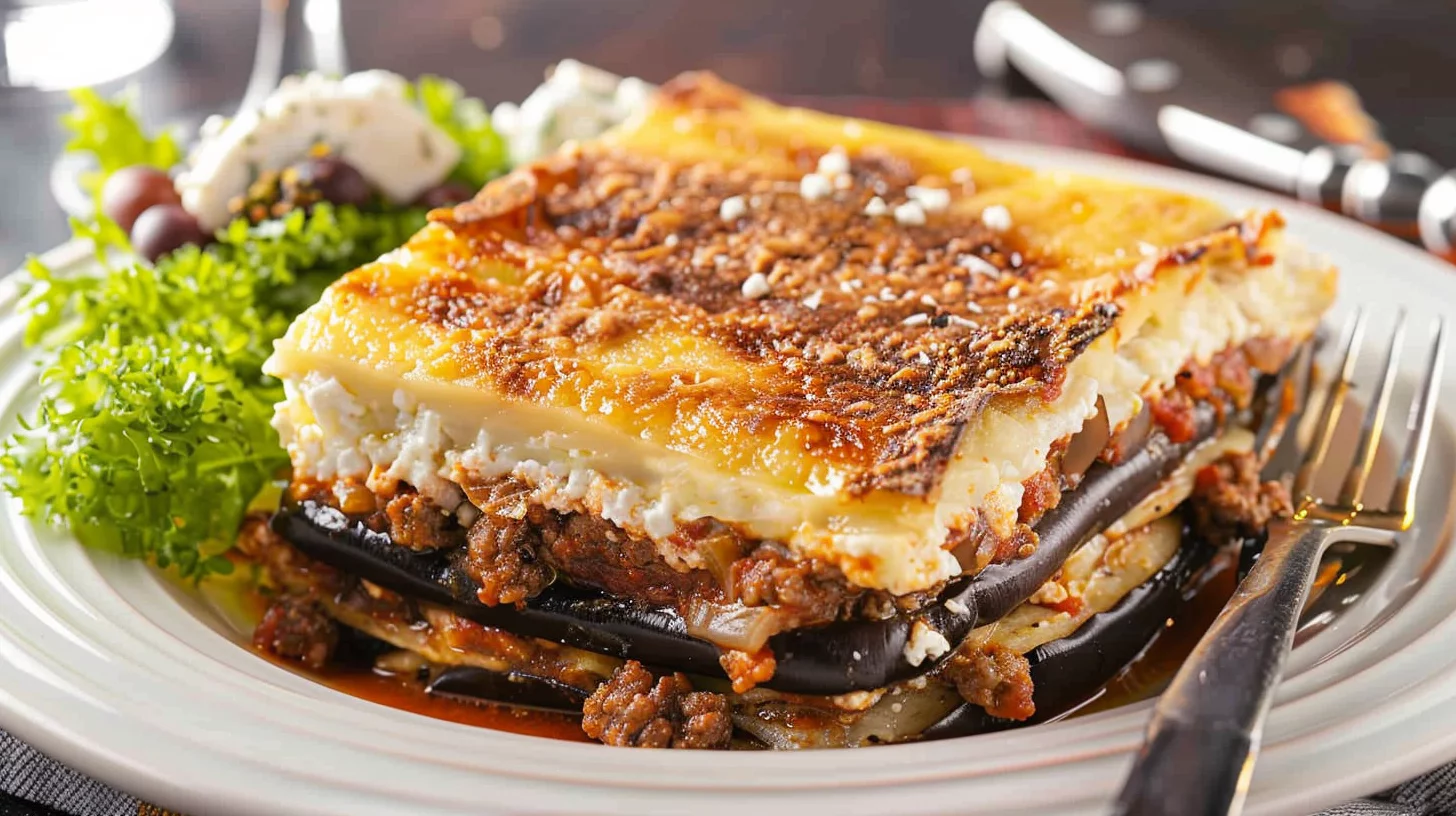
To craft a delicious moussaka, understanding the fundamentals is crucial. At its core, moussaka is a layered dish, much like a lasagna, but with a distinct Mediterranean twist. The primary components include eggplants, a rich meat sauce, and a creamy béchamel topping. Each layer contributes to the overall complexity and richness of the dish.
Eggplants form the foundation of moussaka, providing a tender and flavorful base. The meat sauce, often made with beef or lamb mince, introduces savory depth. Finally, the béchamel sauce adds a luxurious creaminess, elevating the dish to new heights. It’s this balance of flavors that makes moussaka a beloved classic.
Preparation/Setup
Begin by preparing the eggplants. Slice them into rounds, sprinkle with salt, and let them rest to draw out any bitterness. After rinsing and drying, fry or bake them until golden. If you’re using potatoes, slice and cook them in the same manner as the eggplants. This step ensures a flavorful and tender base for your moussaka.
Next, focus on the meat sauce. Sauté chopped onions until soft, then add the minced meat, breaking it apart as it browns. Incorporate garlic, tomato paste, and spices for a robust flavor profile. Let the sauce simmer, allowing the ingredients to meld together. This is where the magic happens, as the flavors deepen and develop.
Creating Culinary Harmony
Technique
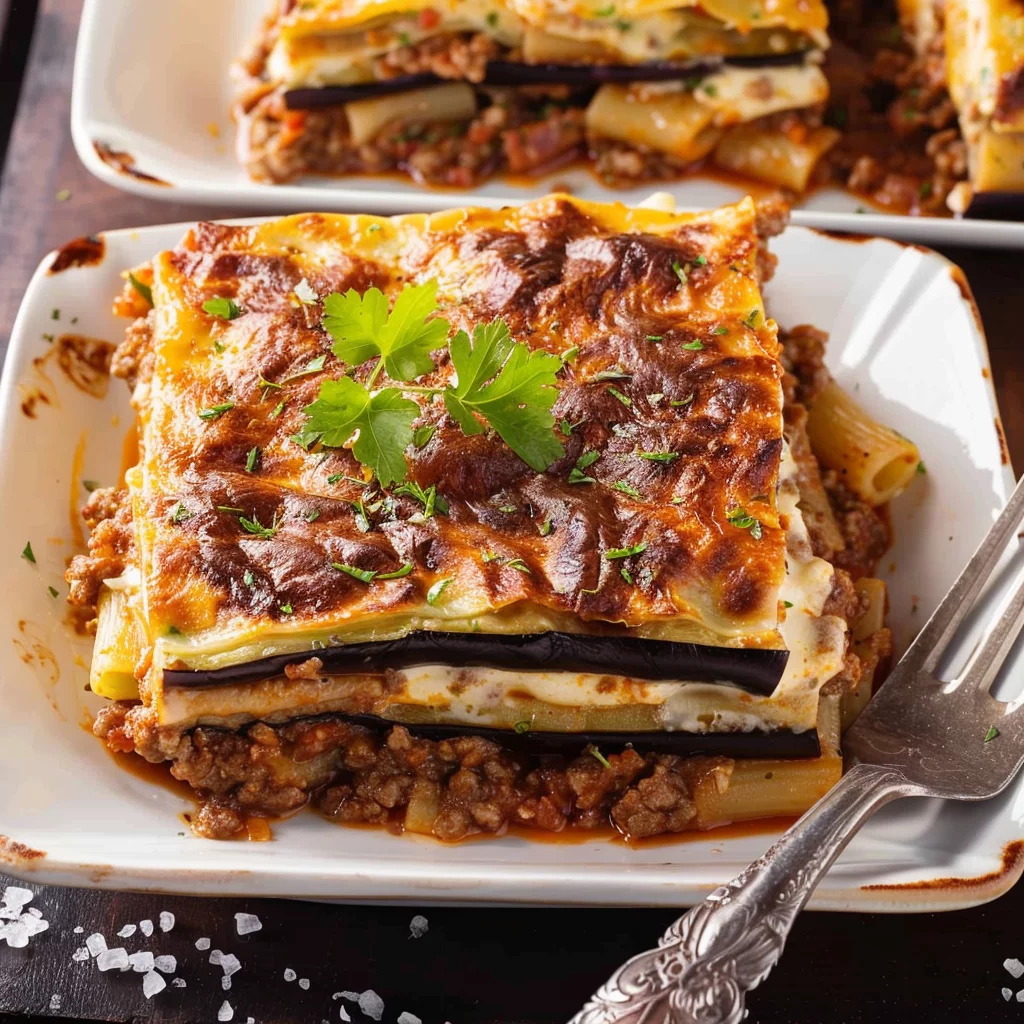
Perfecting moussaka requires attention to technique. When making the béchamel sauce, patience is key. Melt butter and gradually whisk in flour to form a smooth paste. Slowly add warmed milk, whisking continuously to prevent lumps. The goal is a creamy, thick sauce that will beautifully crown your moussaka.
Once the béchamel reaches the desired consistency, remove it from heat and quickly incorporate egg yolks, cheese, and spices. This mixture should be smooth and velvety, ready to add a rich finish to your dish. A little patience and care here go a long way in achieving a flawless béchamel.
Moussaka and Pastitsada
Tips/Tricks
For a flavorful meat sauce, deglaze the pan with grape juice, allowing it to evaporate and enrich the dish. This step not only enhances the sauce but also adds a subtle sweetness that balances the savory elements. Be sure to taste and adjust seasoning, ensuring each layer of your moussaka shines.
If time allows, let the moussaka cool slightly before serving. This helps the layers set, making it easier to slice and serve. Remember, a well-rested moussaka is a well-enjoyed one, with each bite offering a perfect blend of flavors.
Achieving Perfection in Moussaka
Perfecting Results
For a perfect moussaka, focus on achieving a balance of textures and flavors. The eggplants should be tender yet slightly firm, providing a sturdy base. The meat sauce needs to be rich and flavorful, complementing the creamy béchamel. Together, these layers create a symphony of taste.
Ensure the béchamel is smooth and thick enough to hold its shape. This will give your moussaka a beautiful, golden crust once baked. Letting the dish sit before slicing allows the layers to meld, resulting in a cohesive and delicious serving.
Troubleshooting/Variations
If your béchamel seems lumpy, whisk vigorously while gradually adding more milk until smooth. For a lighter version, consider baking the eggplants instead of frying. This reduces oil content without sacrificing flavor. Feel free to experiment with spices, adjusting to your taste preferences for a personalized moussaka experience.
Don’t be afraid to explore variations, such as using different cheeses for the béchamel or adding a hint of lemon zest to the meat sauce. These small changes can offer a fresh twist on a classic dish, keeping your culinary creations exciting and new.
Serving and Enjoying Moussaka
Serving/Presentation
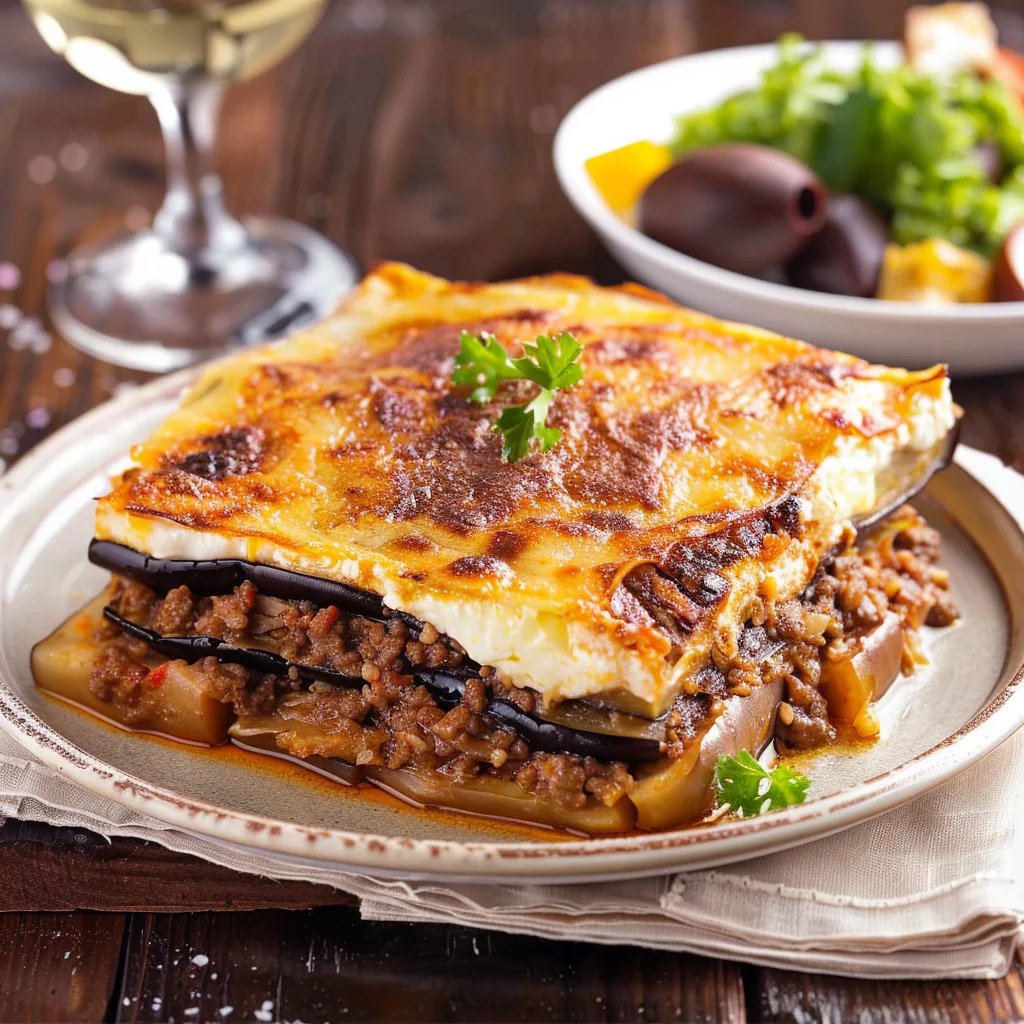
When serving moussaka, presentation matters. Use a sharp knife to slice clean portions, showcasing the beautiful layers of eggplant, meat sauce, and béchamel. Serve warm, allowing the flavors to shine. A simple garnish of fresh herbs can add a pop of color and elevate the dish’s visual appeal.
Pair your moussaka with a crisp salad, balancing the richness of the dish with fresh, vibrant flavors. This combination creates a complete meal, offering a variety of textures and tastes that complement each other beautifully.
Moussaka and Pastitsada
Pairings/Storage
Moussaka can be stored in the fridge for a few days, making it perfect for meal prep or leftovers. Reheat gently to maintain the integrity of the layers. This dish also freezes well, so consider making a double batch to enjoy later. Whether fresh or reheated, moussaka remains a delightful and satisfying meal.
For more inspiration, explore classic Greek moussaka recipes that offer traditional takes on this beloved dish. Each variation provides new insights into the world of Mediterranean cuisine.
Conclusion
Crafting a perfect moussaka involves mastering layers of flavor, texture, and technique. From the tender eggplants to the creamy béchamel, each component plays a vital role. By following these steps, you can create a dish that’s as rewarding to make as it is to eat.
The strength of moussaka lies in its versatility and adaptability. Whether you stick to traditional methods or explore new twists, the result is a dish that brings joy and satisfaction. Moussaka is more than a meal; it’s a culinary journey that connects past and present, family and friends.