
📑 Table of Contents ▶
- Greek Yemista
- Mastering Greek Yemista
- Fundamentals
- Preparation and Setup
- Crafting the Perfect Yemista
- Technique
- Tips and Tricks
- Elevating Your Greek Yemista
- Perfecting Results
- Troubleshooting and Variations
- Presenting Your Greek Yemista
- Serving and Presentation
- Pairings and Storage
- Conclusion
- FAQs – Greek Yemista
I’m Laloti Karla, and my journey with food began in a kitchen filled with the aromas of home-cooked meals. The clatter of pots and pans was the soundtrack of my childhood, and my grandmother’s kitchen was the stage where my culinary passion blossomed. Her knack for turning simple, fresh ingredients into delicious meals left a lasting impression on me. It taught me that food is not just about flavors; it’s a language of love and connection.
My grandmother’s cooking, filled with care and creativity, inspired me to create Yumoti.com. Here, I aim to share recipes that are both approachable and delightful, allowing everyone to experience the joy of cooking. One such recipe is Greek Yemista, a dish that captures the essence of Greek cuisine with its vibrant flavors and wholesome ingredients.
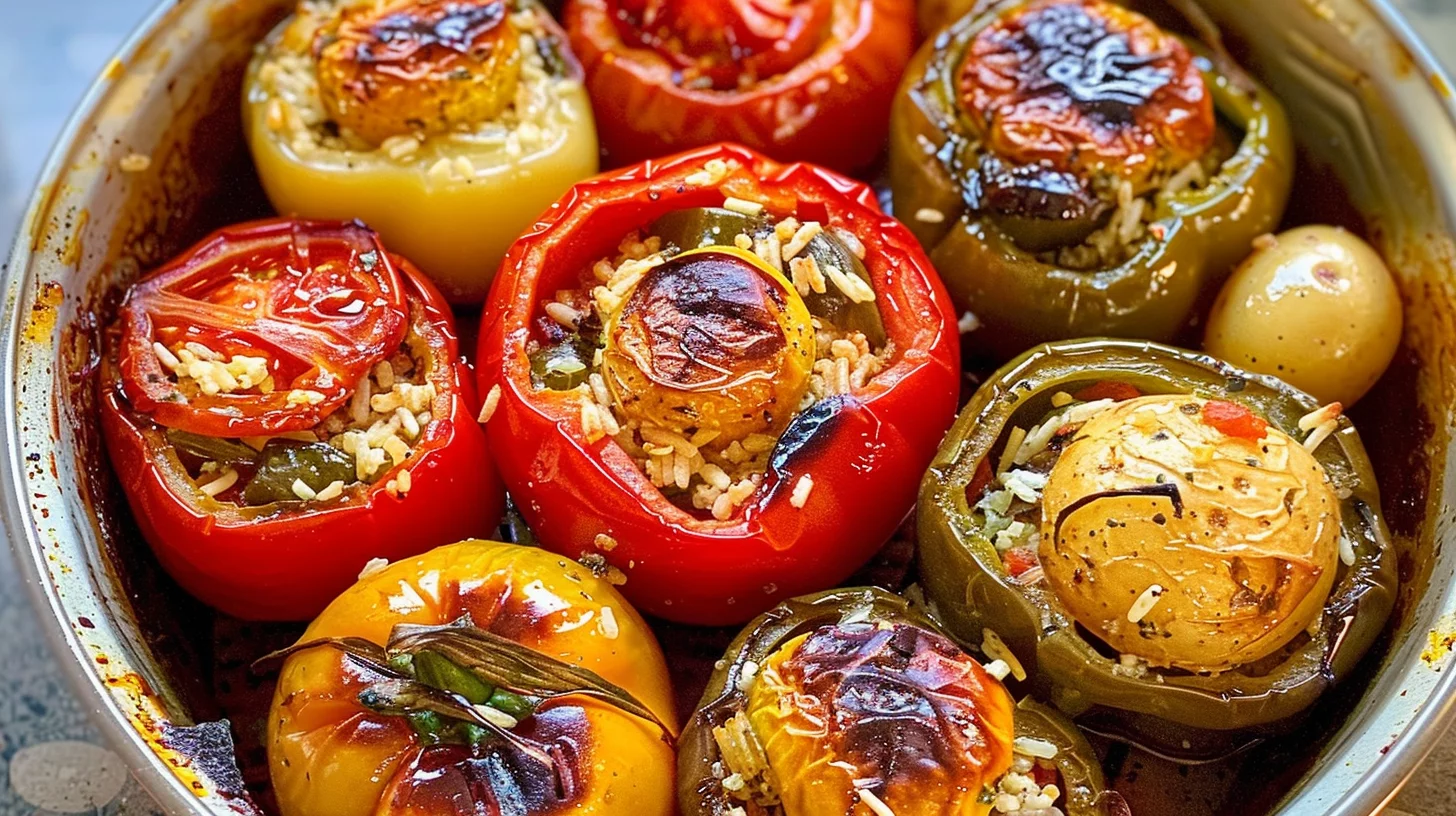
Greek Yemista is a dish that embodies the warmth and simplicity of home cooking. It’s a staple in Greek households, bringing family and friends together around the table. The combination of stuffed tomatoes and peppers, filled with a savory rice mixture, makes it a perfect dish for any occasion.
Whether you’re familiar with Greek Yemista or just discovering it, this recipe will guide you through the process of creating a dish that is as rewarding to make as it is to eat. Let’s dive into the art of preparing this delightful meal.
Print
Greek Yemista
- Prep Time: 20 minutes
- Cook Time: 45 minutes
- Total Time: 65 minutes
- Yield: 6-8 servings
- Category: Breakfast
- Method: Baking
- Cuisine: Italienne
Description
Discover the secrets of authentic Greek Yemista with our step-by-step recipe guide. Learn how to create this delicious, traditional dish bursting with Mediterranean flavors.
Ingredients
- 5 large tomatoes
- 5 large green bell peppers (you may also use zucchini or eggplant) + 1 small green pepper
- 10–12 tablespoon (165 ml) s un-cooked short or medium grain rice (do not use long grain)
- 8 zucchini
- 1 onion
- 2 pounds (907 g) potatoes
- 7 garlic cloves
- 1 tablespoon (15 ml) oregano
- 2 tablespoon (30 ml) s dry mint
- 4 tablespoon (60 ml) s fresh parsley
- 1 tablespoon (15 ml) tomato paste
- Cloves-whole
- Allspice – whole
- 1 1/2 cup (360 ml) olive oil
- Lemon juice
- Salt/pepper
Instructions
- Set your oven to 400°F (200°C) to preheat.
- Rinse the tomatoes and green bell peppers. For the peppers, slice around the top and remove the seeds. For the tomatoes, cut around the base and scoop out the insides with a spoon, saving them along with their juices in a separate container. Make small cuts inside the bottom of the tomatoes and peppers but ensure they do not go through.
- Arrange the hollowed tomatoes and peppers, along with their tops, in a large, deep baking dish.
- Peel and grate 2-3 zucchinis, then place the grated zucchini in a separate bowl.
- Chop an onion and 4-5 garlic cloves in a food processor along with a teaspoon of oil and a pinch of salt. Blend until just combined, avoiding a paste, and then add this to the grated zucchini.
- Dice a small green bell pepper and add it to the zucchini mixture.
- Grate a small potato, slightly larger than an egg, and mix it into the zucchini mixture.
- Squeeze the juice from the tomatoes, using your hands to extract all the liquid, and keep this in a separate bowl. You should now have three bowls: one with chopped tomato, one with the zucchini-potato-onion mix, and one with tomato juice. Chop the tomatoes into small pieces and mix them with the zucchini blend. Add a tablespoon of salt, dry mint, parsley, and tomato paste. Stir in 10 to 12 tablespoons of short-grain rice and a teaspoon of lemon juice. Finally, incorporate ¾ cup of olive oil and allow the mixture to rest.
- Peel and quarter 2 pounds of potatoes. Peel and slice 3-4 zucchinis and combine them with the potatoes in a bowl. Pour in ¾ cup of olive oil, add a tablespoon of oregano, a sprinkle of salt, and 2 minced garlic cloves. Mix thoroughly, preferably using your hands. Pour in the reserved tomato juice from step 8.
- Stuff the tomatoes and peppers with the rice mixture until full and secure with their tops.
- Place the potatoes around the stuffed tomatoes and peppers in the pan to prevent them from moving. If there is leftover rice mixture, combine it with the quartered potatoes and distribute it in the pan.
- Insert 5 whole cloves and 5 whole allspice berries into the potatoes.
- Carefully pour a cup of water into a corner of the pan, avoiding pouring it directly over the ingredients to keep the oil intact.
- Bake in the oven for 15-20 minutes at 400°F (200°C). Then, lower the temperature to 320-340°F (170-160°C) and continue baking for another 1 to 1½ hours. If it seems to be drying out, add more water as needed.
- To check for doneness, ensure the rice is soft and has a creamy texture.
Notes
- Use a small spoon to gently remove seeds from peppers to avoid tearing themnAllow the rice mixture to rest for 15 minutes to fully absorb the spices and juicesnPreheat the oven to 400°F (200°C) for even cooking and properly cooked rice
Mastering Greek Yemista
Fundamentals
The essence of Greek Yemista lies in its fresh, simple ingredients. Start by selecting ripe tomatoes and vibrant green bell peppers. These will serve as the vessels for our flavorful rice mixture. The key to a successful Yemista is balancing flavors and textures, ensuring that each bite is a delightful experience.
Short grain rice is crucial for this recipe as it absorbs flavors beautifully, resulting in a creamy, flavorful filling. Herbs like oregano, mint, and parsley are essential, infusing the dish with a distinct Mediterranean aroma. Olive oil adds richness and depth, elevating the entire dish to a new level of deliciousness.
Preparation and Setup
Preheat your oven to 400°F (200°C) to start. Begin by preparing the tomatoes and peppers. Slice around the tops and remove the seeds from the peppers. For the tomatoes, scoop out the insides carefully and reserve the juice. This step is crucial as it forms the base of our stuffing.
Next, grate the zucchinis and mix them with chopped onion and garlic. This mixture, combined with diced green pepper and a grated potato, forms the heart of the stuffing. Add the reserved tomato juice to this blend, ensuring the filling is moist and flavorful.
Incorporate short-grain rice, herbs, and olive oil into the mixture, allowing it to rest and absorb the flavors. This resting period is vital for the rice to soak up the aromatic goodness before it is baked.
Crafting the Perfect Yemista
Technique
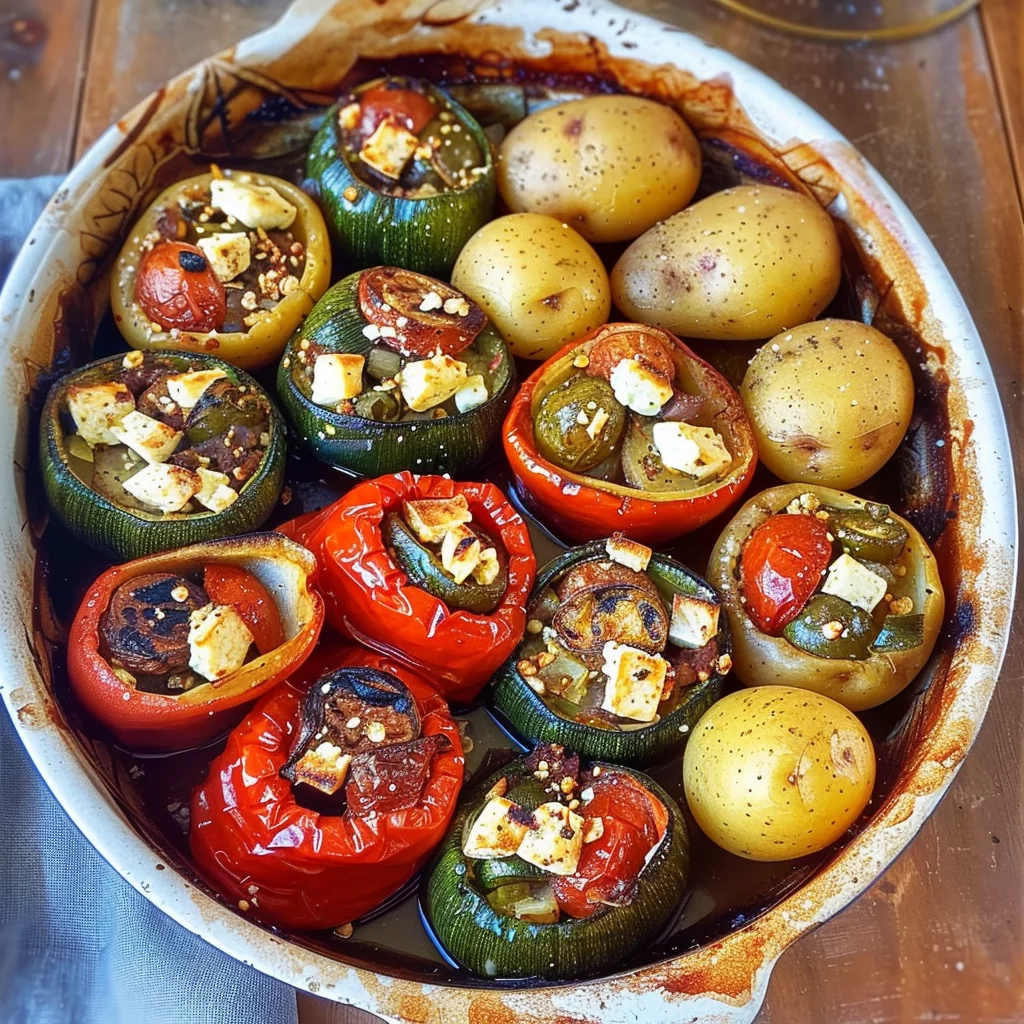
Stuffing the vegetables requires a gentle touch. Fill the tomatoes and peppers with the rice mixture, ensuring they are packed but not overly stuffed. This allows the rice to expand as it cooks, resulting in a perfectly cooked filling.
Greek Yemista
Arrange the stuffed vegetables in a deep baking dish, surrounded by quartered potatoes and sliced zucchinis. This not only prevents the vegetables from tipping over but also allows the potatoes to absorb the flavorful juices released during baking.
Tips and Tricks
To enhance the flavors, add whole cloves and allspice berries to the baking dish. These spices infuse the potatoes with a warm, aromatic essence, complementing the stuffed vegetables perfectly.
Maintaining the right oven temperature is crucial. Start with a higher temperature to set the stuffing, then reduce to allow the flavors to meld and the rice to cook to perfection. If the dish appears to dry out, add a splash of water to keep everything moist and flavorful.
Elevating Your Greek Yemista
Perfecting Results
Achieving the ideal texture in Greek Yemista is all about patience. Allow the dish to bake slowly, letting the rice become soft and creamy. This method ensures that each bite is filled with the rich flavors of herbs and spices.
If you encounter any issues, such as the rice being undercooked, simply cover the dish with foil and continue baking until the desired consistency is achieved. This technique traps steam, aiding in the cooking process.
Troubleshooting and Variations
For those seeking variety, consider using zucchini or eggplant as alternatives to peppers. These vegetables offer a different texture and flavor profile while still maintaining the integrity of the dish.
Experiment with different herbs and spices to personalize your Yemista. The addition of fresh dill or basil can bring a new dimension to the dish, allowing you to tailor it to your taste preferences.
Presenting Your Greek Yemista
Serving and Presentation
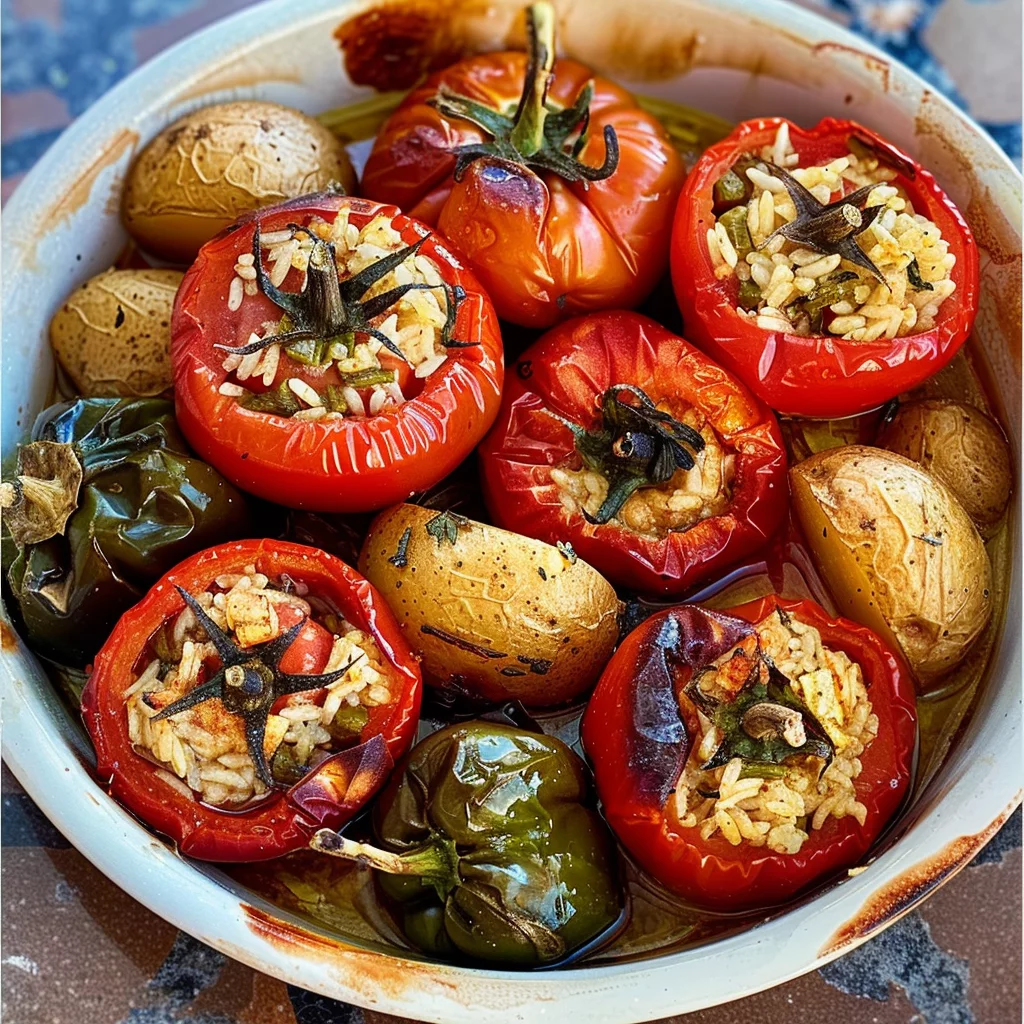
Greek Yemista is best enjoyed fresh from the oven. Serve it with a drizzle of olive oil and a sprinkle of fresh parsley for a vibrant finish. The visual appeal of the colorful stuffed vegetables makes it a show-stopping dish for any gathering.
To enhance the meal, pair your Yemista with a side of fresh salad or Greek Chicken Souvlaki with Tzatziki Sauce. This combination offers a balanced meal filled with diverse flavors and textures.
Greek Yemista
Pairings and Storage
For a sweet finish to your meal, consider a dessert like Chilled Greek Yogurt Bark with Figs and Honey. This light and refreshing treat complements the hearty flavors of Yemista perfectly.
Store any leftovers in an airtight container in the refrigerator. Yemista reheats well, making it a convenient option for meal prep or a quick lunch the next day.
Conclusion
Greek Yemista is a celebration of fresh ingredients and traditional flavors. Its simplicity and depth make it a cherished dish that can bring warmth to any table. By mastering the fundamentals and experimenting with variations, you can create a dish that is uniquely yours.
The utility of Greek Yemista lies in its versatility and ease of preparation. Whether you’re cooking for family or friends, this dish is sure to impress with its rich flavors and stunning presentation. It’s more than just a meal; it’s an invitation to savor the joy of home-cooked food.