
📑 Table of Contents ▶
- Vegetable Paella
- Mastering Vegetable Paella: A Flavorful Journey
- Fundamentals
- Preparation/setup
- Cooking Techniques for Perfect Paella
- Technique
- Tips and Tricks
- Elevating Your Vegetable Paella
- Perfecting Results
- Troubleshooting and Variations
- Serving Suggestions and Storage Tips
- Serving and Presentation
- Storage and Pairings
- Conclusion
- FAQs – Vegetable Paella
I’m Laloti Karla, and my journey with vegetable paella began in my grandmother’s kitchen. The kitchen was always alive with the sound of sizzling pans and the rich aroma of spices. It was in this warm, bustling environment that I first learned about the beauty of simple, hearty meals.
My grandmother’s approach to cooking was all about bringing people together over plates that told stories. Vegetable paella quickly became one of my favorites, a dish that embodies the essence of communal eating and celebration. It’s more than just a meal; it’s an experience that evokes memories with every bite.
Today, I bring that same spirit to Yumoti.com, where I share recipes that transform ordinary moments into cherished memories. Vegetable paella stands out as a dish that feels like a warm, hearty hug from the kitchen, making it perfect for gatherings big and small. Join me as we explore the joy of cooking and the soul-satisfying delight of this classic dish.
Vegetable Paella
- Prep Time: 20 minutes
- Cook Time: 1 hour 40 minutes
- Total Time: 2 hours
- Yield: 6 servings
- Category: Main Course
- Method: Baking
- Cuisine: Spanish
Description
Learn how to make a delicious Vegetable Paella with this easy-to-follow recipe. Discover the secrets to creating a flavorful and satisfying vegetarian dish.
Ingredients
- 3 tablespoons (45 ml) vegetable oil, divided
- 1 medium yellow onion, chopped fine
- 1 1/2 teaspoons (7.5 ml) fine sea salt, divided
- 6 garlic cloves, pressed or minced
- 2 teaspoons (10 ml) smoked paprika
- 1 can (15 ounces or 425 g) diced tomatoes (preferably the fire-roasted variety), drained
- 2 cups (380 g) short-grain brown rice*
- 1 can (15 ounces or 425 g) chickpeas, rinsed and drained, or 1 1/2 cups (270 g) cooked chickpeas
- 3 cups (720 ml) vegetable broth
- 1/3 cup (80 ml) beef broth
- 1/2 teaspoon (3 ml) saffron threads, crumbled (optional)
- 1 can (14 ounces or 400 g) quartered artichokes or 1 jar (12 ounces or 340 g) marinated artichokes, drained
- 2 red bell peppers, stemmed, seeded and sliced into long, 1/2″-wide strips
- 1/2 cup (75 g) Kalamata olives, pitted and halved
- Freshly ground black pepper
- 1/4 cup (15 g) chopped fresh parsley, plus about 1 tablespoon more for garnish
- 2 tablespoons (30 ml) lemon juice, plus additional lemon wedges for garnish
- 1/2 cup (75 g) frozen peas
Instructions
- Position your oven racks in the top and bottom sections, ensuring enough room for a Dutch oven between them. Opt for a large Dutch oven (ideally 6 quarts or more, though a 5.5-quart one can suffice) or a large oven-safe skillet with a tight-fitting lid.
- Set your oven to 350°F. Warm 2 tablespoons of oil in your Dutch oven or skillet over medium heat until it shimmers. Add the onion with a bit of salt and cook until the onions become soft and clear, roughly 5 minutes.
- Mix in the garlic and paprika, cooking until they release their aroma, about 30 seconds. Incorporate the tomatoes and continue cooking until the blend darkens and slightly thickens, around 2 minutes. Add the rice to the mixture, stirring until it’s coated well, for about 1 minute. Add in the chickpeas, both types of broth, saffron (if desired), and 1 teaspoon of salt.
- Turn the heat to medium-high, bringing the mixture to a boil while stirring occasionally. Cover the pot and place it on the lower rack in the oven. Let it bake without interruption until the liquid is absorbed and the rice is soft, around 50 to 55 minutes.
- Meanwhile, cover a large baking sheet with parchment paper for easy cleaning. On the baking sheet, mix the artichokes, peppers, olives, 1 tablespoon of oil, 1/2 teaspoon salt, and about 10 twists of black pepper. Mix well and spread the mixture uniformly across the sheet.
- Bake the vegetables on the top rack until the artichokes and peppers are soft and begin to brown at the edges, roughly 40 to 45 minutes. Take them out and let them cool slightly. Add 1/4 cup parsley and lemon juice to the mixture, tossing to combine. Adjust seasoning with salt and pepper as needed. Put this aside.
- To achieve a crispy base (socarrat), uncover the baked rice pot, place it on the stovetop, and cook over medium-high heat for about 5 minutes, turning the pot as necessary until a well-browned, crisp layer forms at the bottom.
- Whether you choose to create socarrat or not, scatter the peas and roasted veggies over the cooked rice, cover, and let the paella rest for 5 minutes. Add a sprinkle of chopped parsley (about 1 tablespoon) and serve in individual portions with lemon wedges alongside.
Notes
- Enhance flavor with fire-roasted diced tomatoes and marinated artichokes.
- Include saffron for an authentic touch, but it’s optional.
- Allow the paella to rest for 5 minutes after adding peas and roasted veggies for optimal results.
Mastering Vegetable Paella: A Flavorful Journey
Fundamentals
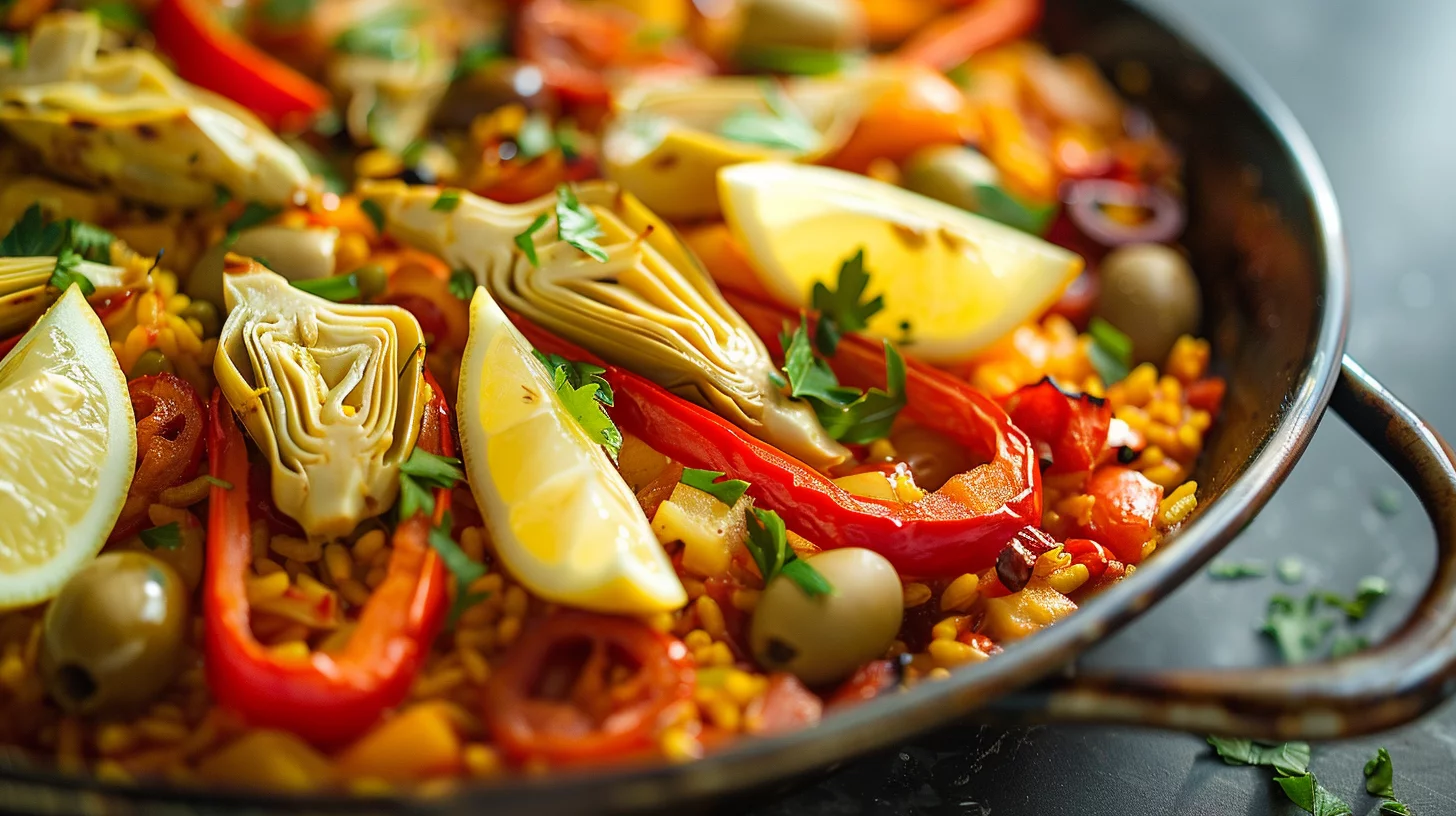
Vegetable paella is a vibrant, aromatic dish that combines an array of flavors and textures. The foundation lies in its ingredients, which are simple yet effective. The aroma of smoked paprika and the freshness of parsley bring each component to life, making every bite a celebration of taste.
The key to a successful vegetable paella lies in its balance. The interplay of ingredients like onions, garlic, and tomatoes create a savory base, while saffron threads add a touch of warmth and color. Together, these elements form a harmonious blend that defines this classic dish.
Preparation/setup
Setting up for vegetable paella requires a bit of planning, but the process is straightforward. Start by positioning your oven racks and preheating the oven to 350°F. This ensures even cooking and a perfectly fluffy rice texture. Gathering all ingredients before you begin will streamline the process and keep you organized.
Use a large Dutch oven or an oven-safe skillet to accommodate the ingredients comfortably. This allows the flavors to meld together beautifully as the dish cooks. Begin by warming the oil and preparing the onion and garlic, which lay the aromatic groundwork for the paella.
Cooking Techniques for Perfect Paella
Technique
Creating the perfect vegetable paella involves a few key techniques. Sauté the onions until they become transparent, releasing their natural sweetness. Add the garlic and smoked paprika and allow them to bloom, enhancing the depth of flavor. This forms the essential aromatic base of the dish.
Incorporate the tomatoes, rice, and chickpeas, stirring to coat the rice evenly. This step is crucial as it ensures each grain absorbs the flavors fully. Bring the mixture to a boil before transferring it to the oven for baking.
Vegetable Paella
Tips and Tricks
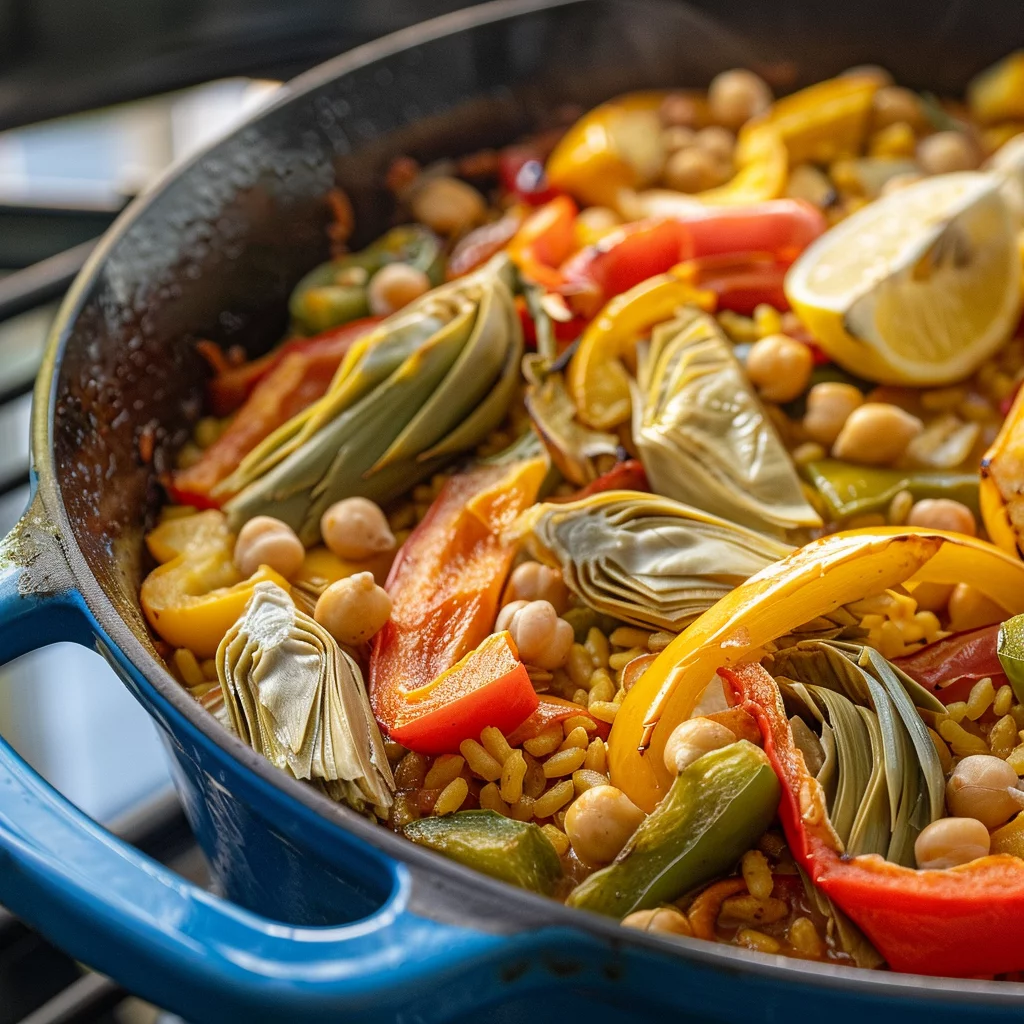
To achieve the signature crispy layer known as socarrat, cook the paella on the stovetop after baking. Rotate the pot to ensure even browning, but be careful not to burn the bottom. This adds a delightful texture contrast and elevates the dish.
While the paella bakes, prepare the vegetable topping. Roasting artichokes, bell peppers, and olives brings out their natural sweetness and enhances their flavor. Toss them with parsley and lemon juice for a zesty finish. For more vegetable inspiration, explore our Roasted Vegetable Grain Bowls recipe.
Elevating Your Vegetable Paella
Perfecting Results
The beauty of vegetable paella lies in its adaptability. Experiment with different vegetables or add a pinch of saffron for added depth. Adjust the seasoning to suit your taste, keeping the balance of flavors in mind. Every variation offers a new experience while maintaining the dish’s core essence.
Presentation plays a crucial role in elevating the dining experience. Garnish with fresh parsley and serve with lemon wedges for an inviting, colorful dish that stimulates the senses. For more ideas on colorful vegetable dishes, check out our Grilled Mediterranean Vegetable Platter.
Troubleshooting and Variations
If your rice turns out too soft, reduce the broth slightly next time or adjust baking time. For a more robust flavor, try adding a touch more paprika or garlic. The beauty of this dish is its flexibility, allowing room for creativity while remaining true to its roots.
Explore different ingredient combinations, such as adding zucchini or asparagus for a seasonal twist. These variations keep the dish exciting and cater to diverse palates. For more creative vegetable recipes, visit Healthy Mediterranean Vegetable Pasta Bake.
Serving Suggestions and Storage Tips
Serving and Presentation
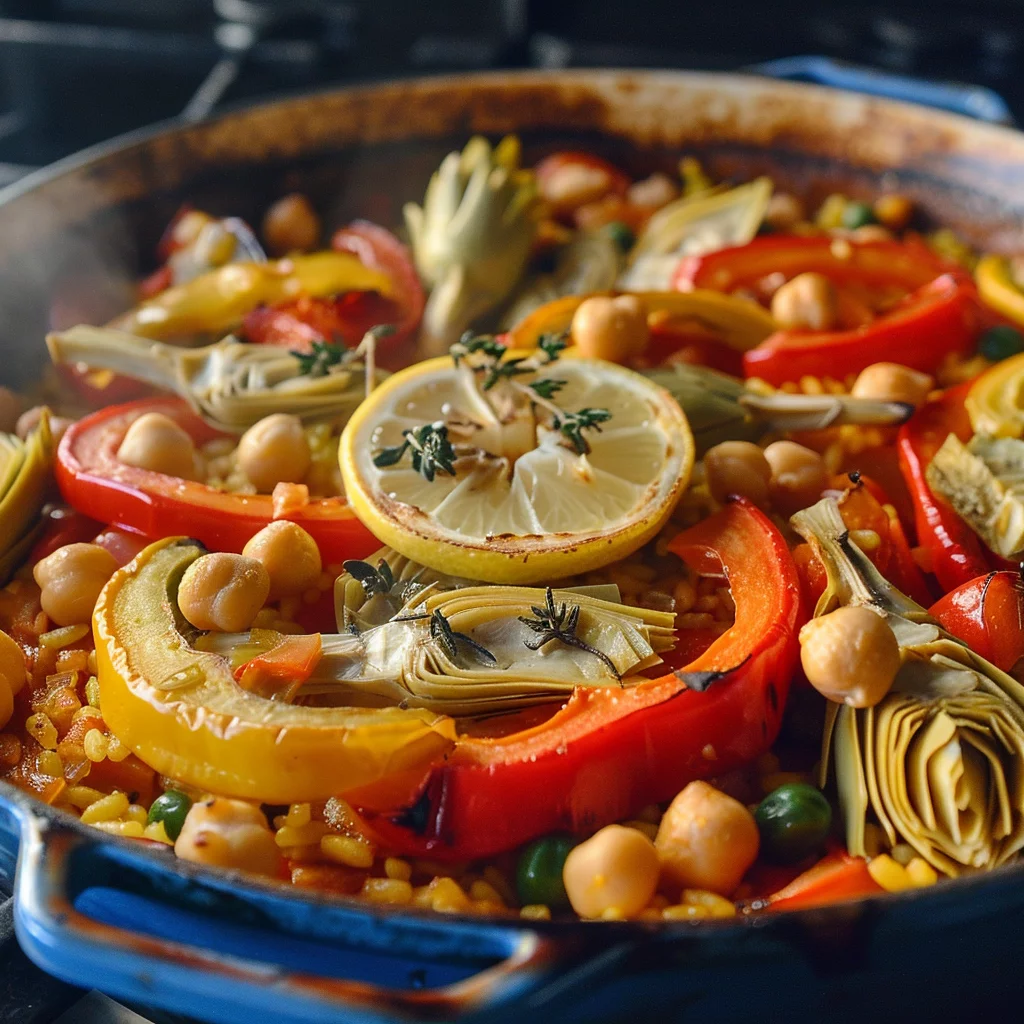
Serve vegetable paella in individual portions, highlighting its vibrant colors and fresh aroma. Present it with a side of lemon wedges for added brightness. The dish pairs beautifully with a simple green salad or crusty bread, completing a satisfying meal.
Consider enhancing your meal with our Quick Vegetable Stir Fry as a side, or explore more hearty options like Hearty Vegetable Soup for a comforting feast.
Vegetable Paella
Storage and Pairings
Store leftover paella in an airtight container in the refrigerator for up to three days. Reheat it gently on the stovetop or in the microwave, adding a splash of broth to maintain moisture. This dish also makes a delightful lunch option, packed with flavor and nutrition.
For more delightful vegetable dishes that make excellent pairings, explore this Vegetable Sous Vide Recipe. It offers a unique cooking method that complements the rich flavors of paella.
Conclusion
Vegetable paella is more than just a dish; it’s a culinary journey that brings people together. Its versatile nature and rich flavors make it a favorite among many, offering endless possibilities for creativity. The preparation process may require attention, but the results are always rewarding.
With its vibrant ingredients and delightful aroma, vegetable paella stands out as a testament to the joy of cooking. Whether you follow the traditional route or explore new variations, this dish promises a memorable experience for all who gather around the table.